
Related videos:
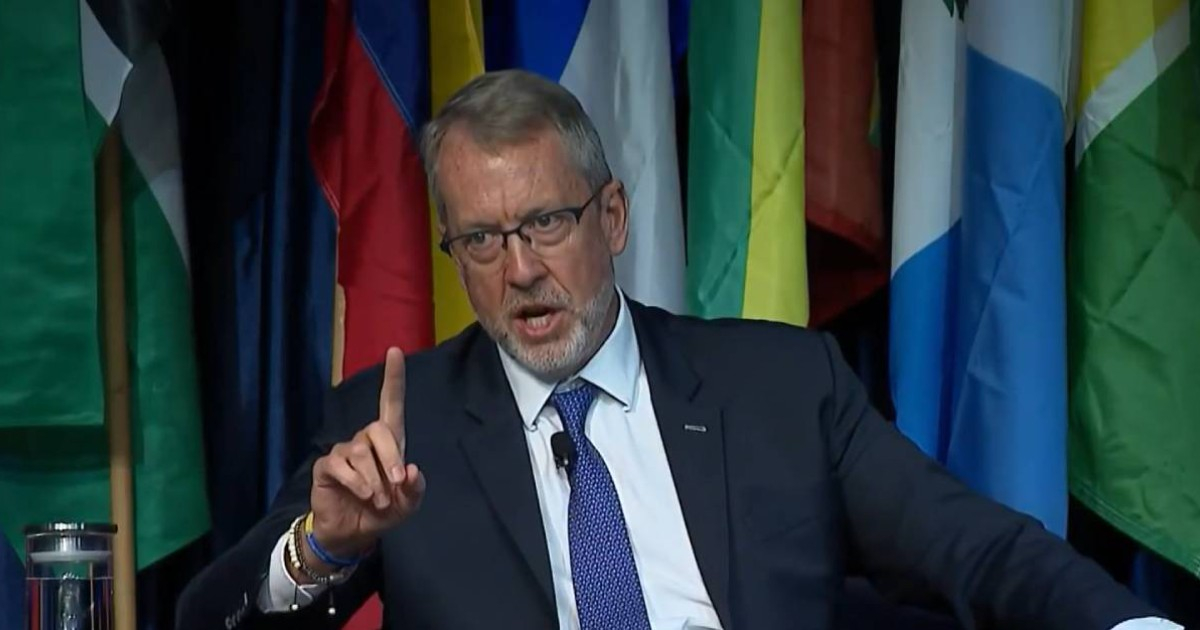
The former United States ambassador to Venezuela, James Story, warned on Wednesday that Washington "loses" if it delays the democratic transition in Venezuela.
Story made its statements during a forum on the political situation in Latin America held at Florida International University (FIU) in Miami, where Cuban activist Rosa María Payá and analyst Frank Mora also participated.
"Every day that we are not making the transition to democracy in the country, we are losing the leverage we have, the time that exists," stated Story, who was the principal U.S. diplomat for Venezuela during Donald Trump's first administration and subsequently under the Biden administration.
The former diplomat warned that a strategy focused solely on diplomatic normalization or oil agreements could further strengthen the Venezuelan political system, rather than weaken it.
"I know that everyone is waiting for the moment when María Corina Machado arrives... not just for an election, but also for the reinstitutionalization of the country," Story stated.
His statements come at a time of profound political transformation in Venezuela.
The Secretary of State Marco Rubio outlined a three-phase plan —stabilization, recovery, and transition— following the capture of Nicolás Maduro on January 3, 2026, in the operation known as "Absolute Resolution."
The Deputy Secretary of State Christopher Landau has requested patience, noting that the transition "only began four months ago," while the U.S. reopened its embassy in Caracas on March 14, 2026, and officially recognized Delcy Rodríguez as the interim head of state.
The forum also addressed the situation in Cuba, with differing viewpoints. Story highlighted the distinctions between the two countries: "At least in Venezuela there was room for democratic opposition... so I ask myself: what can we do in Cuba?"
Mora stated that economic sanctions, on their own, have historically never brought about the desired political change in Cuba and emphasized that the fundamental factor is internal pressure, citing the protests of July 11, 2021 as an example.
Payá, on the other hand, defended economic pressure against the Cuban regime: "The interests of the criminals in power in Cuba must be affected so that they are forced to submit to the will of the Cuban people, which is a will for change."
The activist also described the regime's recent distribution of a family guide to face potential military aggression as a strategy of fear. "The Cuban regime is, as always, intensifying its rhetoric, trying to instill panic, while the only ones who have been and continue to be violent to this day are the criminals in power," she stated.
The repressive context in Cuba supports this reading: the Cuban Observatory of Human Rights documented 366 repressive actions just in April, including arrests, harassment, and surveillance against activists and relatives of political prisoners, in a country where Prisoners Defenders counted 1,214 political prisoners at the end of February 2026.
Filed under: