
Related videos:
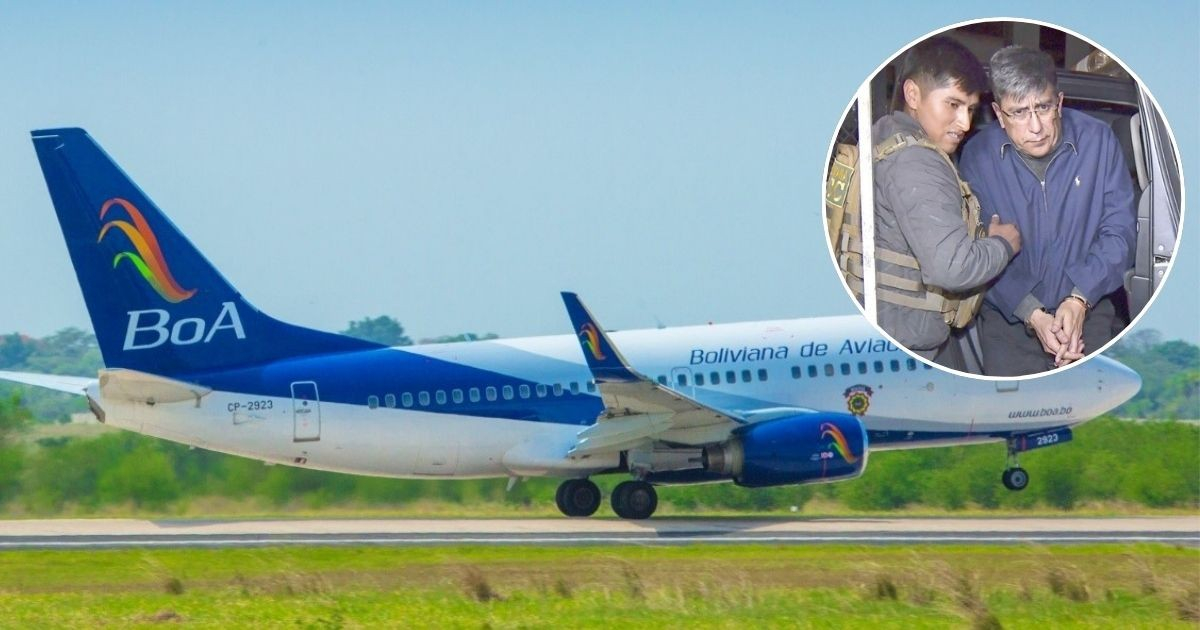
Ronald Casso, former general manager of Boliviana de Aviación (BoA), spent the night in cells of the Special Task Force Against Crime (FELCC) in La Paz, while awaiting his preliminary hearing for the alleged economic damage caused to the Bolivian state by the state airline's flights to Havana.
Casso was apprehended on Wednesday in Cochabamba and transferred handcuffed and under police custody to the seat of government, as part of the investigation known as “The Havana Route,” a case that has uncovered millions in losses related to the failed air connection between Santa Cruz de la Sierra and Cuba, reported the local media Correo del Sur.
The Prosecutor's Office accuses him of conduct detrimental to the economy and failure to perform duties for the operations conducted between October 2023 and July 2024, which allegedly resulted in losses exceeding 18.4 million bolivianos, equivalent to about 2.6 million dollars.
"Mr. Ronald Casso is in custody and will be made available to the judge through a formal indictment resolution during the course of the day," stated prosecutor Walter Lora, as quoted by Unitel Digital.
The investigation also includes former Minister of Public Works Édgar Montaño and the former members of the BoA board who approved the flight route. According to Lora, they are all part of the complaint filed by the Vice Ministry of Transparency.
Montaño is currently in preventive detention at the San Pedro prison in La Paz due to another case related to alleged irregularities in the construction of the El Sillar road section between Cochabamba and Santa Cruz.
According to the investigations, the economic damage is divided into two components: 14.4 million bolivianos due to operational losses from low flight occupancy and another 4 million from irregular currency exchange operations.
The investigation states that BoA was purchasing dollars in the parallel market at 17.5 bolivianos per unit, well above the official exchange rate of 6.96, in addition to paying a 10% commission to intermediaries.
The authorities also reported that the airline physically transported 11.8 million bolivianos in cash to Havana, outside the international banking system.
The scandal originated from the route inaugurated in October 2023 as part of the “regional integration” agenda promoted by then-president Luis Arce. The flights were operated with a Boeing 737-800 capable of carrying 168 passengers, despite the claim from the Vice Ministry of Transparency that there was no technical report or profitability study supporting the opening of the route.
Instead of a feasibility analysis, management presented a document justifying the operations based on Arce's "presidential commitment," according to the investigation.
The lack of passengers ultimately turned the connection with Cuba into a financial disaster. On November 30, 2023, one of the flights took off with only 17 passengers; on February 22, 2024, with 22; and on September 19 of that same year, with just 11 people on board.
The investigations revealed that the 36 flights conducted recorded an average occupancy of 60 passengers on outbound trips and 74 on return trips, less than half of the aircraft's capacity.
The Vice Ministry of Transparency stated that the route was enabled for “ideological reasons,” disregarding the internal warnings from the BoA board regarding the lack of economic viability.
BoA finally suspended flights to Cuba in July 2024, just nine months after launching them, after incurring ongoing losses.
By August 2025, the deputy Janira Román from Comunidad Ciudadana had reported that the state airline spent over 2.5 million dollars on routes to Cuba and Venezuela, of which 2.1 million were related to operations with Cuba, primarily for airport services.
On April 21, 2026, the Vice Ministry of Transparency formalized the criminal complaint against six former officials, and Casso's arrest became the first effective apprehension in the case.
The inauguration of direct flights between Bolivia and Cuba was initially presented as a diplomatic achievement of the MAS government. However, it ended up becoming one of the largest scandals of alleged corruption and waste of public resources in recent years, with millions of dollars invested in an air route that never managed to sustain itself commercially.
Filed under: