
Related videos:
A new YouGov survey (an international market research and data analysis firm based online) reveals that 64% of Americans oppose their country going to war with Cuba, compared to only 15% who support it and 21% who have no opinion.
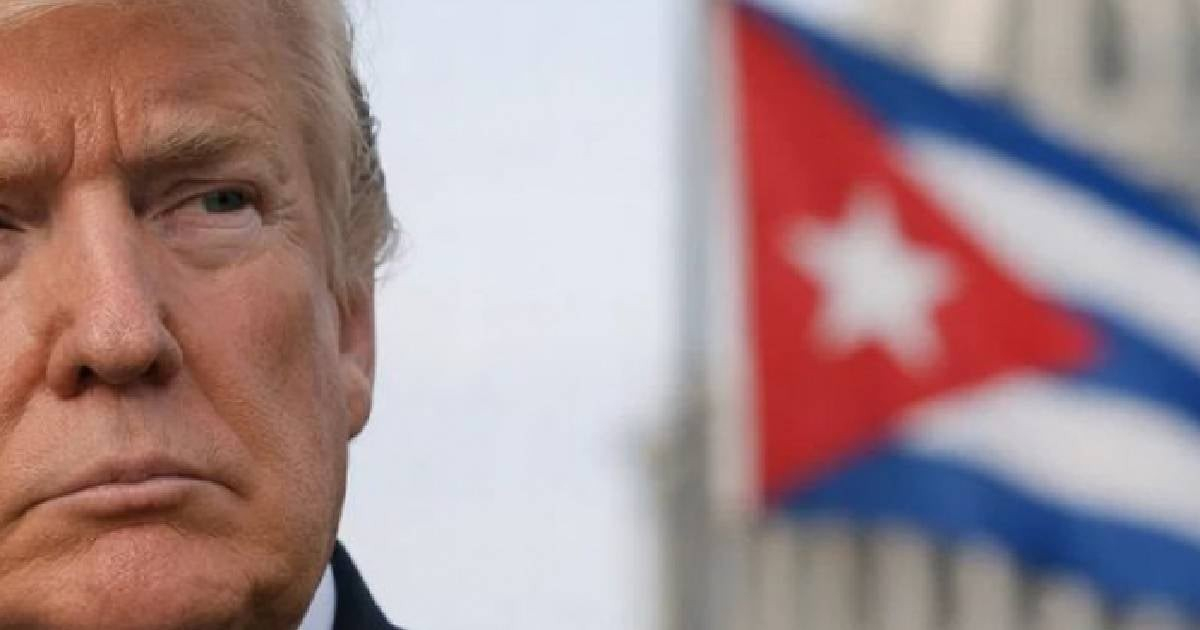
The survey, sponsored by the Center for Economic and Policy Research (CEPR), is particularly significant at a time of heightened tension between Washington and Havana, following the repeated threats from President Donald Trump to deploy the aircraft carrier Abraham Lincoln off the coast of Cuba.
Mark Weisbrot, senior economist and co-director of the CEPR, was straightforward in stating that the survey results should make President Trump "think twice before launching another election war."
"Almost all experts in Cuba would laugh at the idea that Cuba poses a security threat to the United States. And the war against Iran has already cost Trump and his party significant support," he stated.
Among the respondents who expressed their opinion, the rejection is overwhelming: 81% are against any military action against the Island.
Independent voters also reject aggression towards Cuba, with 68% opposed and 25% in favor. The CEPR emphasizes that this group—which is evenly divided between Democratic and Republican supporters—contains a substantial number of undecided voters as the November elections approach.
The survey also shows that 62% of Americans believe that the war in Iran has harmed both citizens and the world, compared to 24% who do not share that view.
In this regard, Weisbrot was emphatic: "Trump presented himself promising that there would be no wars and that prices would come down. Instead, he initiated a war that has driven up prices and will likely continue to do so for some time."
The expert recalled Trump's statements about starting a war with Cuba after withdrawing his troops from Iran, and warned of the danger that the Republican leader might use a new war as a political distraction.
"It is unusual in history for a leader to use another war as a distraction from an unpopular war among voters that has harmed them. But this seems to be a real possibility here. Distraction has played an unprecedented role in Trump's political strategy," he noted.
On May 1, Trump signed a new executive order that expands sanctions against the Cuban regime in the energy, defense, mining, and financial services sectors, with secondary sanctions targeting foreign banks that operate with sanctioned Cuban entities.
That same day, Trump stated at a private dinner in West Palm Beach that the U.S. "will take Cuba almost immediately" after completing military operations in Iran.
Since January 2026, the Trump administration has imposed more than 240 sanctions against Cuba and intercepted at least seven tankers carrying oil destined for the island.
The Díaz-Canel regime, for its part, has responded with resistance rhetoric. Last Saturday, Díaz-Canel warned about "the imminence of a military aggression" from the U.S. and invoked the doctrine of "Total People's War," developed by Fidel Castro in the 1980s.
Filed under: