
Related videos:
The absence of Raúl Guillermo Rodríguez Castro, known as “El Cangrejo”, in the new round of sanctions announced by Secretary of State Marco Rubio has raised questions both inside and outside of Cuba.
While Washington intensified measures against GAESA and sanctioned new officials linked to the regime's economic and repressive apparatus, the grandson of Raúl Castro was completely removed from the SDN List of the Department of the Treasury.
The omission is striking for several reasons. Only eight Cubans are currently listed in the United States' most stringent sanctions list, which includes asset freezes and financial restrictions.
Among them, El Cangrejo is not mentioned, despite being the son of the late general Luis Alberto Rodríguez López-Calleja, former president of GAESA and the first Cuban individually sanctioned by Washington in 2020.
The contrast also becomes evident when comparing the Cuban case with other countries sanctioned by the United States. Russia has more than 1,500 individuals listed on the SDN due to the war in Ukraine, while Venezuela exceeds one hundred.
Cuba, after decades of reports of political repression and human rights violations, currently has only eight names.
The possible role of El Cangrejo as a channel with Washington
The most compelling hypothesis to explain this exclusion points to the role that Rodríguez Castro would be playing as an intermediary between Raúl Castro's circle and sectors of the Trump administration.
Since February 2026, close advisors to Marco Rubio reportedly held meetings with El Cangrejo in Basseterre, the capital of Saint Kitts and Nevis. According to various sources, the discussions focused on the "future" of Cuba and took place in an environment described as "surprisingly friendly."
In April, an official delegation from the State Department landed in Havana on the first U.S. government flight since 2016.
During that visit, a senior official held a separate meeting with Rodríguez Castro, according to reports confirmed by both Washington and the Cuban MINREX.
Days later, it became known that El Cangrejo attempted to establish a direct line with Donald Trump through a letter sent via Roberto Carlos Chamizo González, an agent of MININT with a business cover. He arrived in Miami on April 18, but the contact did not advance.
The figure of power that Washington avoids addressing
Raúl Guillermo Rodríguez Castro holds a strategic position within the power structure, although he does not hold visible positions within the Cuban government or the Political Bureau.
Various sources linked to the upper echelons of power in Cuba indicate that El Cangrejo may have inherited part of the control and influence that his father, Luis Alberto Rodríguez López-Calleja, wielded over the military conglomerate GAESA, always under the direct trust of Raúl Castro.
He does not hold any visible political or institutional positions, but several sources describe him as a figure with immense power within the regime's structure. He is the spokesperson for Raúl Castro. Since 2016, he has been in charge of his grandfather's personal security and controls all access to the leader.
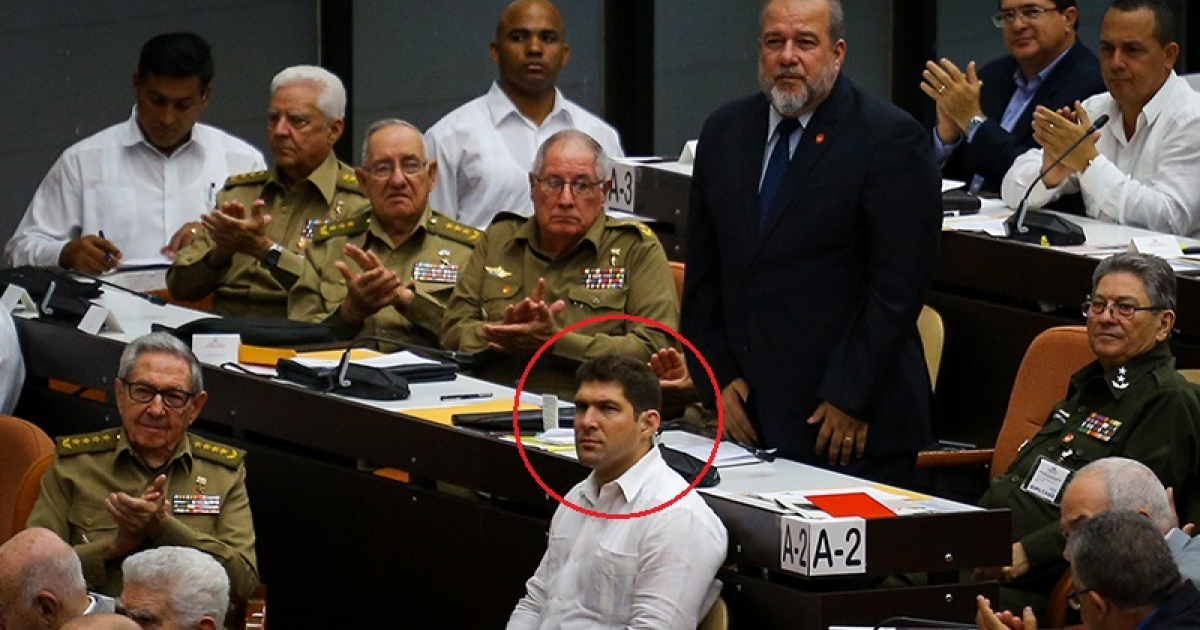
In public events, El Cangrejo often appears sitting alongside members of the country's highest political body, an image that reinforces claims about his growing internal influence within the government.
Sanctioning him now could close one of the few channels of communication open between Washington and Raúl Castro's inner circle, at a time when the Trump administration is maintaining public pressure against the Cuban regime, while not ruling out negotiations.
When announcing the new measures, Marco Rubio stated that "more sanctions against the Cuban regime will come in days and weeks," leaving open the possibility that the absence of El Cangrejo is a purely strategic decision and not a political acquittal.
Filed under: