
Related videos:
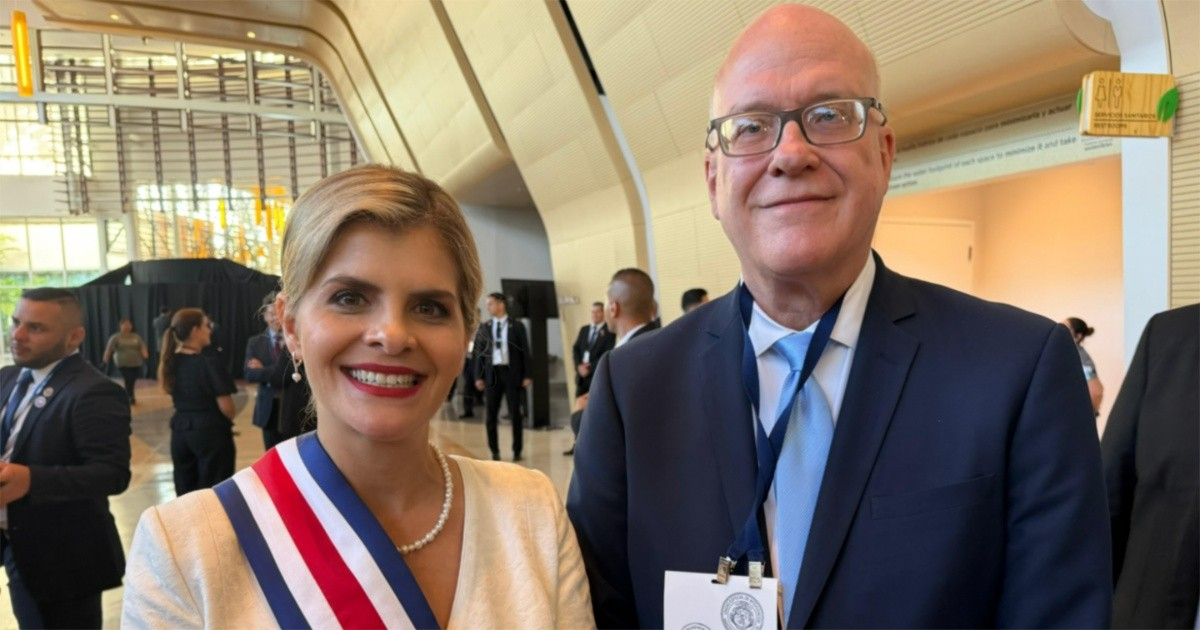
The new president of Costa Rica, Laura Fernández, welcomed the Cuban opposition leader Orlando Gutiérrez Boronat last Friday as a special guest at her inauguration ceremony in San José, in a gesture that strengthens that Central American country's support for the cause of freedom in Cuba.
Gutiérrez Boronat, Secretary General of the Assembly of the Cuban Resistance (ARC), spoke with Fernández and with Foreign Minister Manuel Tovar about the current situation on the island, the struggle of the Cuban people for their human rights, and the international effort to achieve real change in the country, according to a report by Martí Noticias.
"We have expressed to President Fernández and Chancellor Tovar the deepest gratitude of the Cuban people for Costa Rica's decision to sever relations with the Castro communist dictatorship and to support the Cuban people in their struggle for freedom," stated Gutiérrez Boronat in a statement.
The human rights defender was also approached by the international press regarding the situation in Cuba and Costa Rica's gesture of solidarity with the people of the island.
Fernández, 39 years old, was sworn in as the 50th constitutional president of Costa Rica for the term 2026-2030, becoming the second woman to hold this position in the country's history. The ceremony took place at the National Stadium in San José, with the presence of delegations from 71 countries and 18 international organizations.
The elected official took office with the promise to implement "a relentless war, a tough battle against organized crime" and the consolidation of what she called a "Third Republic."
The reception of the Cuban opposition leader is not coincidental. The government of Rodrigo Chaves announced in March the closure of the Costa Rican embassy in Havana and demanded the withdrawal of Cuban diplomatic personnel from San José, stating that Costa Rica "does not recognize the legitimacy of the communist regime of Cuba."
Before taking office, Fernández publicly supported that diplomatic break, stating that "I was part of the decision to close our embassy in Cuba," and arguing that Costa Rica would not tolerate human rights violations or "inhuman" conditions caused by socialism and communism.
The Cuban regime reacted strongly. Foreign Minister Bruno Rodríguez Parrilla described the decision as "arbitrary" and "submissive to the U.S.," while Díaz-Canel attributed it to "clear pressures from the U.S. government".
Gutiérrez Boronat's visit to San José is part of an intense diplomatic offensive by the Cuban resistance abroad. In the weeks leading up to it, the opposition leader had met with the president of Paraguay, Santiago Peña, and the elected president of Chile, José Antonio Kast.
This international tour is part of the push for the "Liberation Agreement," signed on March 2nd in Miami by the ARC, Pasos de Cambio —led by Rosa María Payá— and over thirty exile organizations. The agreement proposes a three-phase roadmap: the release of more than 1,000 political prisoners and the dismantling of the Communist Party of Cuba, stabilization with a provisional government, and democratization through free elections.
The Florida Senate officially recognized the Liberation Agreement on April 29 through a proclamation by Senator Alexis Calatayud, in an institutional endorsement that the Cuban resistance deems a key step toward the international diplomatic pressure against the Havana regime.
"In a strong international effort by the Cuban democratic forces to achieve a concerted diplomatic blockade and support for the freedom of Cuba, the Agreement for Liberation has been signed, laying the groundwork for a provisional transitional government on the Island," stated the ARC in a press release.
Filed under: