
Related videos:
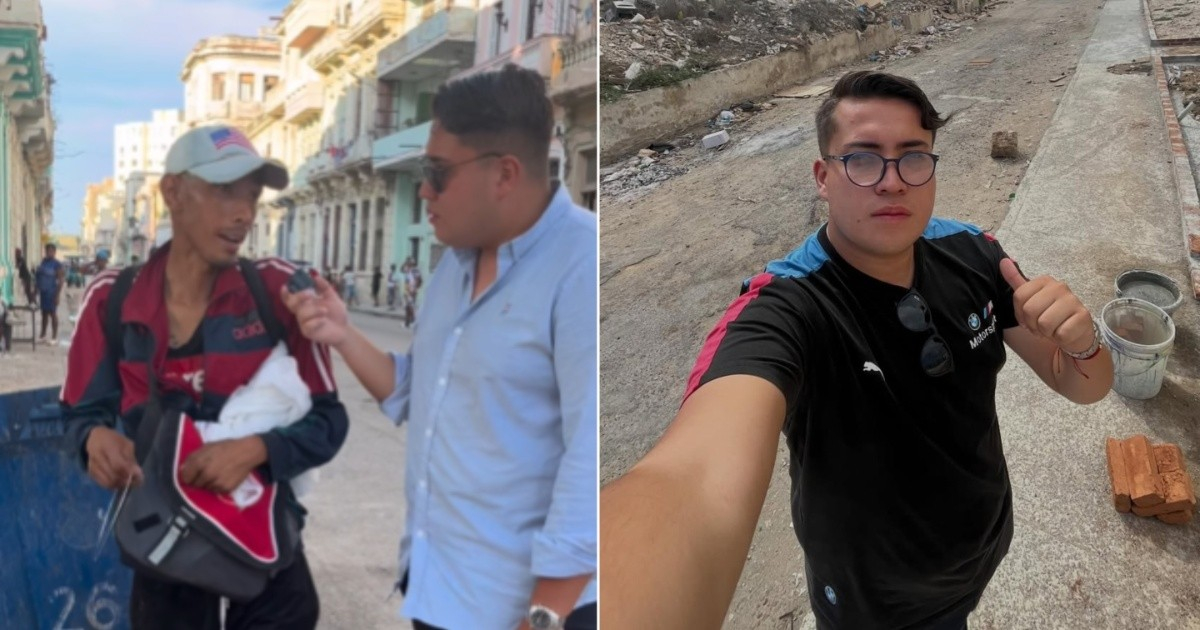
The Colombian journalist and content creator Daniel Maldonado was detained for four hours in Cuba, declared undesirable, and is prohibited from returning to the island, according to a story he shared this Friday in an Instagram reel where he detailed the operation that the Cuban authorities carried out against him.
The incident occurred approximately a week before the publication, on the day Maldonado was supposed to take his flight back to Colombia.
At 7 in the morning, two agents arrived at the apartment where he was staying—located across from a police station—and confiscated the passports of him and his companion, who was recording him.
Both were taken to the station, where their cell phones were confiscated. Maldonado described the interrogation in a white room with six police officers: three in front of him and three behind, watching his movements.
"Something that is truly illegal alters the rights of any human being; one should not have to show personal things," said Maldonado, referring to the demand to unlock his phone and show photos and videos.
When he denied having posted any content, an agent pulled out his own cell phone and showed him the posts that the Colombian had uploaded, including one where he criticized Colombian President Gustavo Petro for praising Cuba.
One of the police officers was direct: "It's a crime to record over there. In fact, you can end up in jail if you speak ill of the government."
The authorities made him delete photos from his cell phone, took him to the hotel to collect his belongings, and then to the airport, where he was detained for another two hours, searched again, and officially declared an undesirable person. He was on the verge of missing his flight.
Maldonado had taken precautions the day before: he erased the contents of his cell phone and sent the files to a cloud service in Colombia, which allowed him to keep the recorded material.
The case adds to a documented pattern of harassment against foreign content creators in Cuba.
Just days earlier, the American YouTuber Nick Shirley reported having been followed by Cuban intelligence agents from the Havana airport on April 30, with equipment confiscation and harassment at his hotel.
The media arm of State Security, "Razones de Cuba," came out to refute Shirley's account, labeling it as "purely an anti-communist script."
In June 2025, the Spanish channel Black Mango was questioned by State Security while filming a documentary on the island.
In September 2024, the Peruvian couple Eva Cavero and Andrés Izarnótegui were deported after 12 hours of interrogation for recording content for their channel.
This context arises as Cuba experiences record levels of repression: 69 arbitrary arrests of journalists in January 2026, a 430% increase compared to January 2025, and approximately 775 political prisoners on the island.
Maldonado concluded his account with a direct message: "I leave the country very happy because of the people I met, but very sad, because sadly these people live under a regime where if they talk about politics, they end up in jail. They can't eat because the minimum wage is not enough. And sadly, if you are not part of the government, you live in complete poverty."
Filed under: