
Related videos:
Officials of the National Revolutionary Police (PNR) apprehended several individuals who were running an illegal scheme for exchanging cash for electronic transfers at the ATMs in the Santiago de Cuba train terminal, charging interest rates ranging from 35% to as high as 50%.
At the time of the arrest, a sum of cash and several magnetic cards that they used to carry out their activities were seized, according to reported by the official profile "Héroes del Moncada" on Facebook.
"Believing that they could make a profit at the expense of others' needs and sacrifices, PNR officers surprised some individuals at the ATMs located in the Santiago de Cuba train terminal who, with an interest rate of 35% to 50% in their favor, were providing cash in exchange for money transfers," the publication noted, which clearly portrayed the officers' actions as "a significant achievement."
The scheme involves exchanging physical Cuban pesos for electronic transfers, taking advantage of the chronic cash shortage that the island has been experiencing as a direct result of the forced banking policy imposed by the regime since August 2023.
This policy mandates the use of digital payments but does not address the structural shortage of cash, which has led to an informal market where intermediaries charge increasingly high fees.
This is not the first time that Santiago de Cuba has been the setting for this type of operations.
In September 2025, the PNR arrested two men identified as Leodan and Yunior for the same scheme at the ATM of the building known as "18 Floors of Garzón," charging a 15% interest rate, with over 250,000 pesos seized.
The jump from 15% to as high as 50% in less than a year reflects the worsening cash shortage in Cuba, making the informal market more profitable—and more expensive for users.
The official press has acknowledged that banking services are not functioning properly, while private businesses are rejecting transfers because they need cash to operate, especially during the frequent blackouts.
The phrase "the transfer is the ruin of the business" summarizes the stance of many private entrepreneurs regarding digital payments in Cuba.
The financial context is devastating: the Cuban peso reached 500 CUP per dollar in the informal market in February of this year, and the average state salary of 7,000 CUP amounts to just 14 dollars.
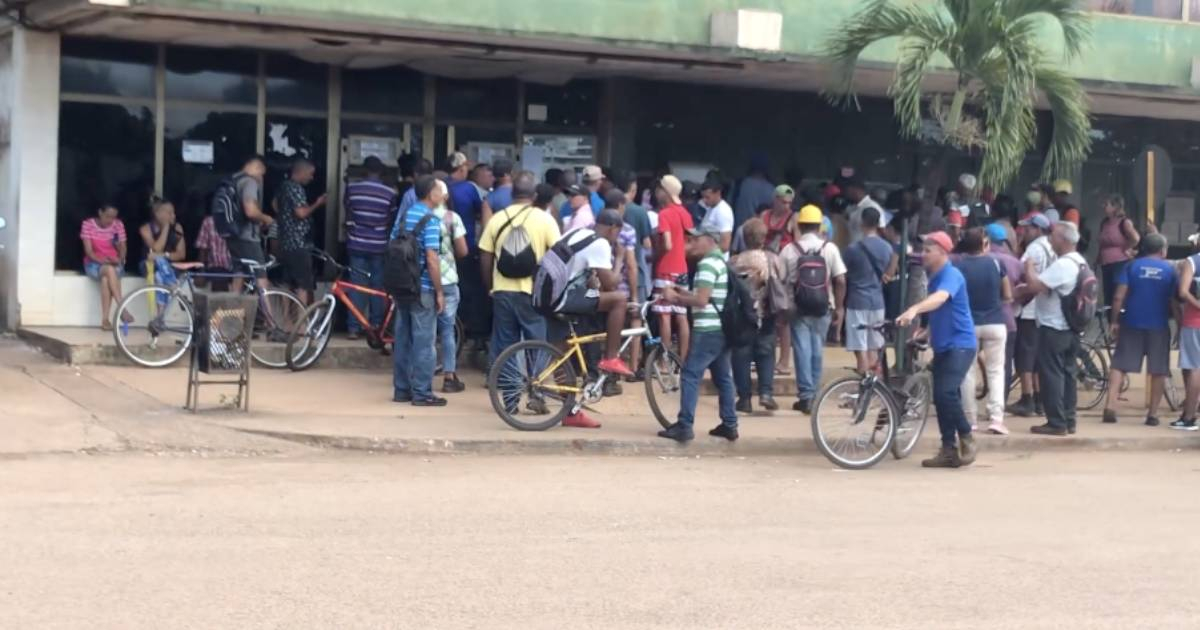
ATMs often run out of cash, banks impose withdrawal limits of up to 120,000 CUP monthly, and in November 2025, a crowd outside a bank in Marianao highlighted the collapse of the state financial system, with Cubans sleeping on the street in attempts to withdraw cash.
Cuban authorities frame these arrests as part of the fight against crime, while the phenomenon is actually a direct symptom of the economic collapse caused by 67 years of communist dictatorship.
"Behaviors like these must be promptly reported and condemned by the population," concluded "Héroes del Moncada," without mentioning that the need fueling this informal market was created by the regime itself.
Filed under: