
Related videos:
While Donald Trump exerts unprecedented pressure on Cuba, documents and testimonies reveal that the president has been considering the island as an investment destination for decades.
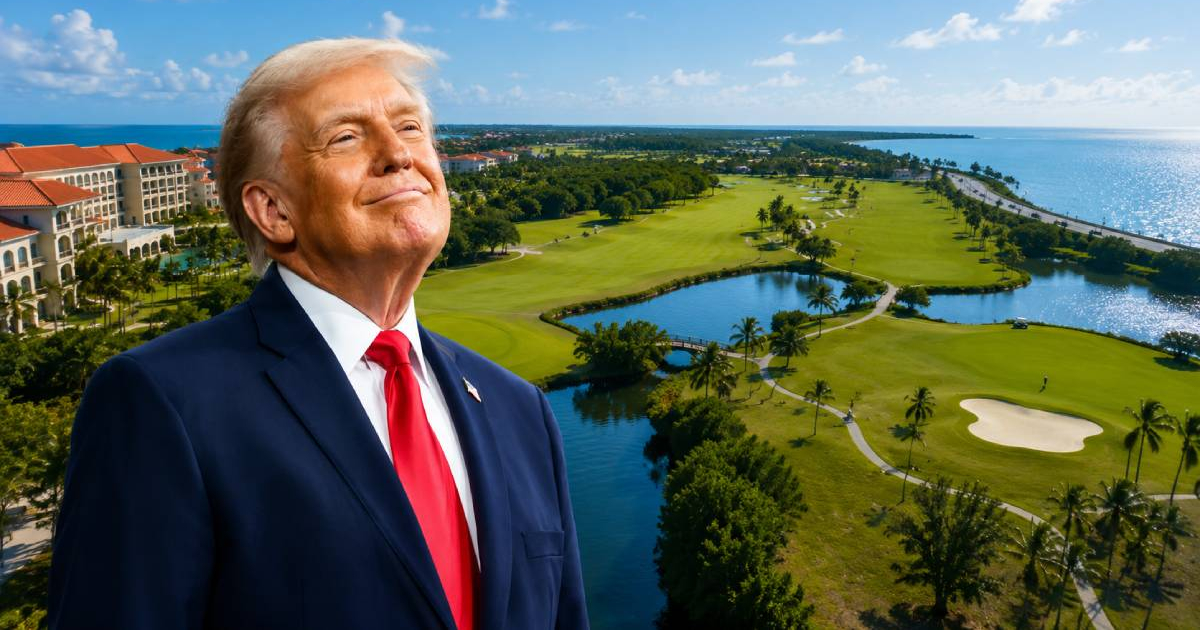
According to a BBC Mundo investigation, the initial business projects that Trump was exploring in Cuba were aimed at building luxury hotels under his name, golf courses, and coastal marinas.
This Tuesday, Trump posted on his Truth Social network that "Cuba is asking for help" and asserted that there will be dialogue with the Cuban regime, but without specifying what is being sought exactly.
The statement adds to a series of increasingly direct remarks. In March, he said he could "do whatever he wants" with Cuba, and on May 2, he claimed that the United States "will take Cuba almost immediately."
The first documented approach of a Trump company to Cuba dates back to 1998, when the firm Trump Hotels & Casino Resorts sent consultants to Havana secretly, spending at least $68,000 funneled through the consulting firm Seven Arrows Investment & Development Corp.
In 2016, Trump responded to the U.S. press on that topic, stating: "I never did anything in Cuba. I never closed a deal in Cuba."
Robert Muse, a lawyer specializing in sanctions against Cuba, notes that "in 1998 it would have been necessary to obtain a specific license authorizing the trip" and that "the OFAC would not have granted it if the trip was intended to explore commercial or investment opportunities in Cuba."
In 2008, Trump requested the official registration of the "TRUMP" trademark with the Cuban Office of Industrial Property, which was approved in 2010 and covered financial services, hospitality, casinos, golf courses, and beauty pageants.
The brand was active until approximately 2018-2019, with Trump already in the presidency.
Between 2012 and 2013, executives from the Trump Organization visited Cuba again to explore hotel, marina, and golf course projects on the island's coasts, according to Bloomberg Businessweek.
In 2016, Trump publicly admitted that "Cuba has some potential" when asked if he would open a hotel with his name in Havana.
"I believe there is no doubt that Mr. Trump was very interested in the possibility of either putting the Trump brand on a hotel in Cuba or even possibly owning golf courses in Cuba," states William LeoGrande, a professor at American University in Washington, to BBC Mundo.
The model that could be applied in Cuba follows the pattern already tested by Trump in other countries: brand licensing for luxury hotels and resorts, without necessarily being a direct owner.
Some analysts suspect that their goal is not to overthrow the regime, but to replace its leadership and open the island to American businesses, following the precedent set by Venezuela, where since January 2025, Chevron has been allowed to operate as the sole oil export channel.
The economic pressure on Cuba is devastating. Since the Executive Order signed on January 29, at least seven tankers bound for the island have been intercepted, and the energy blockade against Cuba has exacerbated a crisis that already included widespread blackouts. On May 1, Trump expanded sanctions on the energy, defense, mining, and banking sectors.
The Cuban tourism sector, which the regime has historically prioritized —investing up to 14 times more in tourism than in health—, recorded a decrease of 29.7% in visitor arrivals in 2025 and a hotel occupancy rate of 21.5% in the first half of that year.
Until 1959, Cuba was the main destination for American tourism and investment in the Caribbean. The most famous symbol of that era is the Habana Hilton Hotel, built by the Hilton chain and nationalized in 1960 by Castro's government, which renamed it Habana Libre. Trump left open the possibility of resuming those businesses "at the right time."
Filed under: