
Related videos:
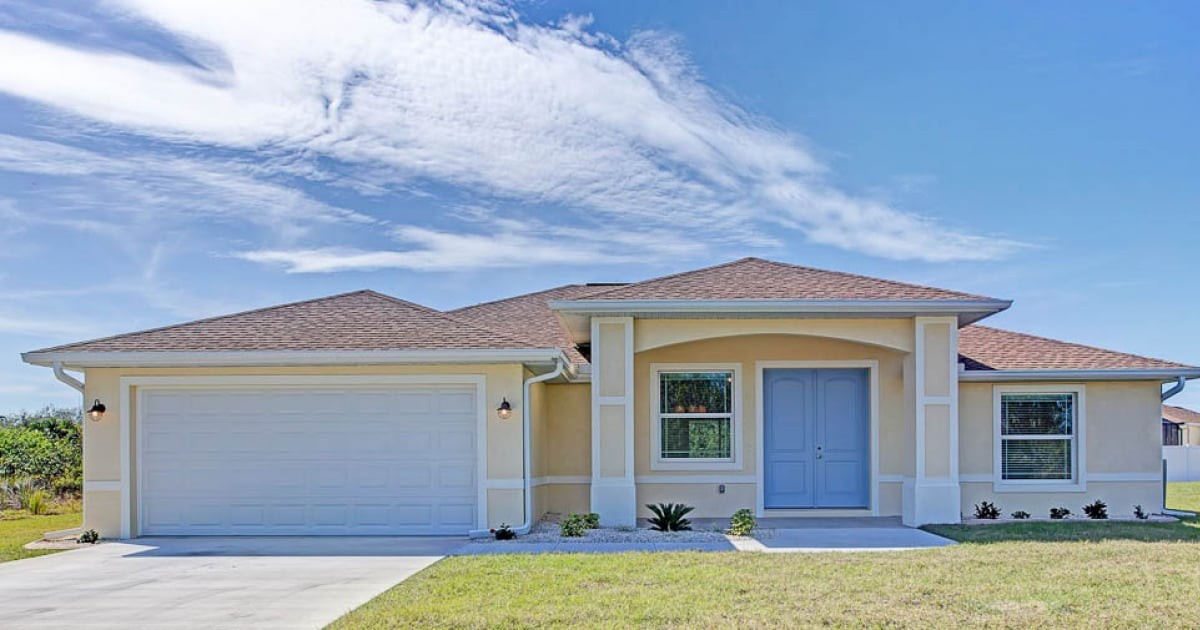
Researchers from Florida International University (FIU) and the University of Kansas subjected a prefabricated house to winds equivalent to a Category 5 hurricane on Wednesday, aiming to gather data that could be applied in the construction sector.
According to a report by Telemundo 51, the tests will be conducted throughout May at the facility known as "Wind Wall" on the FIU campus in Miami.
They are part of the WiSH project (Wind-Safe Prefabricated Housing, for its acronym in English), an eight-year research initiative led by Dr. Elaina Sutley from the University of Kansas.
The installation "Pared de Viento" at FIU is the only one of its kind in the country capable of generating winds of 150 mph, and it features 12 industrial fans that simulate a category 5 hurricane.
The researchers began tests with winds of 110 mph at 8 a.m., planning to gradually increase the speed to 130 mph and then to 150 mph.
The tested dwelling was installed under the standard of Wind Zone 3, the most stringent requirement in Miami-Dade County, and the highest safety rating for this type of construction according to State Farm, designed to withstand winds of precisely 110 mph.
However, the researchers themselves had already anticipated before the experiment that the housing might disassemble "sooner than expected based solely on low-speed tests."
The regulatory background is central to this research.
"The most important thing about prefabricated homes is that they are governed by a different set of building codes, overseen by the U.S. Department of Housing and Urban Development. And this building code has not been updated in 32 years. Meanwhile, we have made tremendous advancements in engineering and wind science, and we would like to see those changes implemented," stated Dr. Sutley before the experiment.
Prefabricated homes make up more than 8% of the housing inventory in the United States and are the first to be evacuated when hurricane watches and warnings are issued, highlighting the urgency of updating the regulations that govern them.
In contrast, the building codes of Florida for conventional homes in Miami-Dade and Broward require wind resistance of over 170 mph, with debris impact testing and cyclical pressure, creating a significant gap compared to the federal standards that regulate manufactured homes.
The official statement of the project summarizes the purpose of the research: "This research aims to assess best practices for proper installation and hurricane mitigation in these homes, and to help save lives."
The tests on this Wednesday are considered the second to last of the WiSH project, and they are taking place less than three weeks before the start of the 2026 Atlantic hurricane season, which begins on June 1 with a forecast of 13 named storms and six hurricanes according to Colorado State University.
The context is even more delicate considering that Florida lost nearly 300 million dollars in federal funds from the BRIC program of the Federal Emergency Management Agency (FEMA), which was canceled in 2025, thereby weakening the state's ability to prepare for natural disasters.
Filed under: