
Related videos:
The Colorado State University (CSU) published its initial forecast for the 2026 Atlantic hurricane season this Thursday, projecting activity slightly below the historical average.
According to the forecast, there will be 13 named storms, six hurricanes, and two major hurricanes (category 3 or higher on the Saffir-Simpson scale).
The report, prepared by the CSU-RAMS team from the Department of Atmospheric Sciences, places these figures below long-term averages, which are 14 named storms, seven hurricanes, and three major hurricanes.
The main factor behind the moderate forecast is the likely arrival of a moderate to strong El Niño phenomenon during the peak of the season, between August and October 2026.
Although the tropical Pacific currently presents weak La Niña conditions, a rapid transition to El Niño is expected in the coming months, which would increase westerly winds at high altitudes over the Caribbean and the tropical Atlantic, raising vertical wind shear, a factor that complicates the formation and intensification of hurricanes.
CSU also notices mixed signals in the Atlantic: warmer-than-normal waters in the west would favor a more active season, but slightly cooler temperatures in the east would have the opposite effect.
The projected activity for 2026 is equivalent to about 75% of an average season from the period 1991-2020, while the 2025 season was around 105% of that same average.
The estimated Cumulative Cyclonic Energy index for 2026 is 90 units, compared to a historical average of 107, and this April forecast is the lowest number of storms since 2019.
For the first time, the team incorporated a climate model based on machine learning called Ai2 Climate Emulator (ACE2), powered by sea surface temperatures forecasted by the European Centre for Medium-Range Weather Forecasts (ECMWF) model, along with a statistical model and three dynamic models based on data from ECMWF, the UK Met Office, and the European center CMCC.
Phil Klotzbach, the lead author of the report, noted that the closest analog years to 2026 include 2006, 2009, 2015, and 2023, although he clarified that the variation observed in those cases reflects the uncertainty inherent in such an early forecast.
Despite the moderate forecast, researchers warn that the threat does not go away: the chances of impact from major hurricanes are 32% for the entire coast of the United States, 15% for the east coast, 20% for the Gulf coast from the Florida Panhandle to Brownsville, Texas, and 35% for the Caribbean.
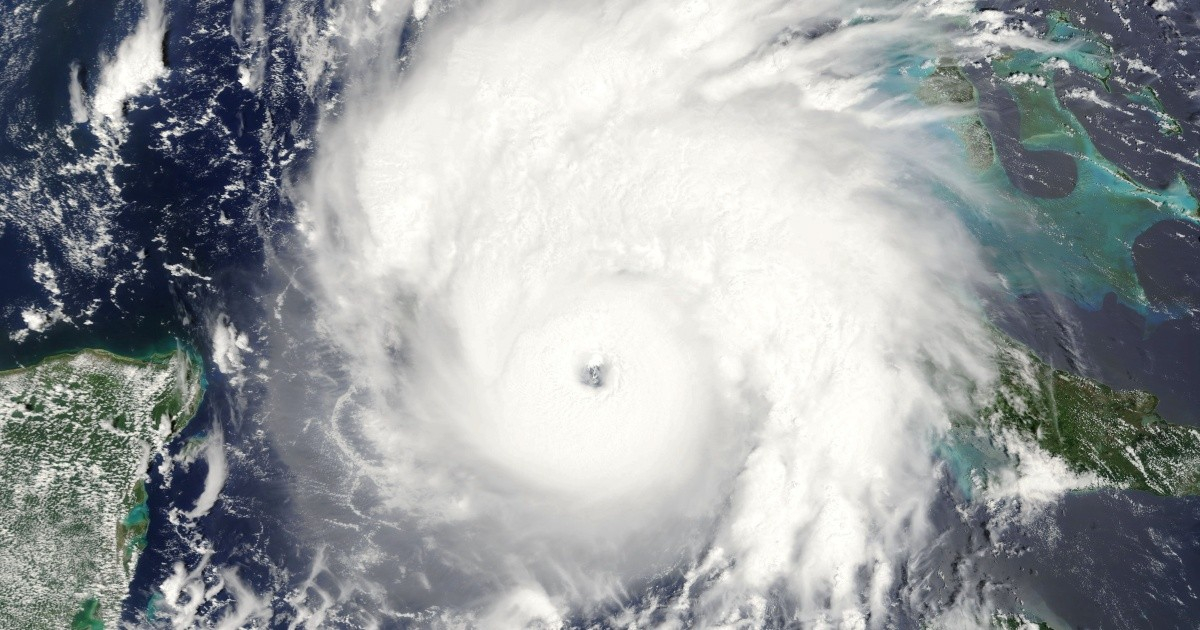
This latest figure is particularly significant for Cuba, which in the 2025 season faced the devastating impact of Hurricane Melissa, a category 5 storm, that affected more than 3.5 million people in the eastern part of the island and damaged over 116,100 homes.
Michael Bell, the team researcher, issued a direct warning to those who may feel confident in a less active forecast: "It only takes one storm near you for it to be an active season for you."
CSU will update its forecast on June 10, July 8, and August 5, dates when the estimates gain accuracy as they approach the peak of the season, which officially begins on June 1.
Filed under: