
Related videos:
The Cuban regime revoked the penitentiary benefit of rapper and activist Yasmany González Valdés and returned him to Company 2 of the Combinado del Este on Tuesday, May 12, just eight days after he enjoyed his first pass in three years of incarceration.
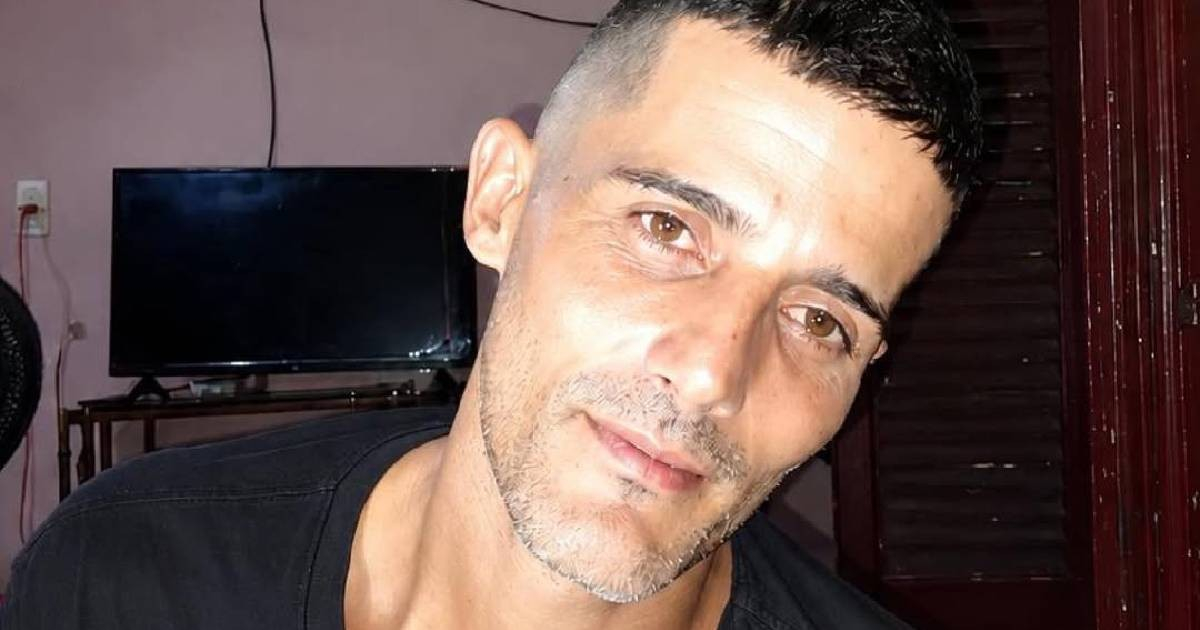
The Cultural Rights Observatory denounced the revocation and specified that the prison authorities themselves informed the activist of the reason: a post he made on social media during his pass on May 4, in which he displayed comparative photographs of his body before and after imprisonment as evidence of the physical deterioration he suffered.
In that post, Yasmany —known as "El Libre"— denounced the contradiction between the official Cuban discourse on human rights and the reality of the island's prisons, and questioned the silence of part of the international community.
The images also displayed tattoos with political messages: "Free or Martyr" and "P11-75," the latter referencing the protests of July 11, 2021 and the 75 political prisoners of the so-called Black Spring.
The activist had foreseen what would happen: "If they revoke me for this publication, the repression against those who tell the truth will become even more evident."
For the Observatory of Cultural Rights, "the revocation of the pass and its immediate return to Combinado del Este constitute a direct punishment for publicly expressing oneself about the inhumane prison context."
The organization went further to state that "the Cuban penitentiary system uses conditional benefits not as tools for reintegration, but as mechanisms of obedience and silencing."
González Valdés, born in Artemisa on September 2, 1992, is serving a four-year sentence for "propaganda against the constitutional order" under Article 124 of the Cuban Penal Code, after being arrested on April 20, 2023, for his alleged involvement in the painting of anti-communist graffiti in Havana.
He was admitted to Combinado del Este on May 29, 2023, and since then, his health has been a constant cause for concern.
In September 2025, his wife Ilsa Ramos described the condition of the political prisoner starkly: "He looked like a skeleton, with a sunken face, very thin arms, his pants falling down due to extreme thinness, and without any teeth."
In February 2026, Yasmany sent a letter from prison denouncing violations of his rights, including the systematic denial of parole.
The case is documented by PEN International on its list of imprisoned artists in Cuba in 2026, an organization that also reports that in 2022 he was fined 3,000 Cuban pesos —approximately 125 dollars— under Decree Law 370 for publishing complaints against the government on social media.
The history of repression against González Valdés is set against a backdrop of massive repression: according to Prisoners Defenders, Cuba had 1,192 political prisoners in December 2025, a historical record.
"When the voice is silenced, the body ends up reduced to an archive," concluded the Observatory of Cultural Rights in denouncing the case of an activist whose physical scars became the pretext for extending his punishment.
Filed under: