
Related videos:
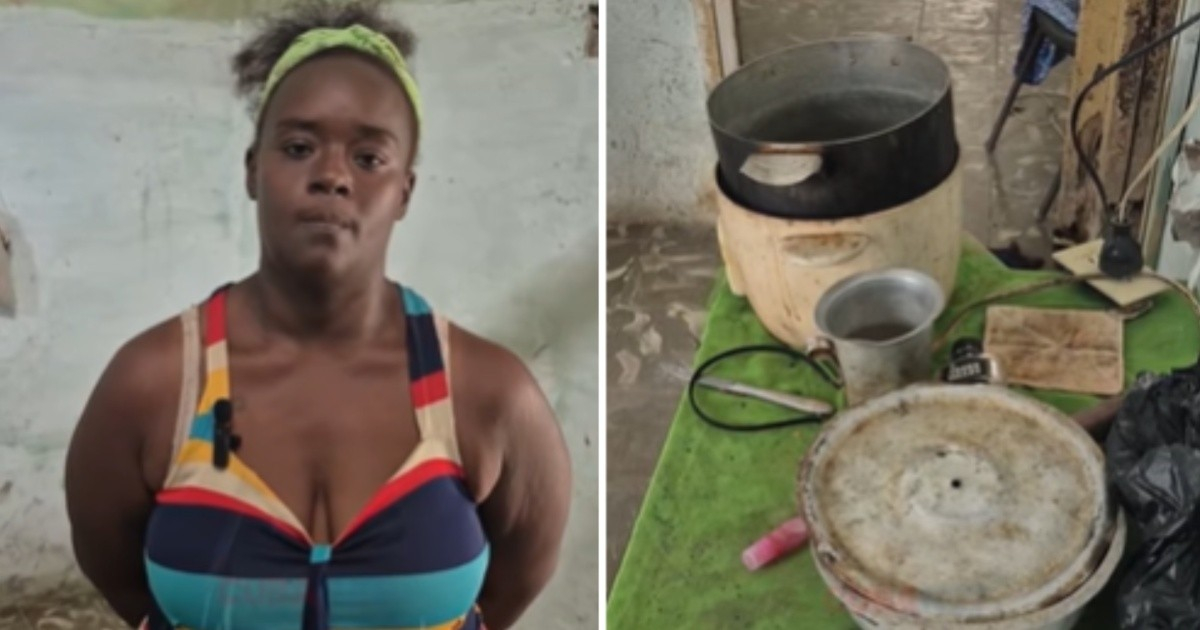
Yanelis Beatriz Torres Pedro, a 31-year-old single mother living in the Havana municipality of Guanabacoa, reported to CubaNet that she and her two underage daughters are going hungry and are surviving in extremely precarious conditions, without any support from the Cuban state.
"Many mothers are struggling a lot; even to the point of hunger," declared Torres Pedro, who is raising two girls aged 10 and 13 on her own after the death of her mother, the only person who provided her support.
"I have nowhere to cook; we had to throw away the beds because they had bedbugs... And this is how I live alone with my daughters. Since my mother passed away, we have been suffering from hunger," the woman recounted.
About two years ago, the Municipal Directorate of Labor and Social Security of Guanabacoa revoked her pension of just over 1,000 pesos, arguing that since her youngest daughter was now attending school, she "was fit to work."
"It was a checkbook for over 1,000 pesos that was taken from me when my mother passed away. They told me that since the youngest child was in school, I could now work," Pedro Torres recounted.
However, the woman cannot find employment because she has no one to take care of her daughters: the oldest suffers from vagal crises, and the youngest has an emotional disorder diagnosed after the grandmother's death, which is being treated with carbamazepine.
When Pedro Torres presented his daughters' medical certificates to the official at the Ministry of Labor and Social Security, the response was devastating: "She told me that she didn't care at all about that."
"I have often had to go without food, just like the girls, because there is nothing," she reported.
It is the neighbors in the neighborhood who support the family: Pedro Torres sends his daughters to the homes of neighbors to receive rice and other food items.
The teacher of the youngest daughter also helps with the school snacks, and the Catholic Church provides her with milk and bread in the mornings so that the girl can go to school.
"Here, the government does nothing; they didn't even come to ask me after my mom passed away, nothing, not even to see how the girls are doing, nothing," Torres Pedro stated.
This is not the first cry for help from this mother. In March 2021, Torres Pedro had already publicly denounced her situation of helplessness in the context of the so-called "Ordering Task," when the authorities also refused to help her.
That complaint led to her being granted a check for 1,300 pesos a month, but five years later, the State withdrew that support, and the situation is even more dire.
"Today I am here again to denounce the injustice that is being committed against me and my daughters," she declared.
The case of Torres Pedro reflects a food crisis of historic proportions in Cuba.
A survey from the Food Monitor Program published on May 6 revealed that 33.9% of Cuban households reported that at least one person went to bed hungry during 2025, a figure that represents an increase of 9.3 percentage points compared to 2024.
79.7% of the surveyed Cubans attribute the food crisis to poor state administration, while only 6.4% primarily blame the U.S. embargo.
"It is true that a little over 1,000 pesos is not enough for anything given how expensive everything is, but it's worse to have nothing, like now," summarized Torres Pedro with a phrase that captures the reality of thousands of Cuban families.
Filed under: