
Related videos:
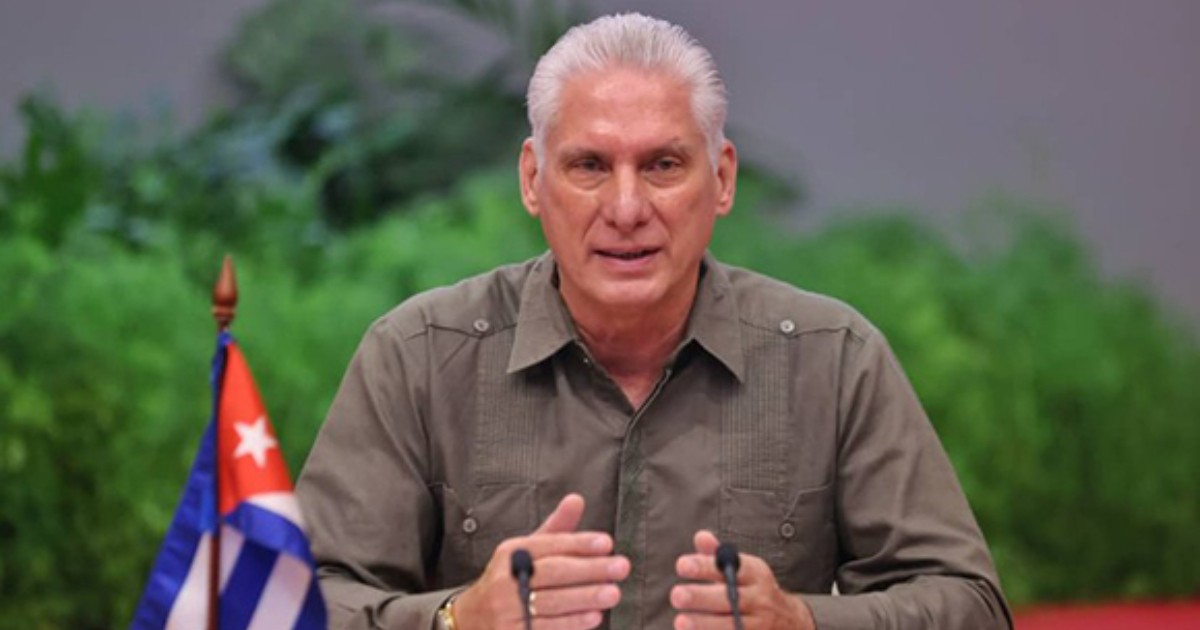
Miguel Díaz-Canel's statements this Thursday regarding Cuba's supposed preparedness for a potential hantavirus risk triggered a flood of criticism on social media, where many Cubans questioned how the regime could speak of healthcare capacity while the scarcity of basic medications continues in pharmacies and hospitals.
In a post on Facebook, the leader stated that the country has “a solid surveillance system” and “the valuable experience of COVID-19” to detect and address epidemiological risks “in a timely manner.” He also assured that “there is no reason for alarm, but there is a need for alertness and individual responsibility.”
The statements were published following a meeting led by Díaz-Canel with experts and scientists to assess the international situation regarding hantavirus, after the outbreak identified on the MV Hondius cruise, which had reported 11 positive cases and three fatalities as of May 13.
Many comments focused on the proliferation of garbage and rodents in cities across the island. "We have a breeding ground outdoors, not on ships or cruise liners," wrote one user, while another warned that "Cuba has all the epidemiological conditions for the transmission of any virus."
References to landfills and unsanitary conditions were constant. "First things first: start by collecting the garbage," demanded a netizen. From Holguín, another Cuban commented: "The garbage is consuming us," while dozens of users insisted that the health issue begins in the streets and not at the borders.
There were also many criticisms regarding the situation of hospitals and pharmacies. "There isn't even a single IV drip in the hospitals," wrote one commentator. Another person expressed being "tired of hearing that Cuba is a medical powerhouse when it doesn't have medications for people with various conditions."
Several users also recalled the official management during recent outbreaks of dengue, chikungunya, and hepatitis. "They acted the same way with chikungunya until half the country got sick," noted a woman. Another comment summarized the distrust toward the government’s narrative: "They couldn’t control chikungunya or the hepatitis outbreak, and now they say Cuba is prepared."
The mockery also targeted the constant official meetings and the disconnection between political discourse and everyday reality. “The country that broke records in meetings and doesn't produce,” one user ironically remarked. Another wrote: “A solid surveillance system? Just walk the streets and see the mountains of garbage and the empty pharmacies.”
Some comments even accused the government of trying to divert attention from the country's internal crisis. "Now they entertain the people for a while with this," wrote one user, while another message captured the prevailing tone of the reactions: "It's unclear whether it's a joke or mockery."
The contrast between the official discourse and reality can be documented with figures from the government itself: only 30% of the basic medication inventory is available nationwide, as acknowledged by the Minister of Public Health before the National Assembly.
Of the 651 essential drugs, 461 are in total shortage or low availability in 2026.
In January of this year, the country had to import aspirin made in China through bilateral cooperation, which led to widespread mockery regarding the so-called "medical powerhouse."
A survey of 1,788 Cubans published on May 11 revealed that 54.2% face severe barriers to obtaining medications and 48.1% do not have access to adequate medical care.
Hospitals are operating with power outages of up to 20 hours a day, with non-urgent surgeries suspended and patients sleeping on the floor due to a lack of beds.
In that context, Díaz-Canel's assertion that Cuba has "the proven capacity of our science to protect our people" was received as propaganda disconnected from everyday life.
In the meeting, Dra. Carilda Peña García, Deputy Minister of Public Health, also spoke, clarifying that hantavirus has no historical precedents in Cuba and that none of the 14 native rodent species on the island are reservoirs of the virus.
However, he warned that the incubation period can last up to eight weeks, which means that infected individuals may enter the territory without visible symptoms.
Authorities announced the enhancement of health inspections at ports, airports, and marinas to detect rodents in aircraft and ships, while the WHO assessed the global risk as low and its director-general stated that hantavirus "is not another COVID-19."
Filed under: