
Related videos:
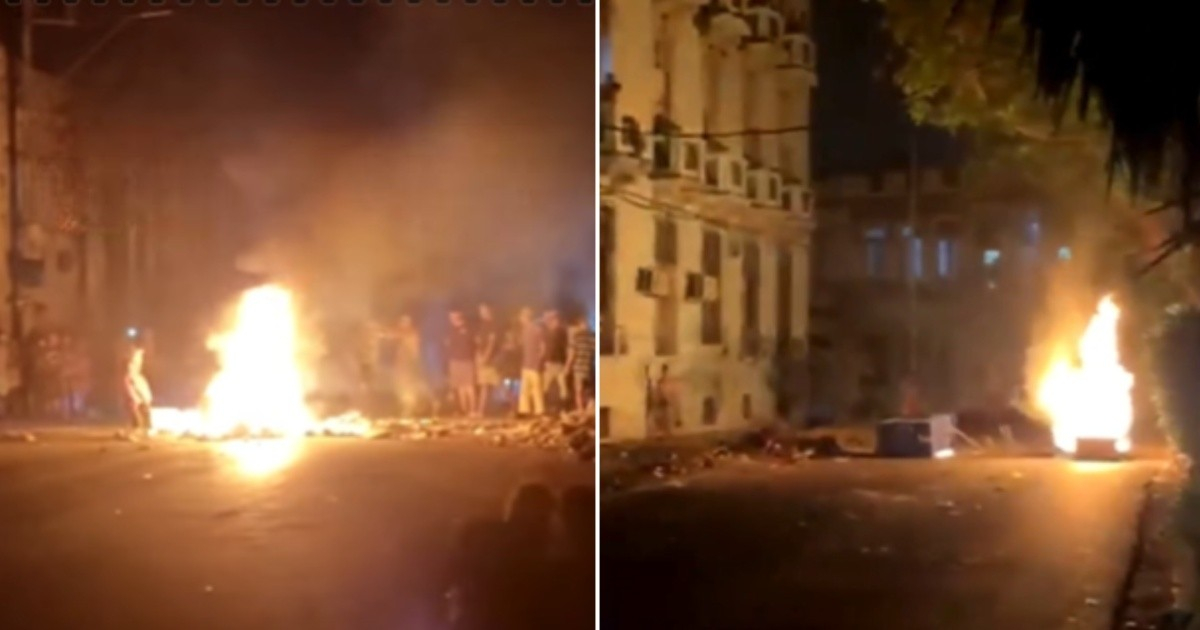
Residents of the municipality of Marianao in Havana took to the streets in the early hours of Wednesday to protest against more than 20 consecutive hours without electricity, blocking the intersection of 100th and 51st Streets in a pot-banging demonstration captured in videos circulated on social media.
The journalist Mario J. Pentón reported on the protests in Marianao after more than 20 hours without electricity shortly after three in the morning, while the outlet Mag Jorge Castro described the scene: "Havana in the streets tonight... images coming from the area of 100 and 51, Marianao."
The images show a large group of people gathered in the dark, with motorcycles and bicycles, on a street without public lighting in front of dilapidated buildings.
According to the independent media outlet La Tijera News, residents went out "in complete darkness to express their outrage at the endless blackouts, the lack of food, the collapse of basic services, and the total abandonment experienced by the Cuban people."
The protest in Marianao is not an isolated incident, but rather the latest episode in a wave of demonstrations that has been shaking Havana since May 12.
On Wednesday, neighbors from Reparto Bahía staged a pots and pans protest with slogans such as "Down with the dictatorship!", while residents of San Miguel del Padrón protested in front of the municipal government headquarters demanding "Electricity and food!".
On Tuesday, neighbors from Luyanó blocked Calzada de Concha in a similar pot-banging protest, and in Nuevo Vedado, residents took to the streets after 24 consecutive hours without electricity.
Marianao had already been the scene of protests in March 2026, when residents of the El Palmar neighborhood burned trash for light and sang the national anthem as a sign of protest.
The magnitude of the energy crisis was revealed this week when the Minister of Energy and Mines, Vicente de la O Levy, publicly acknowledged that Havana experiences blackouts lasting between 20 and 22 hours daily, with only two to four hours of electrical service in some circuits.
The electricity deficit reached a record of 2,113 MW on Wednesday at 8:40 PM, with a availability of only 1,230 MW against a demand of 3,250 MW.
The minister attributed the situation to a fuel shortage: Cuba did not receive any supply ships between December 2025 and the end of March 2026.
A Russian donation of 100,000 tons of crude oil, processed at the Cienfuegos refinery, temporarily alleviated the crisis in April, but the fuel ran out in early May, just as demand surged due to high temperatures.
Popular discontent has been escalating for months. The Cuban Conflict Observatory recorded 1,133 protests in April 2026, a 29.5% increase compared to the same month the previous year, with 176 documented repressive acts that month.
Miguel Díaz-Canel himself admitted that the situation in Cuba is “particularly tense”, while the sound of pots continues to echo in the neighborhoods of Havana night after night.
Filed under: