
Related videos:
The U.S. Embassy in Havana issued a this Thursday, warning about the growing instability of the national power grid and the popular protests that occurred on Wednesday in multiple locations across the island's capital.
The diplomatic statement, published on the social media platform Facebook, describes the situation in straightforward terms: "Cuba's national power grid is increasingly unstable. Prolonged power outages, both scheduled and unscheduled, occur daily across the country, even in Havana."
The alert indicates that the power outages are affecting water supply, lighting, refrigeration, and communications, and that the fuel shortage is causing long lines at gas stations across the country.
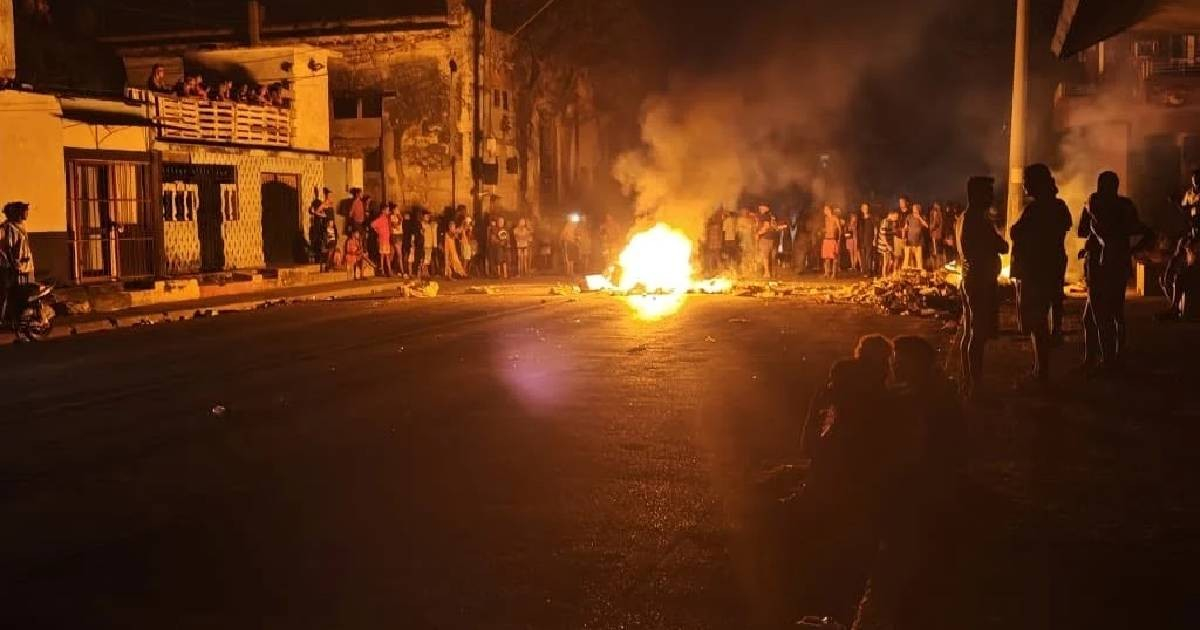
The immediate trigger was the day of protests on Wednesday, May 13, when protesters took to the streets across Havana with pot-banging and street blockades to demand electricity and food.
The protests spread across the municipalities of Marianao, Nuevo Vedado, Luyanó, Santos Suárez, San Miguel del Padrón, Playa, and Puentes Grandes, with slogans such as "Electricity and food" and "Down with the dictatorship."
The embassy acknowledged in its statement that, although the protests were not directed against American citizens, "some have resulted in aggressive police repression against Cuban protesters."
Journalistic reports documented assaults on protesters in Playa municipality by police agents, and the organization Cubalex recorded at least 14 arrests in Havana during the protests.
Meanwhile, a massive internet outage in Havana was recorded amid the protests, seen as a deliberate communication blackout by the regime.
The energy crisis underlying these events reached historic levels: the Electric Union reported a record deficit of 2,113 MW at 8:40 PM on Wednesday, with only 1,230 MW available against a demand of 3,250 MW, leaving approximately two-thirds of the country without electricity.
The Minister of Energy and Mines, Vicente de la O Levy, publicly acknowledged that "Cuba is without fuel" and described the situation as "acute, critical," and "extremely tense," acknowledging power outages of 20 to 22 hours daily in some circuits of the capital.
Cuba did not receive any fuel ships between December 2025 and late March 2026, and in April only one of the eight vessels the country needs monthly at a minimum arrived.
The embassy advised its citizens to avoid crowds, conserve fuel, water, food, and charge in mobile phones, and to prepare for "a significant disruption."
This is not the first alert issued by the diplomatic representation this year: it already did so on February 3, March 4, March 16 —when a total blackout left the country without power for 29 hours and 29 minutes—, March 20, and April 30.
The Cuban Conflict Observatory recorded 1,245 protests in March 2026 —the highest monthly figure since July 11— and 1,133 in April, a 29.5% increase compared to the same month last year, reflecting a sustained escalation of public discontent in response to the energy collapse and shortages imposed by the dictatorship.
Filed under: