
Related videos:
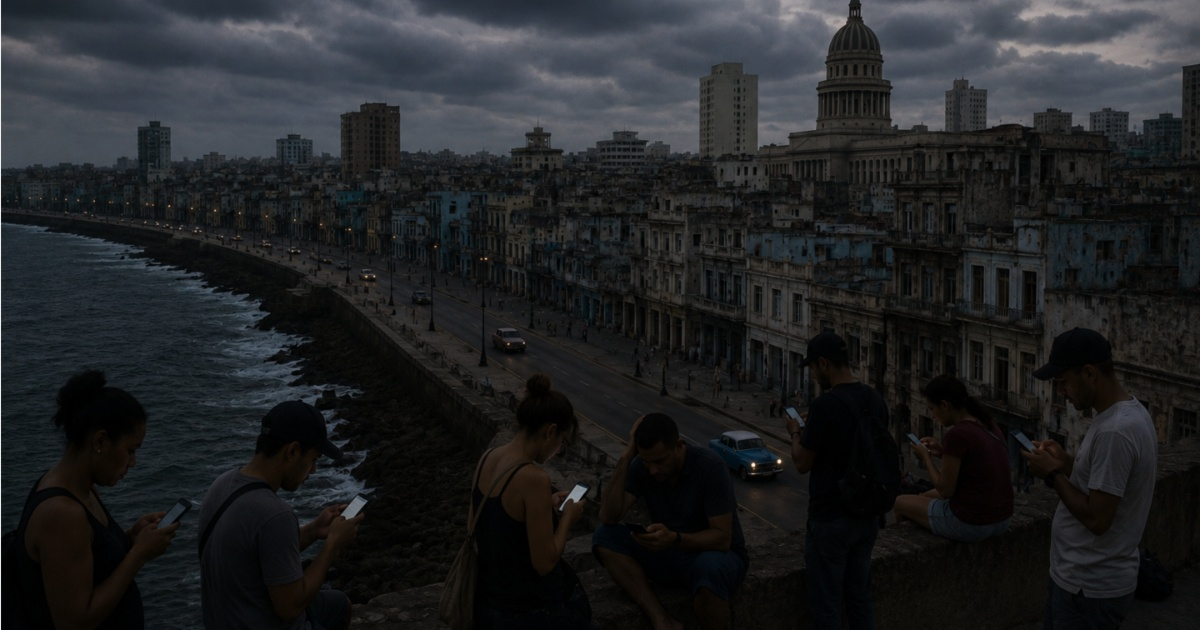
In the early hours of this Thursday, Cuban journalists and activists reported a massive internet outage in Havana as a wave of protests spread over the energy crisis in several municipalities of the capital.
«The regime cuts off communications amid the protests in the capital,» wrote journalist Mag Jorge Castro (@MagJorgeCastro) on X at 2:48 AM, noting that he was informed of a «massive internet outage in Havana.» Journalist Mario J. Pentón also shared the news on his social media.
The outage occurs after two days of intense social unrest. Between May 12 and 13, residents of Luyanó blocked Calzada de Concha during a saucepan protest against the blackouts, while in the Reparto Bahía another saucepan protest erupted with the slogan "Down with the dictatorship!".
In San Miguel del Padrón, protesters gathered in front of the municipal government headquarters chanting "Power and food!", while in Nuevo Vedado, residents protested after going without electricity for 24 consecutive hours.
This Thursday, police harshly beat protesters in the Playa municipality, according to a video released by Pentón.
The catalyst for the protests is the energy crisis. The Minister of Energy and Mines, Vicente de la O Levy, acknowledged this Thursday that blackouts in Havana exceed 20 to 22 hours a day and warned that the situation will worsen as the Russian oil donated in March runs out.
The Electric Union reported on Wednesday a generation deficit of 2,113 MW, with a availability of only 1,230 MW against a demand of 3,250 MW.
The pattern of cutting off internet access during protests has documented precedents in Cuba. During the mobilizations on July 11, 2021, NetBlocks confirmed the blocking of WhatsApp, Facebook, Instagram, and Telegram. On September 30, 2022, during the protests following Hurricane Ian, the same organization recorded a "near-total collapse of internet traffic from Cuba". In March 2026, during the total blackout of the National Electroenergetic System, Cloudflare detected a 65% reduction in internet traffic from the island.
The state monopoly ETECSA controls all telecommunications infrastructure in the country, which facilitates centralized shutdowns whenever the regime seeks to halt the spread of images and testimonies from protests.
According to Cubalex, at least 14 people have been arrested in Havana linked to pan protests since March 6. The Cuban Observatory of Conflicts recorded 1,133 protests in April 2026, a 29.5% increase compared to the same month of the previous year, reflecting a sustained escalation of social unrest on the island.
Filed under: