
Related videos:
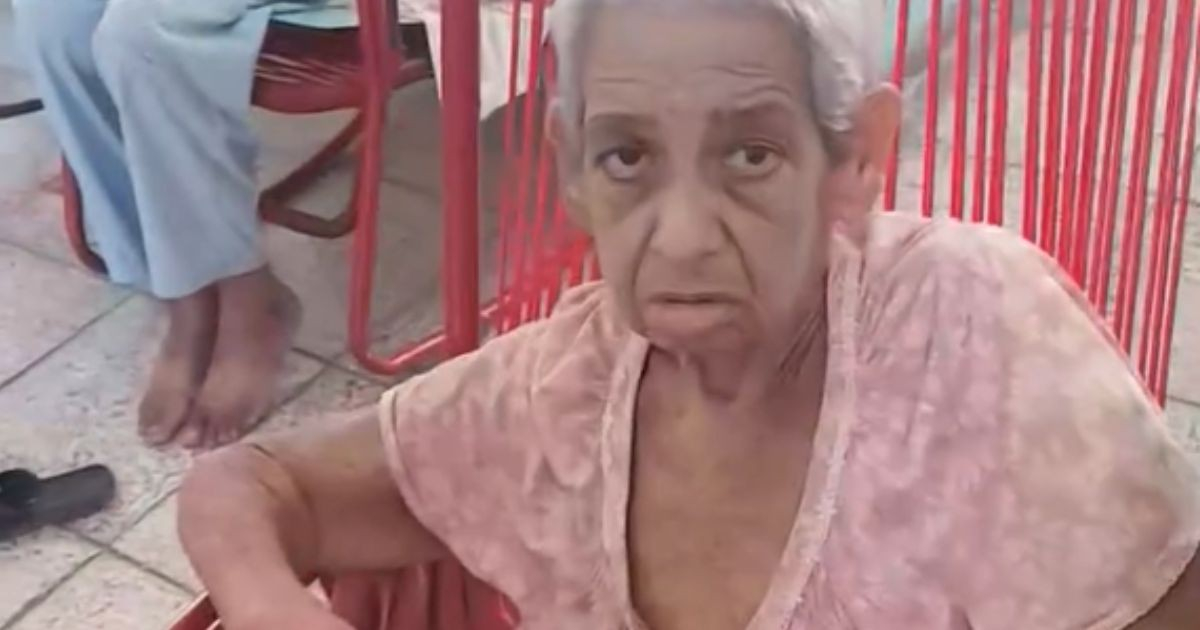
A Habanero identified as Alfonso Vera, a resident of the Los Ángeles neighborhood in the municipality of San Miguel del Padrón, posted a reel on Facebook showcasing the conditions in which his neighbor Luci is living, currently residing in a nursing home located on Beltrán Street and San Miguel Boulevard, in the Jacomino district of the Cuban capital.
In the video, Vera reveals that the elderly woman does not have her own cup or spoon. "Cup and spoon. I have to let mom take the spoon so that other people can use it," the man is heard saying as he walks through the place. The situation forces Luci to wait for another resident to finish using the utensils before she can eat.
The food that the residents receive is no better. As Luci herself told her neighbor, the typical menu at the asylum consists of "pea water and boiled spaghetti." Vera described it with a single word of astonishment in her post: "ñoooo."
To alleviate that precarious situation, Vera brought Luci soaps, underwear, cookies, house coats, and condensed milk—items sent by the elderly woman's daughter from Spain through a niece living in Cuba. "Lucy is recovering," said the man in the video, although the context of the place leaves little room for optimism.
Vera also made a public appeal to those who want to help, arguing that "with 5 or 10 pesos sent, we can buy a few more things and a good lunch." She posted her address and a bank card number to receive donations intended for the elderly woman. The reaction on social media was immediate: the reel garnered over 9,300 views and hundreds of reactions.
The case of the asylum in Jacomino is not an exception. Cuba is the most aged country in Latin America and the Caribbean, with more than a quarter of its population aged 60 or older, according to the National Office of Statistics and Information (ONEI). This demographic reality stands in stark contrast to a care system in collapse.
The Cuban Observatory of Human Rights (OCDH) documented in September 2025 that eight out of ten Cubans over 61 years old have had to skip breakfast, lunch, or dinner due to lack of money or food shortages. The same report noted that 14% of those over seventy continue working after retirement because their pension is not sufficient to cover basic products. According to a survey conducted by the Independent Trade Union Association of Cuba, 99% of Cuban retirees do not meet their basic needs for food, housing, and medicine.
The report "In Cuba There is Hunger" from the Food Monitor Program (2024) added that 96.9% of those surveyed lost access to food due to inflation and that one in four Cubans goes to bed without dinner. Pensions, which do not exceed 4,000 Cuban pesos per month, are insufficient to acquire the most basic necessities.
Similar scenes to those in Jacomino have been documented in other provinces. When Miguel Díaz-Canel visited a nursing home in Manicaragua, Villa Clara, the images contrasted sharply with the reality of visibly malnourished residents. In Havana, an elderly woman in Boyeros summed up her situation with a devastating phrase: "The only thing I had to eat was a little bit of beans."
In light of the evidence of collapse, the Cuban government authorized in February 2026, through Agreement 10249/2025, for non-state actors to open private residences for the elderly. However, the first of these reported facilities, the TaTamanía Senior Residence in El Vedado, charges 1,080 dollars per month for a spot in a double room, an amount unattainable for the vast majority of Cubans. The gap between this price and the reality of a home where the elderly share a spoon starkly highlights the state of elder care in today's Cuba.
Filed under: