
Related videos:
Amazon and Walmart have turned the rural areas of the United States into the new battleground of retail, competing to expedite deliveries in communities that large retailers overlooked for decades, considering them unprofitable.
According to a report from the investment bank Morgan Stanley, this market could be worth up to $1 trillion in annual sales, which represents 20% of all retail purchases in the country, excluding cars and gasoline.
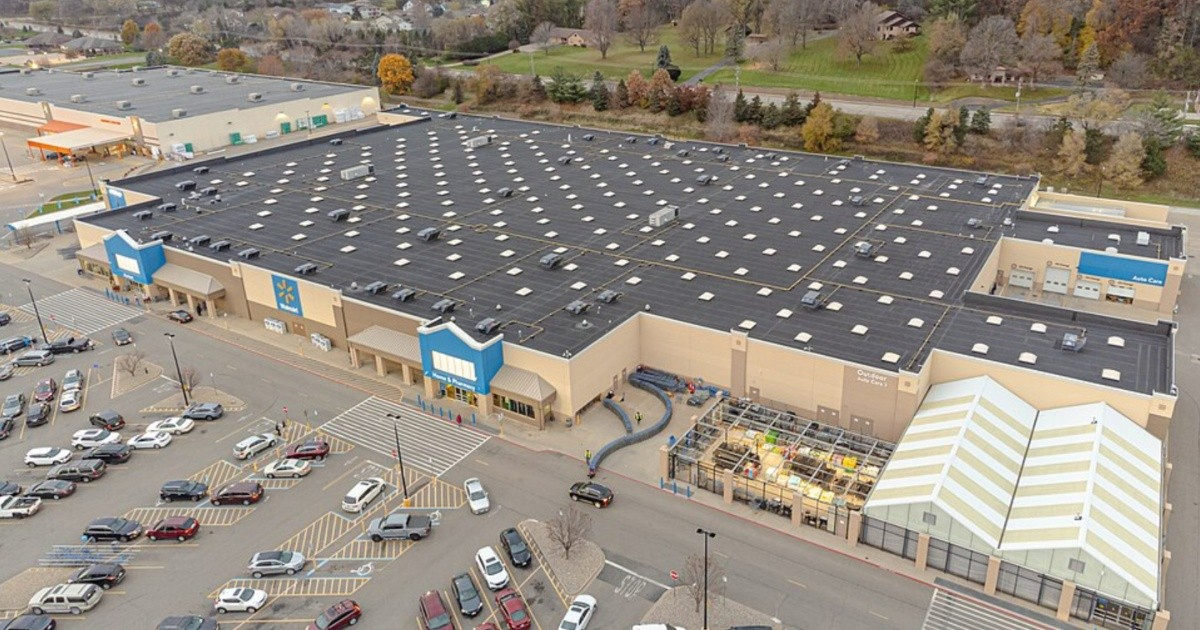
Walmart has a structural advantage in this dispute.
Approximately 90% of residents in the United States live within 10 miles of a Walmart store, and 45% of its full-service Supercenters are located in areas with fewer than 20,000 inhabitants, according to the same report from Morgan Stanley.
The chain has invested in robotic technology at its physical stores to select and package online orders, and has adopted a hexagonal mapping system that replaces traditional postal code boundaries.
That system allowed for same-day delivery to an additional 12 million households.
Doug Sanders, senior director of order fulfillment at Walmart, explained that automation helped a Supercenter in Bentonville, Arkansas, cover deliveries within a 30-mile radius, compared to just 10 miles a few years ago.
Amazon, for its part, responded with an investment of $4 billion to deliver same-day or next-day service to more than 4,000 small cities, towns, and rural communities.
Once the expansion is completed, the company will be able to deliver over 1 billion additional packages per year to more than 13,000 ZIP codes and 1.2 million square miles.
The CEO of Amazon, Andy Jassy, noted in his annual letter to shareholders that the average monthly number of customers receiving same-day deliveries doubled in 2025 compared to the previous year.
"While other companies have been distancing themselves from these customers, we have been reaching out to them," Jassy wrote.
The company also uses artificial intelligence tools to forecast demand and opens small microcenters in rural areas.
Competition is intensifying in a context of demographic change: since the pandemic, peri-urban communities located up to 60 miles from major cities are among the fastest-growing in the United States, according to the Census Bureau.
The average income of households in rural counties increased by 43% between 2010 and 2022, reaching nearly $60,000 annually, according to the consulting firm McKinsey.
This new rural purchasing power coincides with the partial withdrawal of traditional logistics operators: FedEx, UPS, and the United States Postal Service have reduced or slowed down deliveries in some rural areas to focus on more profitable businesses, creating a gap that Amazon and Walmart are aiming to fill.
The dispute is not limited to these two giants.
Dollar General has expanded its same-day delivery to more than 17,000 of its 20,000 stores, with over 80% of orders arriving in an hour or less, according to its CEO Todd Vasos.
Tractor Supply, a specialist in rural lifestyle, announced plans to add more than 150 delivery centers this year, bringing the total to 375, reaching more than 15 million customers.
Both and Walmart are also expanding the use of delivery drones to speed up shipments from stores or order fulfillment centers, a technology that is emerging as the key differentiator in this logistics race to conquer rural America.
Filed under: