
Related videos:
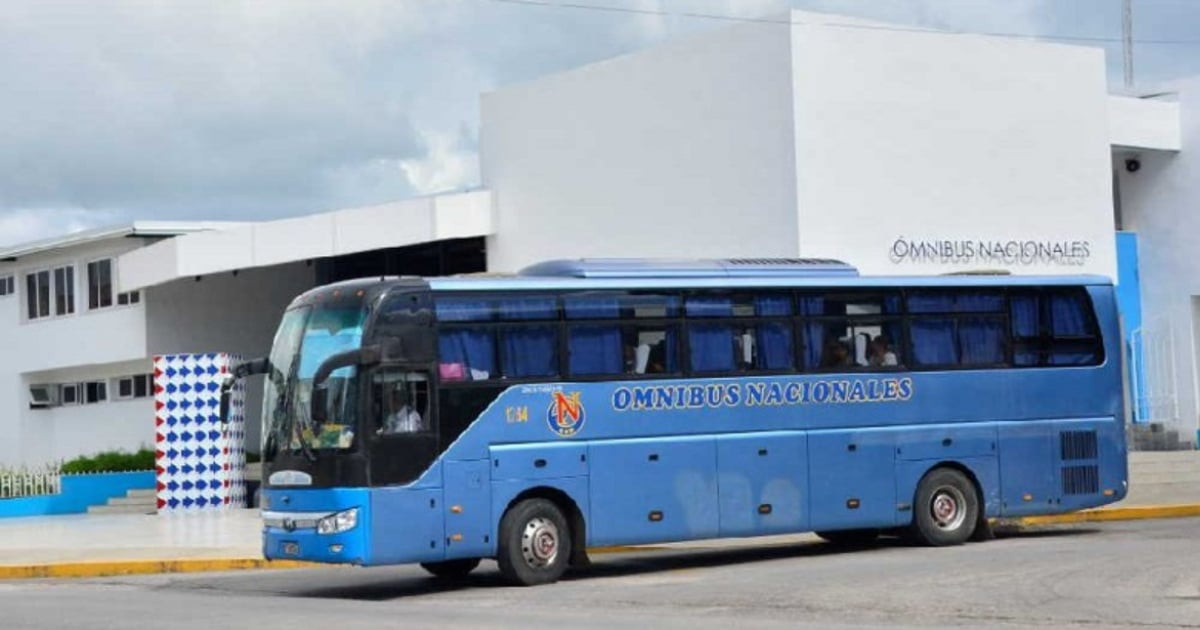
The Cuban Ministry of Transportation announced this Friday a significant reorganization of its main services due to fuel shortages, with gradual cuts to the Ómnibus Nacionales, trains, maritime routes, and domestic air links that will begin to take effect from June 18.
The minister Eduardo Rodríguez Dávila presented the measures at a press conference, framing them within the Government Program and prioritizing services related to the life of the population and the functioning of the economy, reported the Facebook page of the magazine Hola Habana from Canal Habana.
As for Ómnibus Nacionales, the current schedule will remain in effect until June 17th. Starting on the 18th, departures between Havana and the provincial capitals will be reduced to three times a week, including Pinar del Río. The routes to Manzanillo and Baracoa will change to one departure per week.
The maritime service between Nueva Gerona and Batabanó will operate with departures on Tuesdays and Saturdays until June 16. Starting June 20, the route will run only on Saturdays.
National trains to Santiago de Cuba, Guantánamo, Holguín, and Bayamo-Manzanillo will maintain their current schedule for the rest of May and the first half of June. After that, they will be reduced to one round trip approximately every two weeks.
Cuban airports will remain operational, national air links to Santiago de Cuba, Holguín, and Nueva Gerona, the Viazul service, and the Medibus coordinated with the Ministry of Public Health.
Territorial authorities should prioritize essential urban, suburban, rural, and intermunicipal routes based on the availability of fuel in each area, the source specified.
The regime also announced that the incorporation of 200 electric cars for the healthcare system will be expedited and that transport services for dialysis patients will be protected.
The announcement comes just days after the Energy Minister admitted the complete lack of fuel. "We have no fuel, no diesel, only accompanying gas," stated Vicente de La O Levy on Wednesday, May 13.
The electricity generation deficit reached an annual record of 2,113 MW on Tuesday, May 12, with only 1,230 MW available against a demand of 3,250 MW, a situation that keeps the country on the brink of a massive blackout.
Venezuela halted its oil shipments following the capture of former president Nicolás Maduro, and Mexico nearly suspended its supplies in January 2026. The only temporary relief was a Russian shipment of 730,000 barrels that arrived on March 31, which was depleted by early May.
This Friday, the state corporation Cimex implemented a new price increase for gasoline in foreign currency, setting the price of special gasoline B100 at 2.60 dollars per liter, almost double its previous price, while in the informal market, the liter was trading between 4,000 and 6,000 Cuban pesos, equivalent to between seven and 12 dollars at the informal exchange rate.
As part of the energy transformation strategy, the Ministry of Transport is promoting the launch of electric tricycles, eco-mobiles, and solar charging stations. However, these initiatives are unlikely to compensate in the short term for the collapse of a transportation system that, in provinces like Ciego de Ávila, operated only two out of 135 routes in March 2026.
Filed under: