
Related videos:
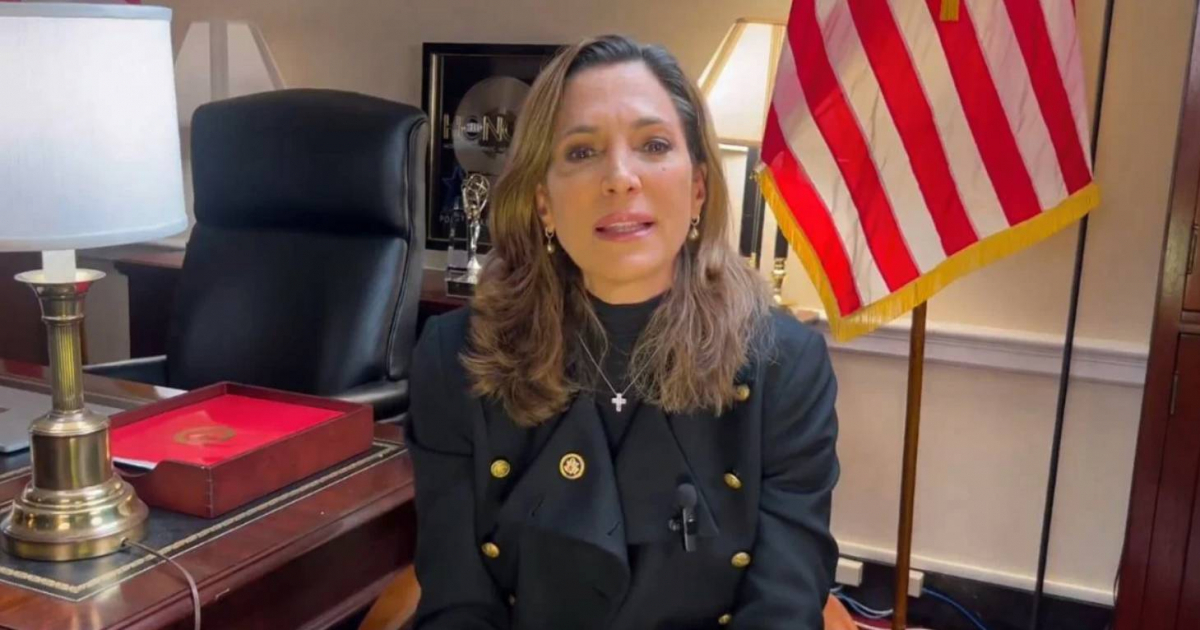
The Republican congresswoman María Elvira Salazar warned this Sunday that the capabilities of military drones allegedly acquired by the Cuban regime pose "a direct threat to national security" in the United States, reacting to an exclusive report by Axios indicating that Cuba has reportedly incorporated around 300 of these units.
In her post on X, Salazar cited an exclusive by journalist Marc Caputo from Axios, who reported that the Cuban regime has reportedly begun discussing plans to use those drones against the Guantánamo naval base, U.S. military ships, and possibly Key West, just 90 miles from Havana.
"The world has already seen what hostile regimes can do with drones, and those capabilities in the hands of the Cuban regime, just 90 miles from Florida, should concern all Americans," the congresswoman wrote.
"A dictatorship aligned with the adversaries of the United States operating so close to our shores is not just a regional problem. It is a direct threat to our national security," Salazar added.
According to a report by Axios, based on intelligence sources, Cuba has reportedly been acquiring attack drones from Russia and Iran since 2023, and these units are believed to be stored in various locations within the island.
A senior official from the Trump administration cited by the outlet noted that the concern is heightened by the combination of those drones with the presence of Iranian military advisors in Havana and Russian and Chinese signals intelligence facilities on Cuban territory.
The report is a journalistic scoop based on classified intelligence and statements from anonymous officials, so the figure of "more than 300 drones" should be regarded as an allegation pending official confirmation.
The alert from Salazar comes days after Secretary of Defense Pete Hegseth confirmed before Congress that the Cuban regime poses a threat to the national security of the U.S., in response to a direct question from Congressman Mario Díaz-Balart on May 12.
In that same hearing, Hegseth confirmed that Russian ships, including the nuclear submarine Kazán, have used Cuban ports, and he mentioned the Russian intelligence complex in Lourdes as an additional point of concern.
The context is one of maximum diplomatic tension. Last Wednesday and Thursday, the CIA director, John Ratcliffe, made a historic visit to Havana where he conveyed a message from President Trump: a willingness to engage in dialogue on economic and security issues, but conditioned on "fundamental changes" in Cuba.
The CIA even published official images of that visit on X with the location "Havana, Cuba," something unusual for an intelligence agency, and warned the regime that "the window of opportunity will not remain open indefinitely."
Salazar has maintained a consistent stance in May regarding Cuba as a national security threat: on May 12, he described the situation as "a clear and present threat to the United States" following Hegseth's testimony, and on May 14, he stated that "the United States cannot pretend" to ignore the Cuban crisis.
Since February 2026, the U.S. has intensified reconnaissance flights near Cuba—at least 25 spy flights according to a report from The New York Times on May 13—against a backdrop of a sustained hardening of Washington's stance toward Havana.
Filed under: