
Related videos:
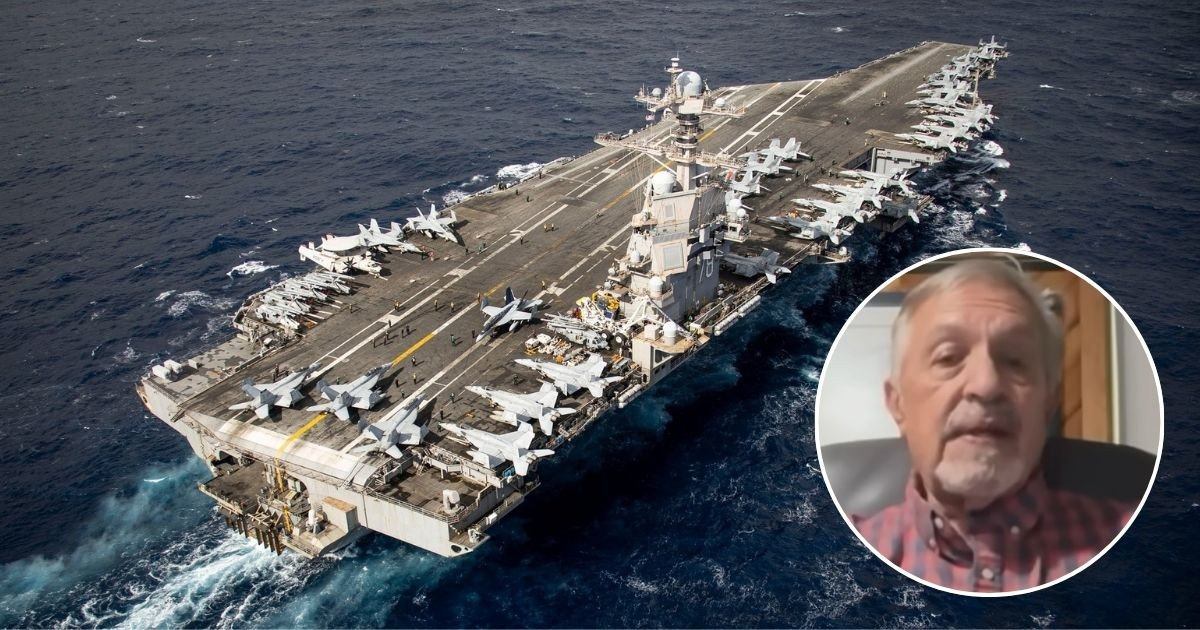
Retired Colonel Eric Rojo, a political analyst for the United States Army, warned this Saturday that President Donald Trump's strategy is to "cast a very large shadow over Cuba" to force a negotiation and a regime change, following the return of the USS Gerald R. Ford aircraft carrier to the Norfolk naval base in Virginia, after nearly 11 months of continuous deployment.
The nuclear giant docked, escorted by the destroyers USS Bainbridge and USS Mahan, completing 326 days at sea, the longest deployment of a U.S. aircraft carrier since the Vietnam War.
The Secretary of War Pete Hegseth was present at the welcome ceremony and posted on his X account: "To the warriors of the USS Gerald R. Ford Carrier Strike Group — WELCOME HOME."
Rojo, interviewed on the program "La Tarde" of NTN24, completely ruled out the possibility of an invasion of Cuba, but he was emphatic about the military pressure that Washington exerts on the dictatorship: "I don’t see a scenario of invasion, I only believe there will be a shadow."
Regarding the possibility of the Ford being deployed in waters near the island, the analyst noted that the vessel could be reactivated in a short period: "If necessary, it can be recalled in the near term, but the most important thing in my opinion that the president is doing is casting a very large shadow over Cuba to reach a final negotiation and achieve a change in the regime so that Cuban citizens can know what true freedom really is."
When asked how long it would take for the Ford to reach Cuba from Norfolk, Rojo was straightforward: "Once it’s sent to Cuba, it’s a matter of days because once the crew is ready, the trip from Norfolk to Cuba would take less than a week."
The colonel's analysis occurs at a time of maximum pressure from the Trump administration on the Cuban regime. Trump threatened on several occasions to deploy the USS Abraham Lincoln "100 yards" from the Cuban coast to force the dictatorship's surrender, conditioning the action on first concluding operations in Iran.
Trump expressed it unambiguously himself: "Upon returning from Iran, we will have one of the great aircraft carriers, perhaps the USS Abraham Lincoln, come and stop 100 yards away, and they will say: 'Thank you very much, we surrender in Cuba.'"
The CIA Director John Ratcliffe traveled to Havana on May 14 and met with officials from the Cuban Ministry of the Interior, in what analysts interpreted as a diplomatic ultimatum in which there will only be dialogue if Cuba makes fundamental changes.
Rojo also warned that the Cuban regime is well aware of the consequences of not negotiating: "The Cuban regime already knows what could happen if no agreement is reached because we know what happened to Maduro."
The Ford, the most advanced aircraft carrier on the planet at 335 meters in length, with a capacity for over 4,500 sailors and more than 70 aircraft, operated during its deployment in the Mediterranean with NATO, in the Caribbean under pressure over Venezuela, and in the Middle East facing Iran.
Meanwhile, the U.S. Department of Justice is reportedly preparing a federal criminal charge against Raúl Castro, 94 years old, for the shooting down of the planes belonging to Brothers to the Rescue on February 24, 1996, with a possible formal announcement on May 20 at the Freedom Tower in Miami.
Filed under: