
Related videos:
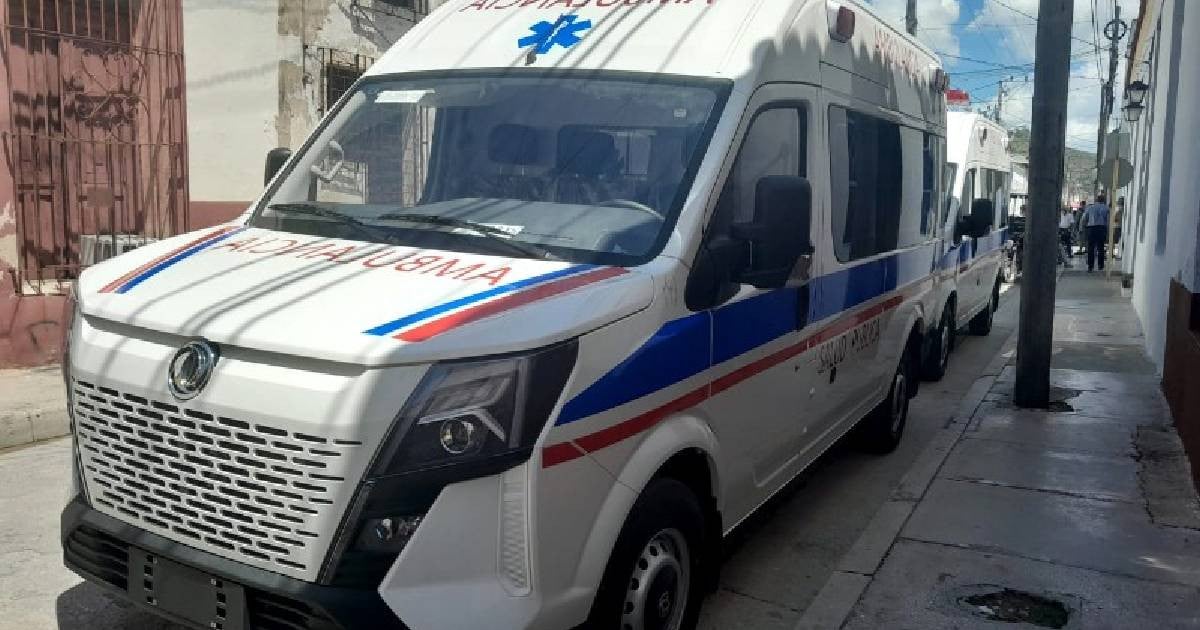
The health system of the province of Holguín received six new ambulances equipped with advanced life support, which will be distributed among the same number of municipalities in the northeastern region of Cuba.
The vehicles are from the Chinese brand Dongfeng, with a fuel efficiency of eight kilometers per liter, and they will enter service in the municipalities of Holguín, Báguanos, Cueto, Banes, Calixto García, and Rafael Freyre, reported this Friday by the official newspaper ¡Ahora!
The delivery is part of a larger plan by the Ministry of Public Health for 2026, which also includes the addition of four electric ambulances and one additional combustion ambulance for the Holguin area.
The news comes at a time when Pinar del Río received five ambulances from the same manufacturer to strengthen its emergency system, highlighting a staggered distribution of medical vehicles across provinces in recent weeks.
These timely deliveries, however, contrast with the magnitude of the structural deficit that the Ministry of Public Health itself has acknowledged. Cuba has only 39.6% of the ambulances needed at the national level.
In Matanzas, at the beginning of the year, only 16 out of the 54 required ambulances were operational, less than a third of the minimum fleet needed.
The Minister of Public Health, José Ángel Portal Miranda, stated in February before Parliament that the Cuban healthcare system was "on the brink of collapse," worsened by power outages lasting up to twenty hours a day, fuel shortages, and an aging vehicle fleet.
A senior official from the Ministry of Public Health acknowledged that waiting times for an ambulance could exceed five hours in some cases, a reality that has cost lives.
In April, the citizen Alexis Rosales Aldama died in Santiago de Cuba after waiting more than four hours for an ambulance; the hospital claimed that the unit could not leave until four patients were ready due to a lack of fuel.
In January, Yordanis Beltrán Beltrán, a 42-year-old former police officer, also died in Santiago de Cuba after more than two hours of waiting without receiving medical attention.
The regime has tried to alleviate the deficit with one-time purchases, 50 ambulances in January 2026, 25 electric ones from the brand Foton in February, and the Dongfeng lots distributed in April and May among various provinces.
In light of the magnitude of the crisis, the UN activated a $94.1 million emergency humanitarian plan in March 2026 to assist nearly two million Cubans in 63 municipalities, while the Director-General of the World Health Organization described the health situation on the island as "deeply concerning."
Filed under: