
Related videos:
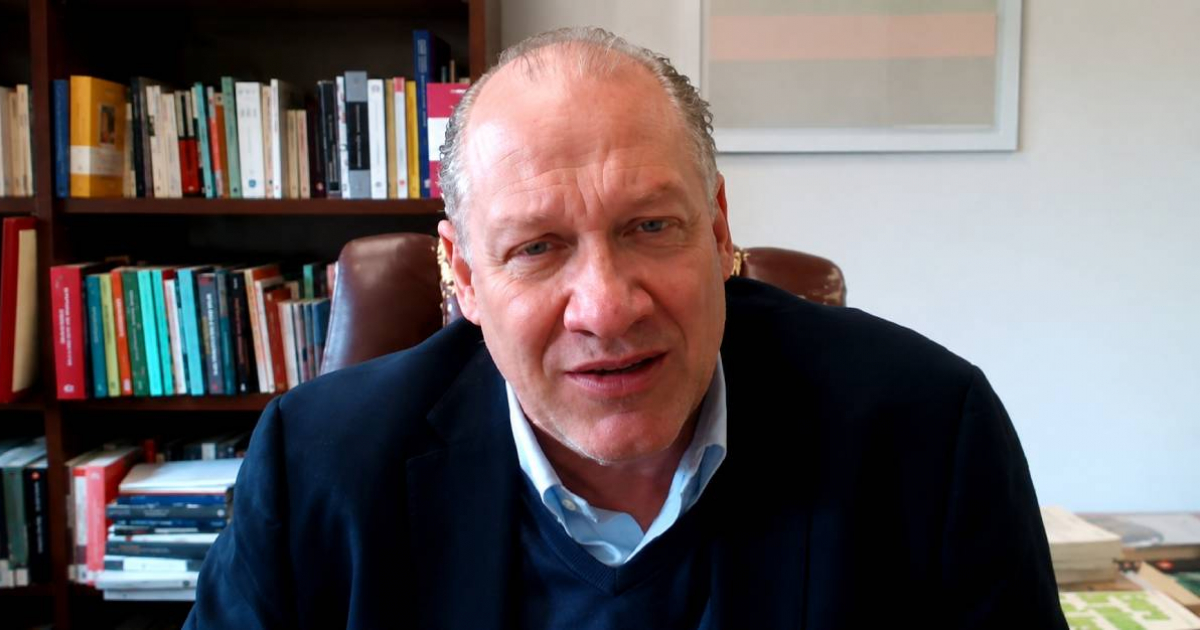
The Cuban historian and essayist Rafael Rojas warned that for the regime of Miguel Díaz-Canel to fall, "there would need to be an uncontrollable social explosion or external intervention," something he believes could be very close.
In an extensive analysis published in El País, the researcher argues that the immediate future of Cuba is situated between three possible scenarios.
The first would be a weakening of the United States' pressure policy, either due to internal changes in Washington or because allies like Russia or China manage to break the energy blockade on the island.
The second scenario envisions a successful negotiation between Havana and Washington that would ease sanctions and provide economic relief to the regime.
The third, which the historian considers the most dangerous and costly, would be a violent response to the crisis caused by the worsening living conditions and the rise in social discontent.
"If this threshold of dissatisfaction continues to grow, with a summer characterized by a severe deterioration of daily life on the island, such as the one that will begin very soon, the third and most costly scenario could occur: an uncontrollable social explosion or a military intervention from the United States," Rojas stated.
The historian describes how the Cuban government simultaneously alternates between two contradictory strategies: resisting the United States and negotiating with the United States.
This occurs while the island is facing a dual crisis—structural and situational—that has led economists, sociologists, and demographers to discuss collapse not as a future scenario, but as a verifiable reality.
"Resist the empire and negotiate with the empire. The Government of Cuba alternates between these two simultaneous agendas in a moment of uncertainty and unpredictability, where the future of the island is at stake between collapse and transition," he said.
Blackouts, protests, and economic collapse
Rojas believes that the accelerated deterioration of living conditions is raising the level of social tension in Cuba. Power outages of up to 20 and 22 hours a day, fuel shortages, the collapse of transportation, and inflation have exacerbated citizen discontent across the island.
In May, new protests were recorded in neighborhoods of Havana such as Guanabacoa, Santos Suárez, Luyanó, and Marianao, where residents held pot-banging protests and blocked streets due to prolonged power outages, acknowledged even by the Minister of Energy, Vicente de la O Levy.
The Cuban Observatory of Conflicts recorded 1,133 protests in April 2026, a 29.5% increase compared to the same month the previous year. Meanwhile, Cubalex documented 229 demonstrations in March, the highest monthly figure since the protests of July 11, 2021.
The economic decline has also deepened. According to economists Carmelo Mesa-Lago and Pedro Monreal, Cuba's GDP has experienced years of decline and could decrease by between 9% and 15% from 2025 to 2026. CEPAL ranks Cuba among the most affected economies in Latin America and warns of a humanitarian crisis.
Tourism, one of the main sources of income for the country, dropped by more than 50% between 2018 and 2024, going from nearly five million annual visitors to fewer than two million, according to economist Omar Everleny Pérez Villanueva.
At the same time, the demographer Juan Carlos Albizu-Campos estimates that the Cuban population has fallen to just over eight million residents following an unprecedented migration wave.
In this scenario, Díaz-Canel agreed to discuss a humanitarian aid offer of 100 million dollars from the United States in fuel, food, and medicines, conditioned on being channeled through the Catholic Church without state mediation.
Chancellor Bruno Rodríguez recently declared that Cuba was "ready to listen" to the details of the proposal.
Rojas, however, argues that the outcome for Cuba is still not defined. "If the Cuban government regains the reformist initiative and negotiates realistically, it can survive and even emerge stronger," the intellectual stated, drawing a comparison between the current austerity measures and the "Zero Option" implemented during the Special Period in the 1990s.
Filed under: