
Related videos:
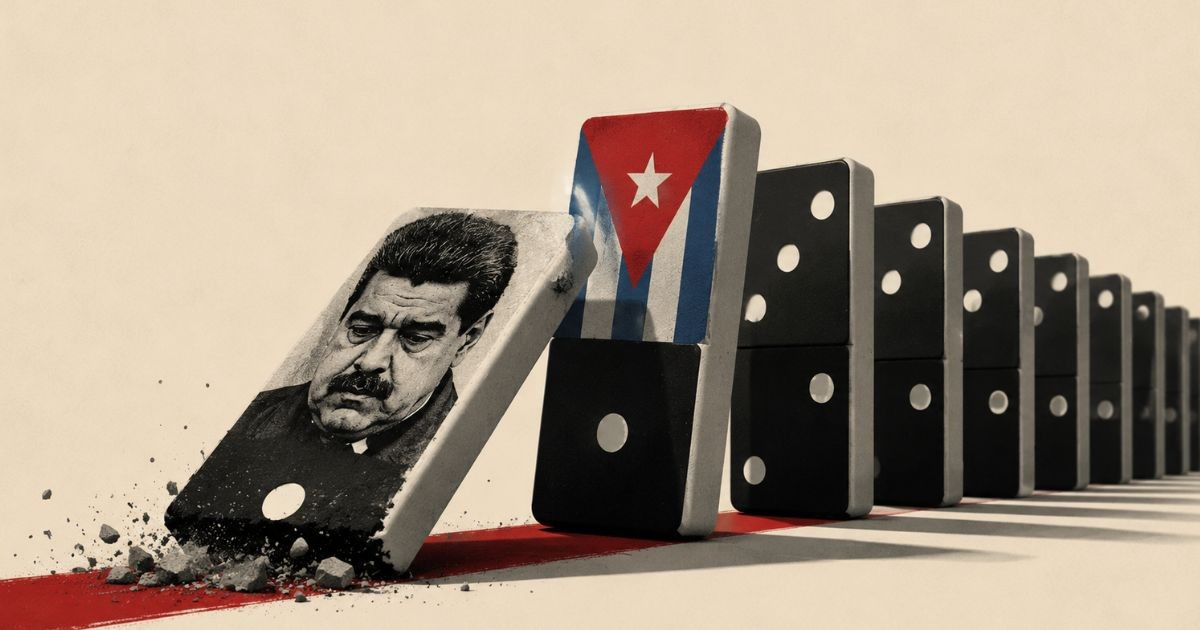
President Donald Trump posted this Wednesday a presidential message for Cuban Independence Day in which he used the capture and extradition of Nicolás Maduro as a direct warning to the Havana regime, commemorating the 124th anniversary of the proclamation of the Republic of Cuba.
"The accusation and removal of Maduro sent a clear message to his socialist allies in Havana: this is our hemisphere, and those who destabilize it and threaten the United States will face consequences," wrote Trump from the White House.
The leader described the operation in January 2026 as "one of the most daring and impressive special operations in generations," carried out by the U.S. Armed Forces, and presented it as a clear signal of what could happen to the Cuban regime.
Trump characterized the communist government of Havana as "a direct betrayal of the nation for which its patriotic founders bled and died," accusing it of violently dismantling political freedoms, denying free elections, silencing dissent, and sinking the Cuban economy.
The president also accused the military leaders of the regime of having "no interest in ensuring the prosperity of the Cuban people," focusing solely on maintaining control and "violently exporting communism and despotism abroad."
Regarding specific actions, Trump stated that his administration is "cutting the financial lifelines that have long supported brutal regimes in Central and South America."
His commitment, he stated, is "unbreakable": "The United States will not tolerate a pariah state that hosts military, intelligence, and terrorist operations hostile to 90 miles from U.S. territory."
The presidential message comes after a week of intense pressure on Havana.
Last Monday, the Department of the Treasury (OFAC) sanctioned nine high-ranking Cuban officials and the Intelligence Directorate (DGI/G2), freezing their assets and prohibiting transactions with U.S. individuals or entities.
Among those sanctioned are the Deputy Minister of the Revolutionary Armed Forces Joaquín Quintas Sola, the head of Military Counterintelligence José Miguel Gómez del Vallín, and the commanders of the Eastern and Western armies, Eugenio Armando Rabilero Aguilera and Raúl Villar Kessell.
These sanctions are part of an executive order signed by Trump on May 1 to penalize Cuban officials responsible for repression and threats to U.S. national security.
In parallel to Trump's message, Secretary of State Marco Rubio released a video in Spanish directed at the Cuban people, in which he offered a "new relationship" between the United States and Cuba, but with an explicit condition: "it must be directly with you, the Cuban people, not with GAESA."
Rubio blamed the regime for the shortage of electricity, fuel, and food, pointing out that those who control the country "have looted billions of dollars."
In the days leading up to this date, leaks about a possible military action by the U.S. against Cuba also emerged, while Trump stated on Tuesday that a diplomatic agreement with the island was possible.
Reuters reported this Wednesday that the Trump administration is also preparing to announce criminal charges against Raúl Castro.
Trump closed his message with a promise: "We look confidently toward a new Golden Age for the island and its people."
Filed under: