
Related videos:
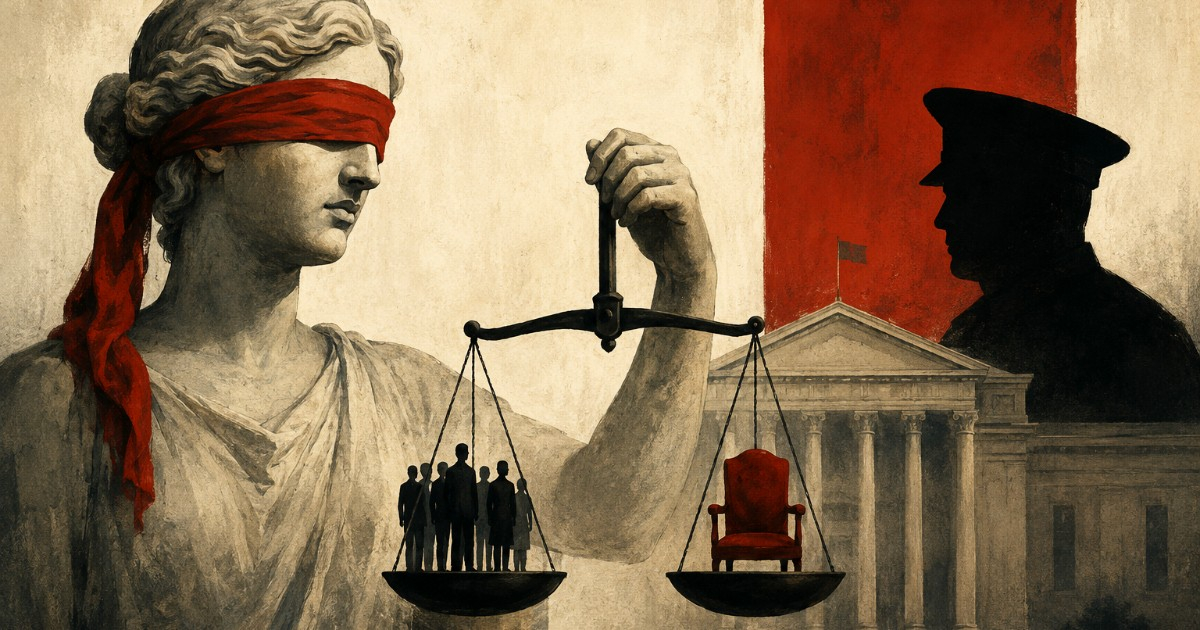
The Cuban Observatory of Human Rights (OCDH) held a discussion in Madrid on Tuesday titled "The Reconquest of Judicial Independence in Cuba," a forum for analysis that brought together former judges, former prosecutors, and lawyers to denounce the structural subordination of the Cuban judicial system to the Communist Party and State Security.
The event was hosted by Teresa Larrinaga, president of the OCDH, and featured participation from Yaxys Cires, director of Strategies for the organization, and Maylín Fernández Suris, a law graduate and former Cuban judge, along with an online contribution from Professor José F. Chofre Sirvent, a doctor in law from the University of Alicante.
“It is unacceptable to start a new republic with judges who have participated in repression,” asserted Cires, who proposed “a thorough review and audit of the judiciary, from top to bottom, with replacement of personnel where appropriate and selection of judges who have not been involved in political cases or in violations of rights.”
The lawyer went further and emphasized the need to restore the separation of powers: "It is essential to rescue or resurrect Montesquieu. It is important that in the Cuba we are going to build there is independence of powers: the legislative, executive, and judicial branches. There can be no rights without justice."
During the colloquium, the report "The Absence of Judicial Independence in Cuba: Formal and Practical Elements," prepared by Fernández Suris, was presented. It concludes that the issue is not due to isolated failings but rather to a deliberate institutional design that subordinates the courts to political power.
The document warns that the judiciary career in Cuba does not depend on professional merits, but rather on ideological loyalty, and that the Decree-Law 13 of 2020 allows for secret and binding checks by State Security on candidates for public office, with no possibility of appeal.
Two former Cuban judges testified at the colloquium about how they received "direct instructions from the President of the Supreme Court, which served the interests of the Communist Party of Cuba and the Ministry of the Interior."
"The judges were required to submit reports on the decisions made, and we were even instructed on how to proceed in these cases," stated one of them, who added that "the judicial career in Cuba does not depend on the professionalism with which the judge acts, but solely on the interest that may represent in fulfilling the expectations of the Communist Party."
The report also documents that judges are subjected to daily oversight by State Security "regarding their conduct in their personal lives as well as within the system itself," and it notes patterns of obstacles to the right to defense, abusive use of pre-trial detention, severe penalties in political cases, and reprisals against lawyers.
This context is framed within years of mass trials against protesters and the figure of over 1,250 political prisoners documented in Cuba by the NGO Prisoners Defenders.
Cires presented a roadmap organized around three pillars: independence and legal framework, evaluation and purging —or lustration— and renewal and efficiency of the system.
He proposed to create a commission composed of distinguished jurists and members of civil society to conduct a thorough review of the current judges and candidates for entry into the system, based on criteria of non-participation in repression, suitability, ethics, and absence of ties to organized crime.
It also proposed to retain those who have worked in civil, family, or labor areas without involvement in political causes, and to call upon Cuban jurists who graduated and reside abroad to strengthen the system during the transition.
"The transition must avoid two risks: the collapse of the judicial system and the unnecessary judicialization of all transition issues. Not every conflict has to end up in court," Cires warned, emphasizing that the reconstruction of judicial independence will be an essential requirement for any process of democratic transition in Cuba.
Filed under: