
Related videos:
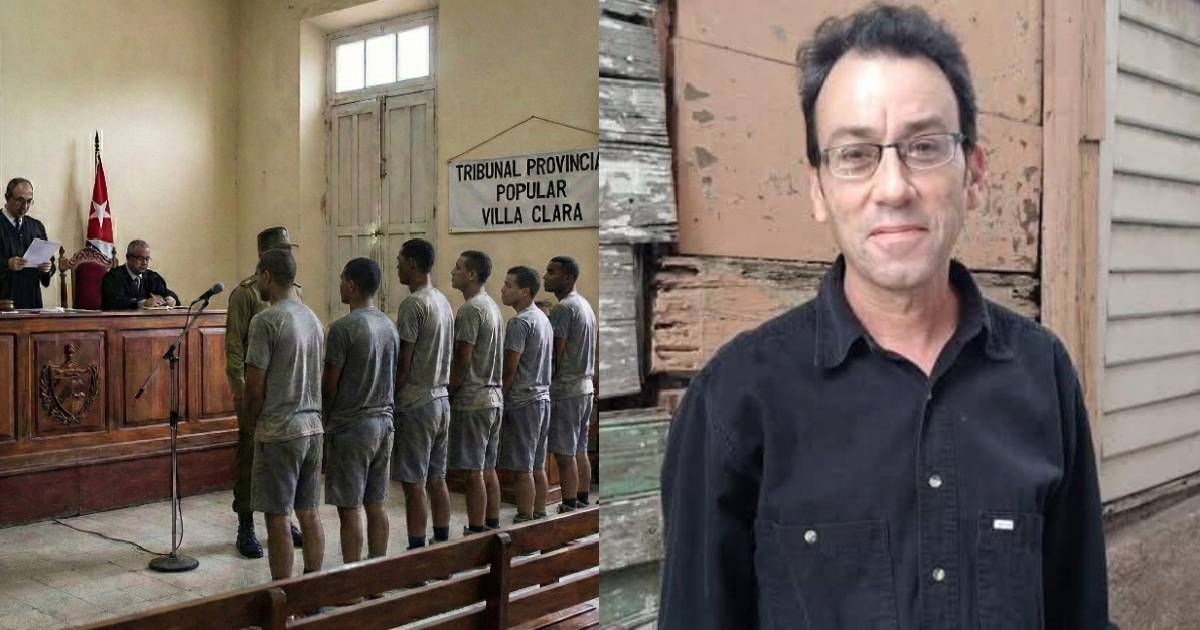
A Cuban court sentenced six citizens to up to 8 years in prison for demanding electricity during a blackout in Encrucijada, Villa Clara province, in a ruling that human rights organizations describe as repressive and a violation of fundamental freedoms.
The Provincial People's Court of Villa Clara, in its Chamber for Crimes Against State Security, sentenced six citizens for the crime of "public disorder" for participating in a peaceful protest during a blackout on November 7, 2024, in the municipality of Encrucijada.
The sanctions include prison sentences of up to eight years, as well as measures of liberty restriction and corrective work, revealed the Cuban Observatory of Human Rights (OCDH).
According to ruling No. 4 of 2026, related to Case No. 82/2025, José Gabriel Barrenechea Chávez was sentenced to six years of imprisonment; Yandri Torres Quintana to eight years; Rafael Javier Camacho Herrera to seven years; Rodel Bárbaro Rodríguez Espinosa to five years.
Meanwhile, Yuniesky Lorences Domínguez received three years of corrective work without incarceration, and Marcos Daniel Díaz Rodríguez was sentenced to five years of limited freedom.
The ruling, which was accessed by the OCDH, states that the defendants gathered in front of the municipal headquarters of the Communist Party of Cuba (PCC) and the Government, shouted slogans like “we want power” and banged pots, actions that the judges deemed to create “noise and commotion” and to obstruct traffic and the work of the authorities.
The ruling, signed by judges Aimee Caraballé Corrales, Justo Gustavo Faife Hernández, and María Teresa Domínguez Rodríguez, uses a narrative that downplays the peaceful nature of the protest and criminalizes acts of citizen demand, such as preventing a PCC official from providing explanations during the blackout.
In Barrenechea's case, the court also resorted to stigmatizing descriptions commonly used in cases against activists, although it acknowledges that he has no criminal record.
The OCDH reported that these sentences constitute a direct violation of the rights to freedom of expression and peaceful assembly, as enshrined in the Universal Declaration of Human Rights and the International Covenant on Civil and Political Rights, to which Cuba is a signatory.
In the organization's view, protesting due to the lack of electricity is not a crime, but a legitimate demand in light of the prolonged energy crisis the country is experiencing.
The case of Barrenechea has sparked particular outrage over the treatment received during incarceration.
Detained since November 2024, the opposition intellectual was unable to say goodbye to his mother, Zoila Esther Chávez Pérez, who passed away in May 2025 at the age of 84 after suffering from metastatic cancer.
Despite repeated requests for humanitarian passes, the prison authorities denied him visits, even though he was her only caregiver.
From La Pendiente prison in Santa Clara, Barrenechea wrote a letter published by the independent outlet 14ymedio, in which he expressed the pain of his loss and described his joining neighbors to demand electricity as a "crime."
Following the death, he was only allowed a brief and supervised transfer to the wake, with no opportunity for a proper farewell, before being returned to his cell.
The OCDH emphasizes that this case is part of a context of increasing repression. According to its VIII Report on Social Rights, blackouts became the main concern of Cubans in 2025, even surpassing the food crisis.
That same year, the organization documented at least 3,179 repressive actions against the civilian population, including new prison sentences for exercising fundamental human rights.
Filed under: