
Related videos:
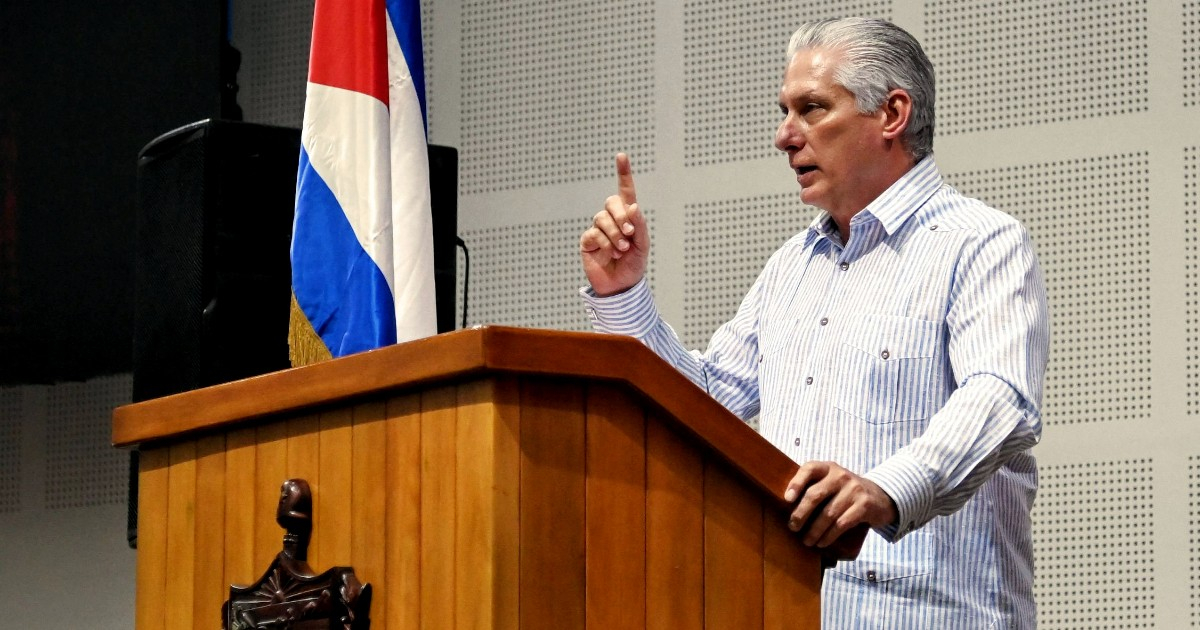
Miguel Díaz-Canel responded this Wednesday, on the 124th anniversary of the proclamation of the Republic of Cuba, to the message that the U.S. Secretary of State, Marco Rubio, addressed to the Cuban people on a date that the exile community celebrates as Independence Day.
In his post on social media X, the ruler and first secretary of the Communist Party described May 20 as a symbol of "intervention, interference, dispossession, frustration" in Cuba's history, outright rejecting the interpretation that Washington and the exile community have of that date.
The leader appointed by Raúl Castro emphasized, in his view, a single value on that day: «having instilled in the Cubans of that time an anti-imperialist sentiment that each subsequent generation has felt deepen with new and constant threats to the independence and sovereignty of the Homeland».
Díaz-Canel called those who, according to him, "shameless hired individuals," referring to those who "cry out for the return of the tutelary republic," in reference to the period of dependency on the U.S. under the Platt Amendment, in effect between 1901 and 1934.
He closed his message with a warning: "Let us not underestimate them, but never forget that due to the merits of the empire itself, we anti-imperialists are many, many more."
The message to which Díaz-Canel was responding was the first that Rubio has directed directly to the Cuban people in Spanish since he took office as Secretary of State, and he chose the date deliberately, which the regime removed from the official calendar after 1959.
In that message, Rubio stated that "Cuba is not controlled by any 'revolution'. Cuba is controlled by GAESA", the business-military conglomerate founded under Raúl Castro, which he blamed for looting billions of dollars and for causing the shortages of electricity, fuel, and food that the population is suffering.
Rubio also offered the Cuban people a "new relationship" with the U.S. that includes 100 million dollars in food and medicines, conditional on being distributed by the Catholic Church or trusted organizations, without the intervention of the Cuban government.
It was not just Díaz-Canel who reacted. The Deputy Minister of Foreign Affairs, Carlos Fernández de Cossío, accused Rubio of "repeatedly lying" about Cuba in a post that was also shared this Wednesday.
The exchange occurs amid a rise in tensions that intensified in early May. On May 8, Rubio announced direct sanctions against GAESA in what he referred to as an "economic war" against the regime. On May 12, the State Department formalized the offer of 100 million dollars.
In response to that offer, the regime shifted from initial rejection to a conditionally open stance. On May 14, Chancellor Bruno Rodríguez Parrilla stated that he was “willing to listen” to the details of the proposal, and Díaz-Canel himself indicated that Cuba “will not encounter obstacles or ingratitude” if the aid arrives under internationally recognized humanitarian conditions.
While the regime responds with anti-imperialist rhetoric, the Cuban exile community in Miami commemorates the 124th anniversary of the Republic with civic, religious, and judicial events at the Tower of Liberty, the Museum of Brigade 2506, and the Shrine of Our Lady of Charity.
Filed under: