
Related videos:
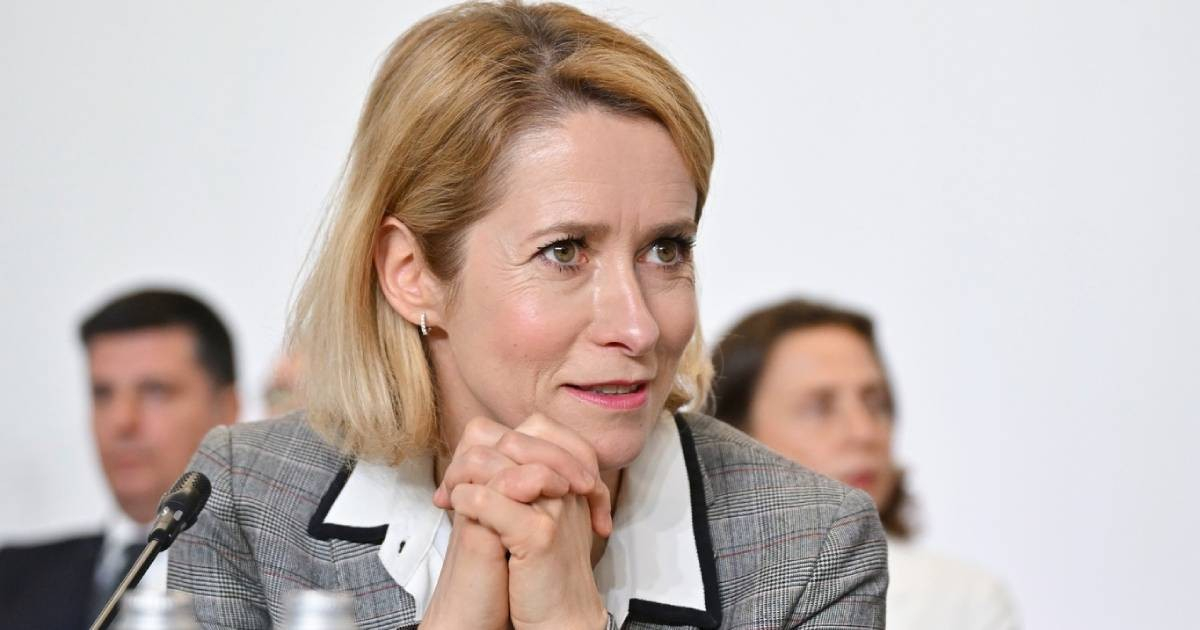
Kaja Kallas, the European Union's High Representative for Foreign Affairs, issued a direct warning to the Cuban regime this Tuesday from the European Parliament in Strasbourg: "Today, a negotiated reform is preferable to the country 'collapsing tomorrow.'"
According to the agency Efe, the head of European diplomacy intervened in a specialized debate on political repression and the humanitarian situation in Cuba, at a time when the island is experiencing the worst crisis in its recent history.
"Along with the end of political repression, Havana should also put an end to the relentless control over the economy that is holding the country back. Opening up to private initiative, investment, entrepreneurship, and economic modernization is essential," Kallas stated before the MEPs.
The Estonian diplomat pointed out that the Cuban situation "is the result of decades of structural economic failures, poor policies, and the impact of ongoing external restrictions and measures."
Kallas was also emphatic regarding the role of the EU: "The European Union does not fund the Cuban state," and warned that "humanitarian support will not solve Cuba's crisis; it will merely ease immediate human suffering."
The debate also included Spanish MEPs with differing positions. Socialist Leire Pajín insisted that "the United States must put an end to all forms of coercion in Cuba," but with "the same clarity" demanded that "the Cuban government must finally make progress on democratic reforms" and that "all political prisoners must be released."
The conservative Gabriel Mato was more emphatic in his criticism of the regime and the European Union itself. He warned about blackouts and the “more than 1,200 political prisoners who are still jailed today” and pointed out that “the European Union should be ashamed for maintaining a cooperation agreement” with Havana that “has not helped at all to advance democracy.”
The debate takes place in a context of increasing international pressure on the regime of Miguel Díaz-Canel. In early May, the opposition figure José Daniel Ferrer appeared before the European Parliament to denounce that Cuba is experiencing "the worst crisis in its modern history" and to demand the end of the Political Dialogue and Cooperation Agreement (PDCA) between the EU and Cuba, in effect since 2017.
In January, the European Parliament had already approved an amendment —with 331 votes in favor— that called for a review and suspension of the privileged cooperation with the Cuban regime. Activists like Carolina Barrero and Amelia Calzadilla also traveled to Brussels in April to advocate for the suspension of the agreement and the imposition of individual sanctions.
The energy crisis affecting Cuba exacerbates the backdrop of the European debate. The island is experiencing blackouts of up to 30 hours daily, with a generation deficit that exceeded 2,113 MW on May 15. The situation worsened after the capture of Nicolás Maduro in Venezuela in January, which interrupted the supply of between 25,000 and 35,000 barrels of Venezuelan crude oil per day, and was further aggravated by a fire at a fuel plant in Havana on February 13.
The final resolution of the European Parliament on Cuba, resulting from the debate this Tuesday, is scheduled to be voted on in the plenary session in June 2026.
Filed under: