
Related videos:
The Embassy of Cuba in the United States published a series of messages on the social network X under the hashtag "Myth Busters," in which it labeled the case of Brothers to the Rescue as a "deception" and defended the downing of two civilian planes in 1996, hours before the U.S. Department of Justice announced an event at the Freedom Tower in Miami to honor the victims.
The Cuban diplomatic mission posted on X that the violations of Cuban airspace between 1994 and 1996 "were not isolated incidents," but rather part of "more than 25 serious, deliberate, and systematic violations" documented by the Ministry of Foreign Affairs and the civil aviation authorities of the island.
"It was not a matter of miscalculations, but rather a continuous campaign that jeopardized international aviation safety," stated the embassy in its publication.
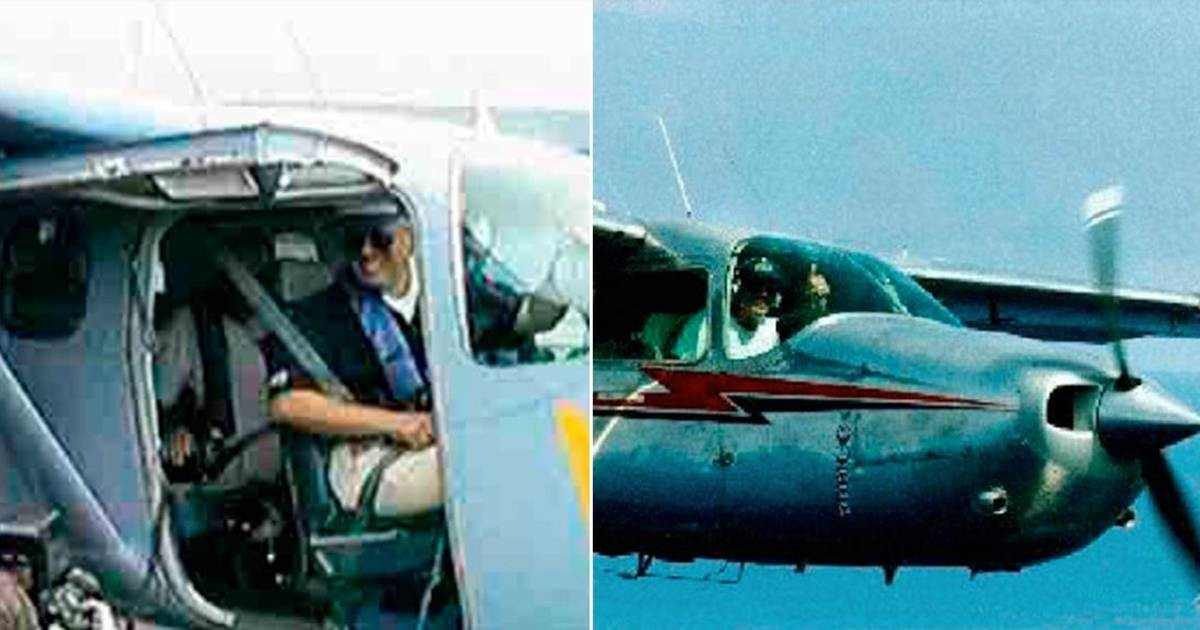
The Cuban reaction comes at a time of heightened tension. Sources informed CNN that U.S. federal prosecutors are considering filing criminal charges against Raúl Castro, 94, for his alleged role in the attack on February 24, 1996, when Cuban Air Force jets shot down two unarmed Cessna 337 aircraft belonging to the organization over the Florida Strait.
In that attack, four crew members were killed, identified as Armando Alejandre Jr. (45 years old), Carlos Costa (30), Mario de la Peña (24), and Pablo Morales (30). A third plane, which carried the organization's founder, José Basulto, managed to escape.
Raúl Castro was then the Minister of the Revolutionary Armed Forces. The central piece of the possible federal accusation is an audio recording from June 1996, first published in El Nuevo Herald in August 2006, where Castro allegedly ordered: "Take them down in the sea when they appear; and do not consult those who have the authority."
In February 2026, Representative Mario Díaz-Balart and other Cuban-American legislators sent a letter to then Attorney General Pam Bondi urging the Department of Justice to prosecute Raúl Castro, citing that recording as key evidence.
The Florida Attorney General also reopened a criminal investigation into the case in March 2026, coinciding with the 30th anniversary of the downing.
The incident had far-reaching historical consequences. President Bill Clinton signed the Helms-Burton Act days later, which toughened sanctions against Cuba and still serves as the foundation of the U.S. embargo. The then U.S. ambassador to the UN, Madeleine Albright, condemned the Cuban pilots who celebrated over the radio after the attack: "Frankly, this is not bravery. This is cowardice."
The FBI later discovered that agents from the Wasp Network, a Cuban espionage group infiltrated in South Florida, had provided information to the regime about the mission on February 24. Five Cuban spies were convicted in 2001; Gerardo Hernández Nordelo received two life sentences for conspiracy to commit murder. Barack Obama released them in 2014 as part of the restoration of diplomatic relations with Cuba.
If the charges against Raúl Castro are confirmed, it would mark the first time that Washington is seeking criminal charges directly against one of the Castro brothers for this incident, according to reports from recent days that anticipated the announcement on May 20 at the Freedom Tower in Miami.
Filed under: