
Related videos:
The Ministry of Labor and Social Security (MTSS) of Cuba published the Resolution 10/2026 in Official Gazette No. 44 Ordinary of 2026, which establishes the procedure for assessing the socioeconomic situation of families applying for state financing to carry out architectural interventions in their homes.
The regulation, issued on April 21, 2026, and published this Wednesday in the Official Gazette, responds to Agreement 10326 of the Council of Ministers, dated March 5, 2026, which authorized financing from the State Budget for architectural interventions both through state channels and individual efforts to assist individuals lacking economic solvency.
Resolution 10/2026 repeals and replaces Resolution 22/2022 from the same ministry, which regulated the previous procedure for economic solvency analysis for construction subsidies in housing.
According to the text, the municipal Labor and Social Security Departments are responsible for conducting the evaluation at the request of the Municipal Housing Department.
The municipal director appoints an official who has 15 business days to complete the socioeconomic investigation and present the corresponding report, in a sensitive area such as housing that has historically been plagued by corruption.
The evaluation consists of three components: the social characterization of the family unit, the verification of the technical condition of the housing or the lack thereof, and the analysis of insufficient income.
To calculate solvency, the regulation establishes a specific formula: "All income received by the family unit is summed up; from this income, expenses for obligations and incurred debts, debts from bank credits, court-ordered garnishments, alimony, and other monthly taxes are subtracted; and the result of this operation is divided by the number of members of the family unit to determine the available per capita income."
The resolution sets the maximum income limit per capita for access to financing at 2,100 pesos.
Exceptionally, households with a per capita income of up to 3,234 pesos may benefit if they are in situations of vulnerability.
The regulation also imposes a significant restriction: "In order to benefit from the financing, individuals of working age or who are unemployed, and capable of working, cannot coexist within the same family unit."
The applicants' income must be verified through certifications from their employers, sworn statements, or certifications from the National Office of Tax Administration (ONAT) in the case of self-employed workers and agricultural producers.
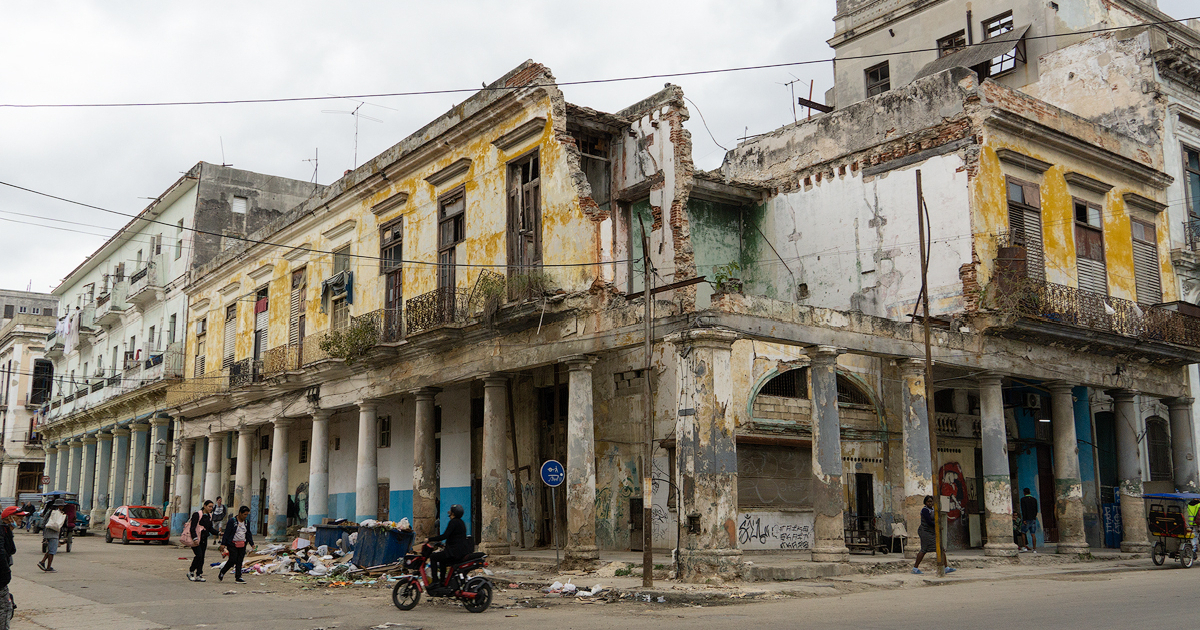
This regulation comes amidst an unprecedented housing crisis in Cuba, with a deficit exceeding 929,000 homes and nearly 35% of the housing stock in regular or poor condition.
The construction of housing in Cuba fell in 2024 to levels lower than those of the Special Period, and in the first quarter of 2025, the government completed only 1,344 houses out of a plan of 10,795, achieving 12.4% compliance.
In all of 2025, Cuba barely completed around 2,382 homes, which is equivalent to 22% of the annual plan, in a context of chronic shortages of cement and construction materials.
The State Budget for 2026, outlined in the Law No. 181, allocates 57,993 million Cuban pesos for infrastructure projects, including housing; however, the gap between the resources allocated and the actual needs of the population remains vast.
Filed under: