
Related videos:
The ruler Miguel Díaz-Canel raised the official Cuban rhetoric this Thursday in response to the criminal charges brought by the U.S. Department of Justice against Raúl Castro, posting a new message on X in which he stated: "The Army General is Cuba, and Cuba deserves respect."
The message represents an escalation compared to his initial reaction on Wednesday, when he called the accusation "a political action, with no legal basis" and described it as a pretext to justify a military aggression against Cuba.
In the new tweet, Díaz-Canel directly appealed to national sentiment: "The heroes of the Homeland are not disrespected, history and traditions are not offended without consequences. Not in Cuba."
The ruler also tried to turn the accusation into a factor of internal cohesion, claiming that "the new aggression has united us even more and elevated the honor, dignity, and anti-imperialist sentiment of a people already recognized worldwide for their brave resistance to any form of subordination to the empire."
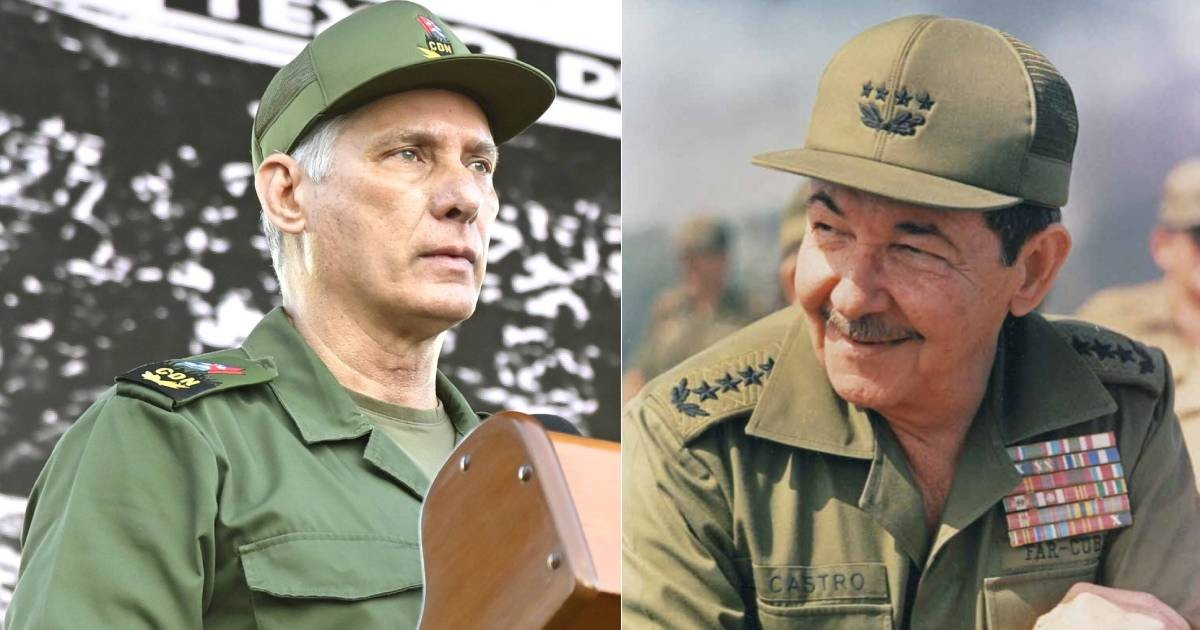
The message was accompanied by an official image from the Presidency of the Republic featuring a photo of Raúl Castro in a four-star military uniform, under the campaign #RaúlEsRaúl.
Díaz-Canel also announced his presence at the José Martí Anti-Imperialist Tribune this Friday, where the Union of Young Communists called for a gathering at 7:30 in the morning in front of the U.S. Embassy on the Havana Malecón to "condemn the despicable and infamous act of the Department of Justice."
The accusation that triggered the crisis was presented on Wednesday—Cuba's Independence Day—at the Freedom Tower in Miami by acting Attorney General Todd Blanche, who stated: "For nearly 30 years, the families of four murdered Americans have been waiting for justice."
The charges against Raúl Castro include conspiracy to assassinate U.S. citizens, four individual counts of murder, and two for aircraft destruction, related to the downing of two civilian planes belonging to Brothers to the Rescue on February 24, 1996, in which Armando Alejandre Jr., Carlos Costa, Mario Manuel de la Peña, and Pablo Morales died, and whose bodies were never recovered.
The central piece of the accusation is an audio recording from June 1996 in which Castro, then Minister of the Revolutionary Armed Forces, acknowledges having ordered the attack: "Take them down in the sea when they appear; and do not consult those who have the authority."
Secretary of State Marco Rubio described Raúl Castro as a "fugitive from American justice" and warned that he would not disclose how he plans to bring him to court: "If there is an announcement, we will tell you afterward, not before."
The Cuban regime threatened with a "fierce resistance" to any actions arising from the charges, while Prime Minister Manuel Marrero Cruz described the accusation as a "farce," and Foreign Minister Bruno Rodríguez referred to Rubio as a "spokesperson for corrupt and vengeful interests."
Raúl Castro is 94 years old and will turn 95 on June 3, 2026. There is no extradition treaty between Cuba and the United States, and analysts view the charge as mainly symbolic, although if found guilty, he could face life imprisonment or the death penalty.
Filed under: