
Related videos:
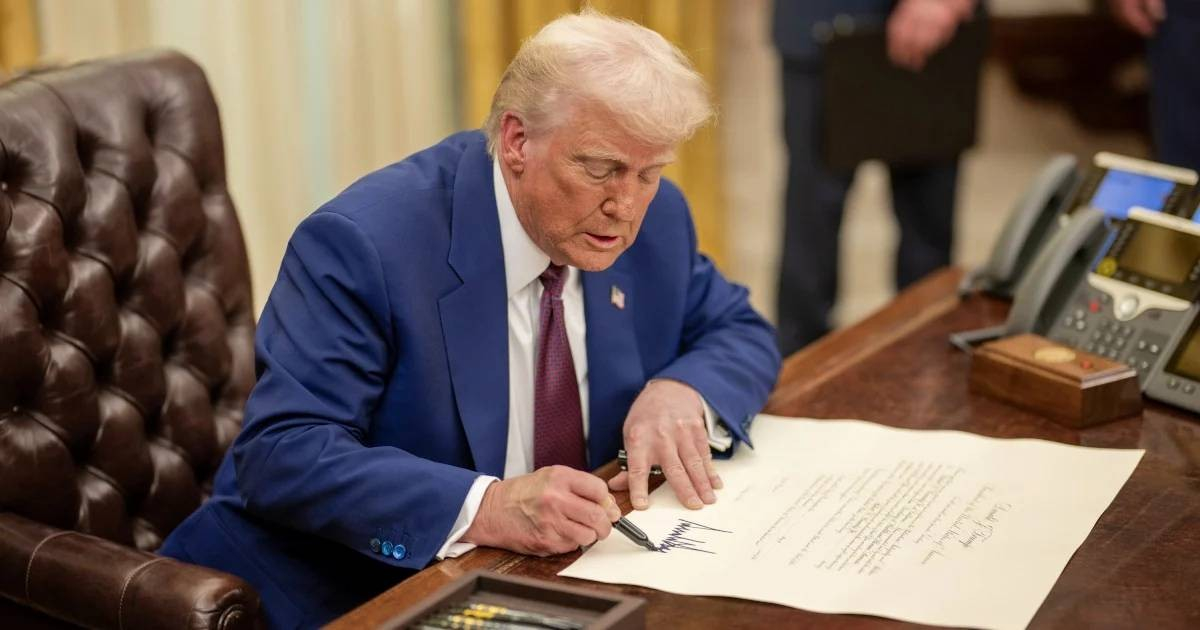
The president Donald Trump signed an executive order requiring federal banking regulators to assess and mitigate what is termed "credit risk related to immigration," in a new measure that intensifies his administration's pressure on individuals living in the United States without legal authorization.
The order, titled "Restoring Integrity to America's Financial System", directs the Department of the Treasury, the Federal Reserve, the FDIC, and the OCC to issue formal guidance within 60 days for banks to identify warning signs in accounts, loans, and credit cards of individuals without legal immigration status.
The central argument of the White House is that lending money to individuals who could be deported poses a structural risk to the financial system, as the borrower might lose income or leave the country and default.
The White House stated that it will not "allow risks to our financial system arising from the extension of credit or financial services to populations of inadmissible foreigners who are subject to deportation."
However, the order is less aggressive than the banking sector feared, as it does not explicitly require banks to collect proof of citizenship from all their customers.
The banking industry had aggressively lobbied for months to prevent a measure that would make such data collection mandatory, arguing that it would be costly and would require an enormous amount of paperwork.
The Secretary of the Treasury, Scott Bessent, had anticipated the measure in April by stating that "there should be stricter rules" for opening bank accounts, and he questioned, "Why can foreigners of unknown nationality come and open a bank account?"
Bessent also asked, "How do you know your client if you don’t know if they have legal or illegal status, if they are a U.S. citizen or a green card holder?"
The order explicitly mentions the use of the Individual Taxpayer Identification Number (ITIN) to obtain credit products or open accounts when the applicant does not have verified immigration status.
A study by the Urban Institute estimated that between 5,000 and 6,000 mortgages were issued to clients with an ITIN, and that banks are very reluctant to grant loans to people with that type of document.
Immigrant rights advocates warn that the measure could push undocumented immigrants out of the formal financial system, driving them towards a cash economy and unregulated services with a higher risk of fraud and usury.
This order is not the first indication of the Trump administration in this direction.
Since December 2025, Cubans in the United States started receiving alerts from Bank of America warning about possible account closures if they did not update their immigration information.
In November 2025, the Department of the Treasury also announced the reclassification of certain refundable tax credits as "federal public benefits," which prevents some immigrant taxpayers from receiving them, including DACA recipients and those with Temporary Protected Status (TPS).
Bank regulators now have 60 days to issue formal guidelines that will effectively define how banks should identify and manage accounts of customers without verified immigration status.
Filed under: