
Related videos:
The Trump administration announced on Thursday the easing of a federal rule that required supermarkets and air conditioning companies to reduce the use of hydrofluorocarbons (HFCs), potent greenhouse gases used in refrigeration equipment, in an effort to alleviate food prices amid the growing inflationary pressure facing American families.
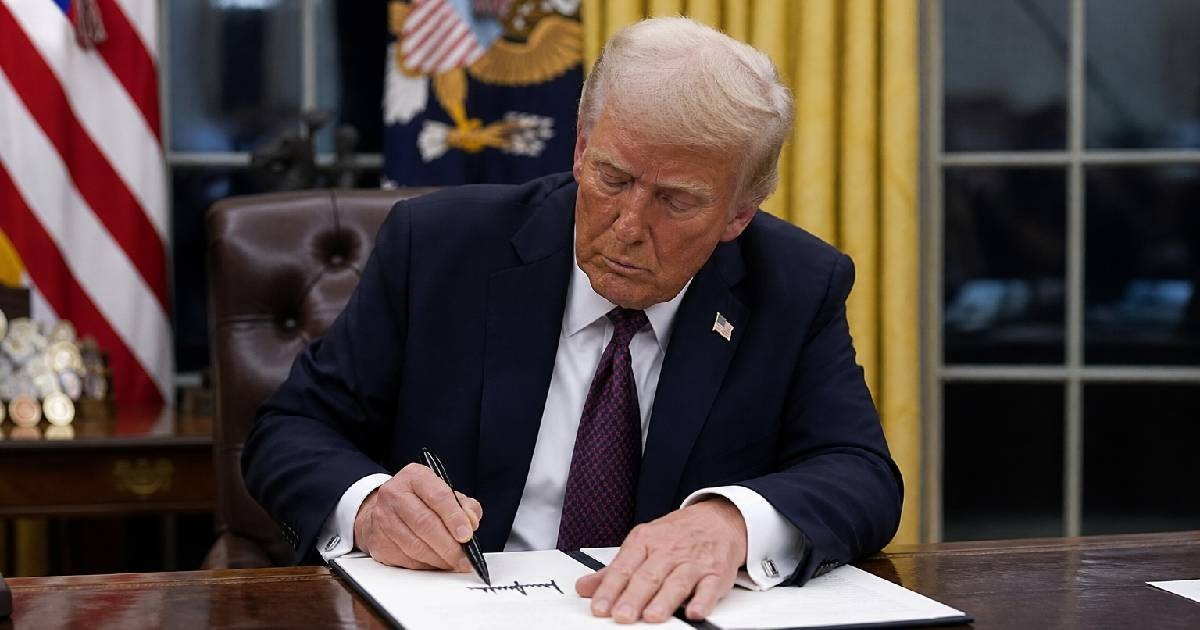
Trump and the Administrator of the Environmental Protection Agency (EPA), Lee Zeldin, presented the measure at the White House as a direct economic relief for consumers, claiming it would generate savings of "more than $2.4 billion a year" for families and businesses.
Zeldin estimated that the supermarket sector would specifically benefit from $800 million in savings, and he described HFCs as "devastating" for food prices.
The event featured Greg Foran, CEO of the Kroger chain, who supported the decision by stating that the delay would prevent the company from having to "disburse more capital more quickly" to replace costly refrigeration equipment.
The EPA's proposal would raise the allowable global warming potential threshold for cold storage facilities and supermarket systems to 1,400, in effect until 2032, when stricter limits would be reinstated.
The rule that is being relaxed—known as the Technology Transitions Rule—was originally adopted under the Biden administration in October 2023 and established phased deadlines for various sectors to reduce their reliance on HFCs.
What generates criticism is that the law that created these restrictions, the American Innovation and Manufacturing Act (AIM Act), was signed by Trump himself in 2020, aligning the United States with the Kigali Amendment to the Montreal Protocol for the gradual phasing out of these gases.
Since December 2025, the EPA had already classified the enforcement of the January 2026 deadlines as "low priority," anticipating the formal easing announced this week.
The measure is part of a broader deregulation strategy that the administration has expedited in recent weeks: on May 19, the Department of Energy announced that it had eliminated 47 regulations deemed burdensome.
The economic context explains the political urgency: inflation in the United States reached 3.8% year-on-year in April 2026, the highest since May 2023, driven mainly by the energy shock resulting from the attacks by the United States and Israel on Iran at the end of February, which triggered the blockade of the Strait of Hormuz.
Food prices rose by 3.2% year-on-year and supermarket items by 3.6%, while real wages turned negative for the first time since April 2023, with salaries growing by 3.6% against an inflation rate of 3.8%.
Experts and members of the sector, however, question whether the relaxation of the HFC regulation will lead to real savings for consumers, and warn that the measure could conflict with Congressional mandates and international commitments.
Environmentalists point out that the decision hinders the technological transition to refrigerants with a lower climate impact and prolongs the dependency on gases that have a global warming potential thousands of times greater than that of carbon dioxide.
"For consumers, this means that the cost of living remains uncomfortable. For the Federal Reserve, it means that interest rate cuts are likely to be postponed into the future," warned Sung Won Sohn, an economist at Loyola Marymount University.
Filed under: