
Related videos:
The Cuban regime asserted this Friday that the aircraft of the organization Hermanos al Rescate carried out 25 "violations of Cuban airspace" between 1994 and 1996.
The statement occurs in the context of a propaganda campaign in response to the criminal charges presented against Raúl Castro on May 20 by the U.S. Department of Justice for the shooting down of two of these aircraft.
The first colonel Salustiano Ruiz del Real, head of the Air Force Department of MINFAR, presented a list of dates, registrations, and coordinates of the incidents on the program Mesa Redonda.
"They spoke of 25 violations. There were 25. But here it is demonstrated, and we have it documented in maps and radar information," he stated.
Among the incidents mentioned, Ruiz del Real pointed out that on May 15, 1994, five aircraft coming from Florida allegedly violated Cuban airspace between Cárdenas, Matanzas Province, and Mariel, Havana Province, remaining between 1.5 and 5.5 nautical miles off the coast.
On July 13, 1995, four aircraft allegedly violated the restricted MUP-1 zone over Havana. "They flew over the city of Havana at very low altitude, in a dangerous and negligent manner," declared the colonel, who added that among the occupants was a reporter from Channel 4 in Miami and that photographs of the city center taken from those aircraft were later put up for sale in Miami.
The official also highlighted two incidents in January 1996, when planes from Opa-locka Airport in Florida dropped propaganda over Havana. "Two violations on two consecutive days, January 9 and 13, 1996, shortly before February," he said. According to the regime, José Basulto himself stated that on January 13, half a million pamphlets were dropped.
Following those flights, Fidel Castro published a statement in the newspaper Trabajadores that, according to Ruiz del Real, authorized "putting an end to these violations and interrupting these flights."
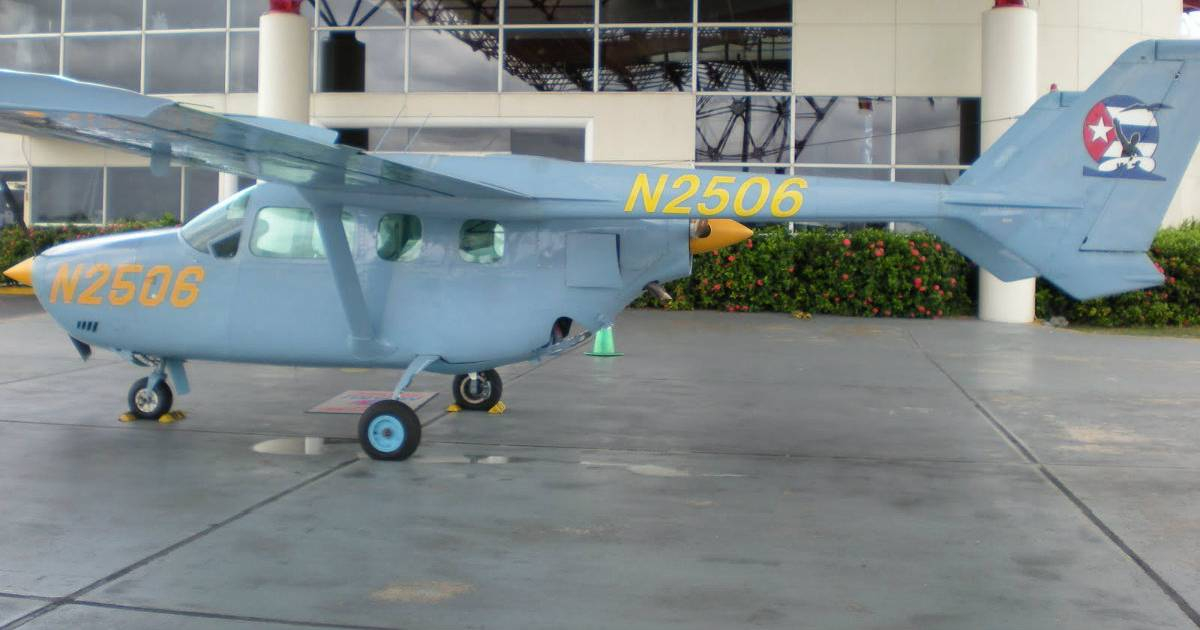
On February 24, 1996, MiG aircraft from the Cuban Revolutionary Air Force shot down two Cessna planes belonging to Brothers to the Rescue, killing four Cuban-Americans: Armando Alejandre Jr., Carlos Costa, Mario de la Peña, and Pablo Morales. Cuba presented its list of 25 violations to the UN on March 6, 1996 as justification for the shootdown.
However, the regime's position contrasts with the conclusions of the International Civil Aviation Organization (ICAO), which in its report dated June 28, 1996, determined that the two downed aircraft were outside Cuban territorial airspace: the first was 18 nautical miles off the coast and the second was 30.5 miles away. ICAO also noted that Cuba did not attempt to communicate by radio with the pilots before opening fire.
The accusation against Raúl Castro includes charges of conspiracy to assassinate American citizens, destruction of civilian aircraft, and four counts of manslaughter. Alongside him, five other former Cuban military members were accused: Emilio José Palacio Blanco, José Fidel Gual Barzaga, Raúl Simanca Cárdenas, Luis Raúl González-Pardo Rodríguez, and Lorenzo Alberto Pérez-Pérez.
The spy Gerardo Hernández Nordelo, at the rally last Thursday at the Anti-Imperialist Tribune led by Díaz-Canel, rhetorically asked: "What sovereign country would tolerate having its airspace violated 25 times without taking action? None."
The MINREX official Miguel Ángel Moreno Carpio described the accusation as an escalation: "Bringing this issue up after 30 years clearly means that we are witnessing an escalation and a significant effort to achieve what they have not succeeded in—a strong escalation with a direct intervention from the United States."
Filed under: