
Related videos:
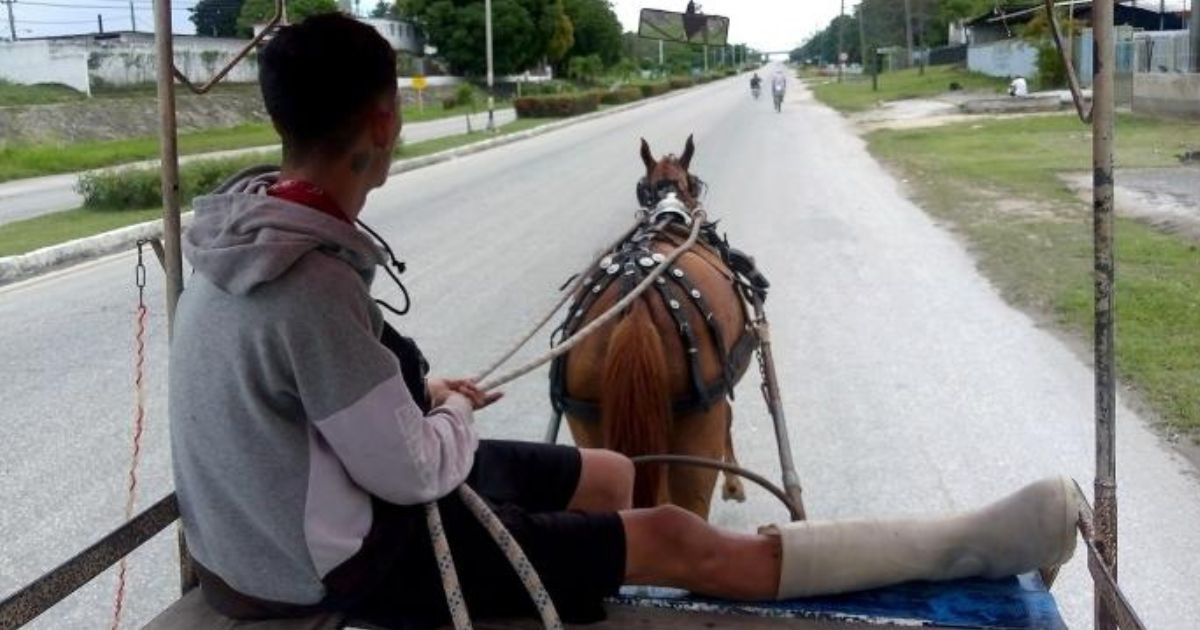
A young carriage driver known as «El Chinito» refused to charge fare to two people he transported in his horse-drawn carriage through the streets of Sancti Spíritus, in a gesture of solidarity that circulated on social media as a portrayal of dignity amidst the collapse of public transportation in Cuba.
The event was narrated by the official journalist Pastor Batista Valdés, who was walking along the road resigned to covering about two kilometers on foot when he heard a voice telling him: "Go ahead, Puro, get in, I'll give you a lift."
The young boy, slim and very young, was driving a car mounted on four wheels with 13-inch tires that he had owned for only nine months.
During the ride, a woman around 50 years old who was also traveling in the car tried to pay him when she got out.
"Nothing, my aunt, have a good afternoon," the coachman replied without hesitation.
When the journalist tried to do the same upon arriving at his destination, the response was just as straightforward: "Leave that, my uncle, leave that; another day, another day."
And he walked away smiling, as Batista Valdés describes, "as if he were returning with his pockets full of bills."
The gesture is even more significant when considering the economic situation of the coachman himself.
When the journalist asked him if the job helped, the young man responded with a mix of honesty and optimism: "Well, there are better days and some that aren't as good, but we're getting by. Today, for example, I hardly did anything. That doesn't matter; tomorrow will be better."
During the journey, "El Chinito" also spoke passionately about the care he provides for his mare: the rest he ensures for her and a piece of sponge he wanted to obtain to prevent sores on her back.
A neighbor, upon hearing the story, recognized him immediately: "Of course... that's El Chinito: a good boy."
The episode takes place against the backdrop of an unprecedented transportation crisis in Sancti Spíritus, where this month the authorities suspended intermunicipal, interurban, and rural routes due to the low availability of diesel, leaving only one daily departure to Havana —at 1:00 AM— and some priority medical services operational.
Private electric cycles exist, but they charge fees that the journalist himself describes as "spaceship prices," and the ecomobiles—small locally-made minibuses—operate in a very limited capacity.
In that void, horse-drawn carriages have become a daily solution for thousands of Cubans who have no other means of transportation, in an island where public transportation sinks deeper each day while the government fails to provide real solutions.
The energy crisis driving this collapse is structural: Cuba produces only 40,000 of the 110,000 daily barrels of oil it needs, Venezuela reduced its shipments since the end of 2025, and Pemex suspended supplies due to Cuban debts.
The journalist's colleague, Israel Hernández, summarized the significance of the gesture with a phrase he also suggested as an alternative title for the article: "Of course, it's very good and fair to write about attitudes like this. Young people like that are not an exception. If you’d like, I can even provide the title, and I won’t charge you for it: Where there are, there are."
Filed under: