
Related videos:
The NASA announced this Tuesday that it will send to the Moon, between September and November, the first unmanned lander from Blue Origin to begin laying the groundwork for a permanent base on the Earth's satellite, marking one of the most ambitious milestones in human space exploration.
The announcement was made by the agency's administrator, Jared Isaacman, at a press conference in Washington, where NASA presented the details of the Moon Base program and confirmed that three uncrewed missions will be carried out before the end of 2026.
The chosen spacecraft for the first mission is the lander module Blue Origin Mark One Endurance, designed by the space company founded by Jeff Bezos, the founder of Amazon.
Called "Moon Base One," it will be the first privately funded lunar lander mission in history and will head to the rim of Shackleton crater at the South Pole of the Moon.
"In addition to transporting two scientific payloads from NASA, the mission's objective is to demonstrate critical capabilities that reduce risk for Human Landing System missions," Isaacman explained.
The second launch, scheduled for late 2026, will send the Griffin lander from the company Astrobotic Technology, which will transport over 500 kilograms of cargo, including a rover, to the lunar surface, making it the largest commercial payload ever delivered to the Moon.
The third lander will be operated by Intuitive Machines and will investigate the origins of lunar magnetic anomalies, in addition to carrying payloads from the European Space Agency and the Korea Space Agency.
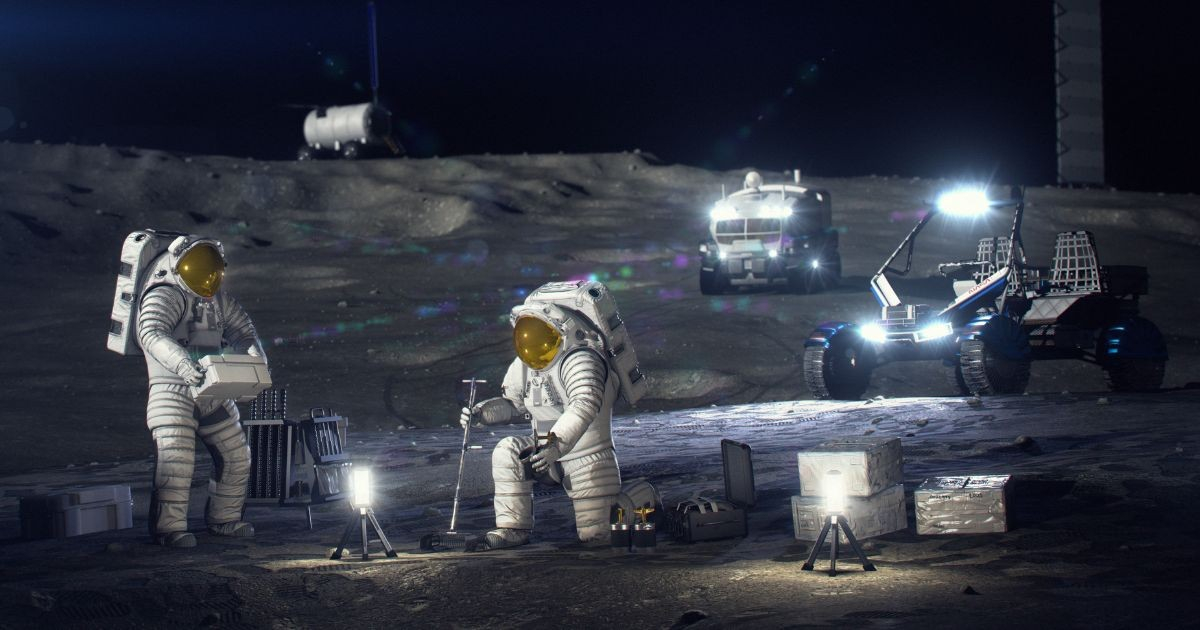
The three launches are part of Phase 1 of the NASA Moon Base plan, which includes up to 25 missions and 21 lunar landings by 2029 to deliver over four tons of material.
The program, announced in March with an estimated budget of 20 billion dollars over seven years, is structured in three phases.
Phase 2, between 2029 and 2032, plans for 27 launches and 24 landings to transport 60 tons of material and establish the initial infrastructure with biannual crewed missions.
Phase 3, starting in 2032, includes 29 launches and 28 lunar landings with the capacity to transport 150 tons annually and achieve continuous human presence on the Moon.
The choice of the South Pole is due to the presence of regions in permanent shadow with water ice, an essential resource for producing drinking water, oxygen, and in-situ fuel.
The Spanish scientist Carlos García Galán, who is in charge of the Moon Base program at NASA, described the scope of the project: “We envision the lunar base as an extension of hundreds of square miles, equipped with various resources that collectively contribute to the goal of establishing a permanent lunar presence.”
Among the main challenges is the extreme climate: the lunar surface reaches 120 degrees Celsius during the day —which lasts two Earth weeks— and drops below -120 degrees Celsius at night, for the same duration.
For energy generation, García Galán specified that the use of solar and nuclear systems is anticipated: "We foresee an energy generation capacity between 2 and 15 kilowatts, potentially reaching up to 20 kilowatts in the case of using a nuclear system, along with a storage capacity of hundreds of kilowatt-hours."
This announcement comes weeks after the Artemis II mission returned to Earth on April 10, after taking four astronauts to orbit the Moon for the first time since 1972, paving the way for this new phase of permanent exploration.
"These missions represent the first of more than a dozen that we expect to announce during the rest of this year, as we return, build the foundation, and never leave the Moon again," stated NASA at the conclusion of the press conference.
Filed under: