
Related videos:
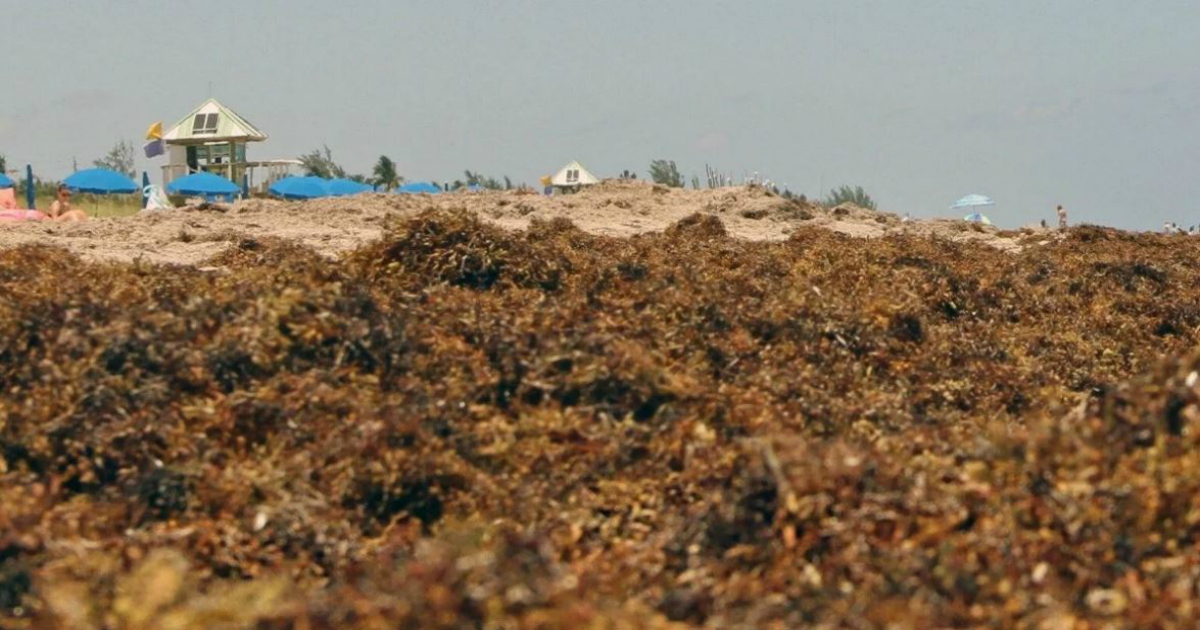
The beaches of South Florida are facing what scientists warn could be the worst seaweed season ever recorded, with projections indicating levels that may even exceed the historic highs of 2025, according to reports from El Nuevo Herald.
In January of this year, NASA satellites detected a quantity of sargassum greater than that recorded in any previous January, according to Chuanmin Hu from the University of South Florida, a pioneer in the satellite monitoring of this phenomenon.
By March, the biomass in the Great Atlantic Sargassum Belt had already reached 19.6 million metric tons, a 31% increase compared to the same period in 2025, when the total annual volume reached 50 million tons throughout the tropical Atlantic.
"What troubles me as a scientist is that, in the last two or three years, we have been breaking more and more historical records," Hu remarked. "At one point, I thought, 'Well, this is a record,' and three months later, I said, 'Well, this is another record.'"
The impact on Miami's beaches is already visible. Last Thursday, three tractors spent over an hour raking the beach at South Pointe Park in Miami Beach, while bathers navigated through thick piles of seaweed that tinted the shore waters a murky brown.
At Crandon Park beach, a team shooting a commercial adjusted the angles of their cameras to exclude the piles of sargassum from the frame.
Taxpayers in Miami-Dade County spend nearly four million dollars annually to cover the removal of algae from approximately 27 kilometers of public beaches, an expense that has steadily increased since 2019 when systematic cleaning operations began.
But the real cost goes far beyond removal. Di Jin, a scientist at the Ocean Discovery Center of the Woods Hole Oceanographic Institution, estimates that losses in Florida's tourism and fishing sectors are around 2.7 billion dollars.
If indirect effects are taken into account—empty restaurants, unused services—the total amounts to about 5 billion, with pessimistic estimates nearing 10 billion.
"Seaweed has ceased to be a mere environmental nuisance," Jin stated. "It is now generating a significant and tangible economic impact."
The magnitude of the risk becomes clear when considering that Greater Miami welcomed 28 million tourists in 2024, who generated an expenditure of 22 billion dollars, according to the Greater Miami Convention and Visitors Bureau.
The phenomenon is scaring away visitors even before they arrive in Florida. In a Facebook group with over 17,000 members dedicated to discussing sargassum, travelers from across the country are debating whether to cancel their plans.
Victoria Brosman, a resident of Toronto, vowed never to return after her last visit to Bal Harbour. "The photos from that trip remain an astonishing reminder of why, every time we look to make a simple getaway to relax, Florida is no longer an option," she stated.
Brena Watson, from St. Louis, is now considering Las Vegas or New York instead of Miami. "We don't need that in our lives. A beach vacation should be clean, beautiful, and enjoyable," she said.
The phenomenon is not exclusive to Florida. In 2025, sargassum devastated beaches in eastern Cuba and Cuba issued a maximum alert due to health risks arising from the decomposition of the algae, which releases toxic gases affecting respiratory health in the population.
This year, Florida was already anticipating the largest sargassum invasion in its history since the beginning of the season, and the latest data confirms that this warning was not exaggerated.
He was categorical about the outlook: “No one can stop the massive amount of sargassum in the ocean. We can only prepare ourselves.”
Filed under: