
Related videos:
The organization Human Rights Watch published this Wednesday the report "They Leave Us Here to Die", which documents that the Trump administration deported nearly 13,000 Cubans, Venezuelans, and people of other nationalities to Mexico between January 20, 2025, and March 9, 2026, exposing them to cartel violence in a country they do not know.
According to the HRW report, Cubans are the largest group among those deported to Mexico: more than 4,353 people sent to that country during that time.
The document is based on more than 50 interviews conducted in Tapachula, Chiapas, and Villahermosa, Tabasco, the two cities in southern Mexico where the majority of deportees are concentrated.
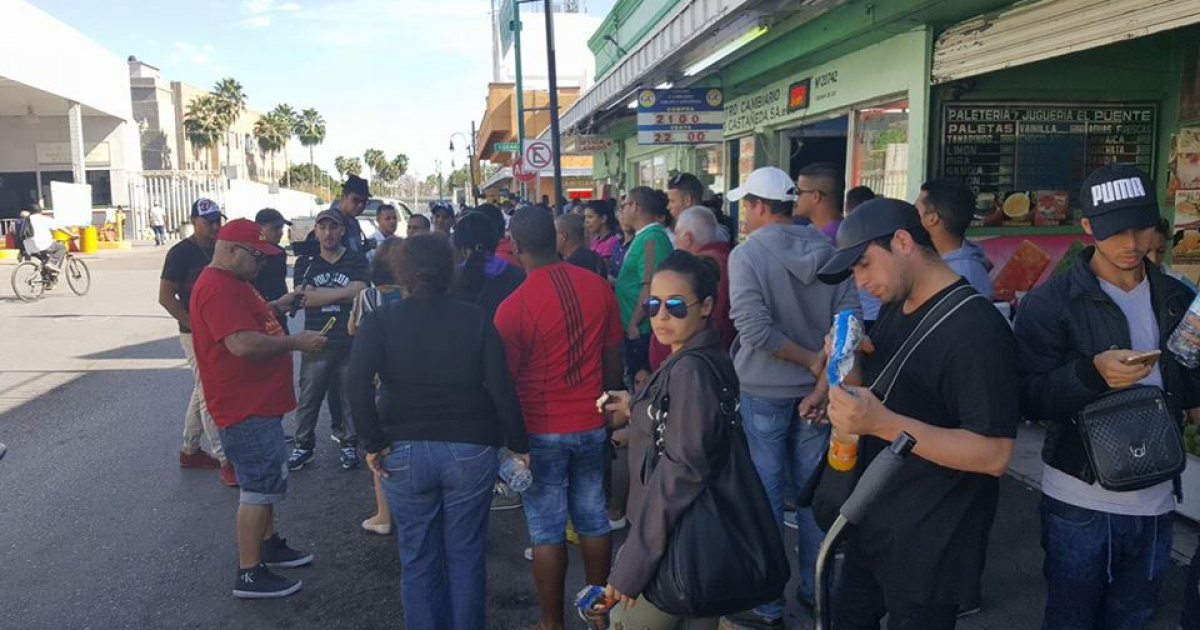
Activists estimate that there are about 800 Cubans stranded in Tapachula and around 3,000 in Villahermosa, without documents, without work permits, and without a clear path to regularization, seeking asylum, or returning to Cuba.
Deportees arrive in a hostile environment: scarce job opportunities, the presence of organized crime, and limited institutional capacity to assist them.
One of the documented cases is that of Lázaro Romero León, a 59-year-old Cuban who was deported to Mexico by Immigration and Customs Enforcement (ICE) despite a court order, and two months later was still stranded in Tapachula with no possibility of being repatriated to the United States.
Another case is that of a 73-year-old Cuban man deported from the U.S. who requested to stay in Mexico as he had nowhere else to go.
"What happened here, I wouldn't wish on anyone," said that man, whose words encapsulate the despair of thousands of compatriots in the same situation.
HRW points out that more than half of the Cubans deported to Mexico had criminal records, but only 16% were for violent crimes, which calls into question the narrative that they are exclusively dangerous individuals.
The organization also criticizes the lack of transparency regarding the agreement between Washington and Mexico City for these deportations to a third country, something that a U.S. federal judge questioned in March by casting doubt on the existence of a possible secret pact between the two governments.
The U.S. sends Cubans to Mexico when Havana does not accept repatriation flights, especially in cases with criminal records, a practice that has intensified since the beginning of the second Trump administration.
In March, authorities in Chiapas confirmed to EFE that between two and three flights per week were arriving with migrants deported from the United States.
The Trump administration eliminated through executive orders the humanitarian parole programs for Cubans, Haitians, Nicaraguans, and Venezuelans beginning in January 2025, closing one of the few legal avenues for entering the country.
HRW demands that Mexico ensure medical care and a genuine pathway for regularization for those who cannot return to their countries of origin, and calls on both governments to make any agreements about deportations to third countries public.
Among the Cubans stranded in southern Mexico, many have been without work or documents for months, caught in a migratory limbo from which they see no way out: "Never in my life have I been in this situation, on the streets," one of them stated.
Filed under: