
Related videos:
A federal judge in the United States has scrutinized a practice that could be affecting thousands of deported Cubans by questioning an alleged "unwritten" agreement with Mexico to accept expelled migrants, a situation that raises new concerns about the transparency and legality of these expulsions.
According to a report by the agency Reuters, the administration of President Donald Trump informed a court that it has sent approximately 6,000 Cubans to Mexican territory under that supposed understanding with the government of Mexico.
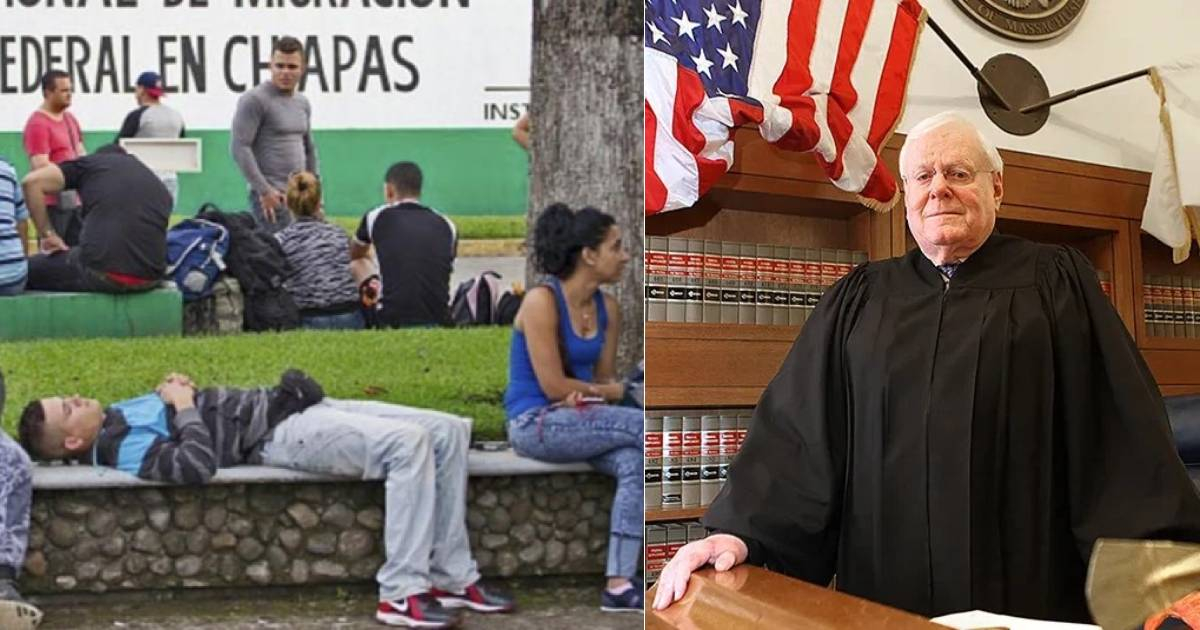
However, the lack of official documentation raised alarms for Judge William Young, who demanded concrete evidence and openly questioned whether this is a secret pact between both countries.
"Is there any tacit agreement (...) by which 6,000 Cuban citizens have already been sent to Mexico? Is this agreement secret?" wrote the judge in a court order, reflecting the seriousness of the doubts surrounding the case.
The controversy arose during the legal proceedings of a Cuban man detained by the Immigration and Customs Enforcement (ICE), whose lawyers claim that the authorities violated his due process rights by arresting him despite knowing that he could not be quickly deported to Cuba, a country that has historically impeded the return of its nationals.
The case is not isolated. In recent months, the arrival of Cubans deported from the United States to southern Mexico has visibly increased, especially in Tapachula. Regular flights are transporting migrants who, in many cases, find themselves stranded in precarious conditions, without documents or clear options to rebuild their lives.
Behind the numbers are stories that reflect the human impact of these decisions. Cubans who spent decades in the United States—some since childhood—suddenly find themselves in a country that was not their intended destination, forced to start over, often without support networks.
In Tapachula, thousands are surviving in a migratory limbo. Without work permits or a defined legal status, they face the dilemma of returning to Cuba, staying in Mexico under difficult conditions, or attempting to cross into the United States once again.
Judge Young also connected this case to a broader debate: the legality of deporting migrants to third countries that are not their country of origin. In fact, the process was temporarily suspended while an appeal by the government regarding similar policies is being resolved.
Meanwhile, the lack of clarity regarding the alleged agreement with Mexico adds further uncertainty to a crisis that is already affecting thousands of Cuban families.
For many, the question is not just legal, but profoundly human: how is it possible that the fate of thousands of people depends on an agreement that, officially, doesn't even exist on paper?
Filed under: