
Related videos:
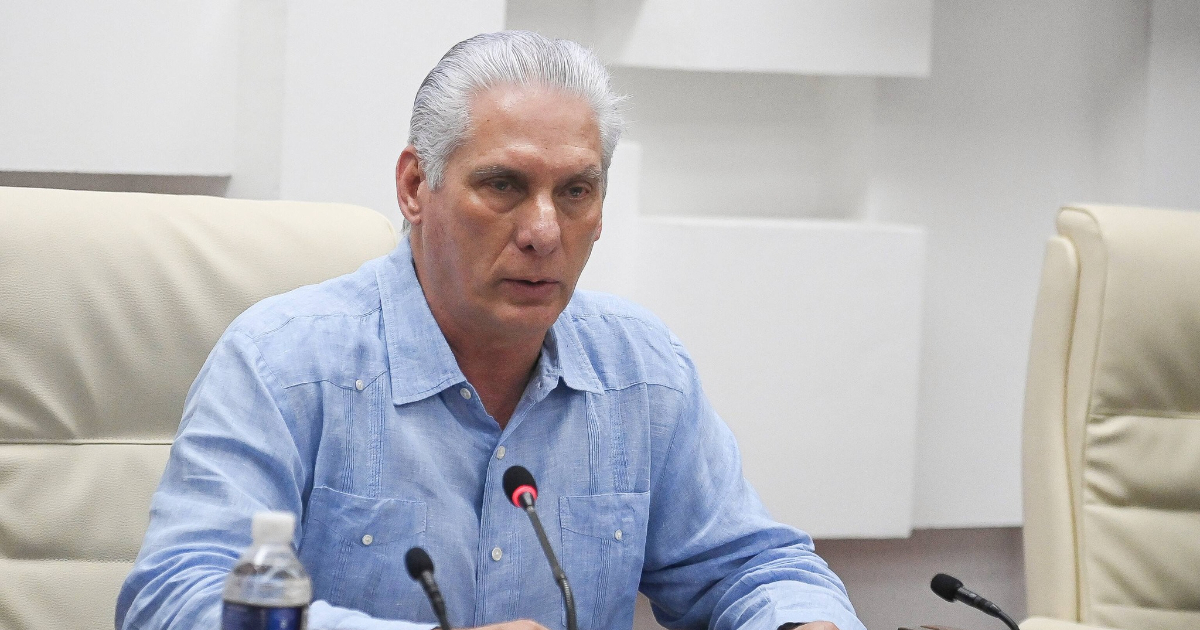
Amid a surge of U.S. sanctions, Miguel Díaz-Canel chaired a meeting of scientists where the Cuban regime presented the progress of HEBERSaVax, a therapeutic vaccine candidate described by its developers as unique in the world for the treatment of malignant tumors.
The event occurs in a context of heightened tension with the United States, and coincidentally, the announcement of the vaccine comes on the same day as a report from Politico, which confirms that the Pentagon has forces ready to act swiftly in Cuba should they receive an order from President Donald Trump.
In this context, the presentation of HEBERSaVax serves as a symbolic and political response from the Cuban government, framing its biotechnology as a testament to resilience against external pressure, despite the chaotic reality in the healthcare sector in Cuba, where hospitals lack basic supplies to attend to the population.
Díaz-Canel personally congratulated Yanelys Morera Díaz, the scientific leader of the project that created the vaccine and a full member of the Academy of Sciences of Cuba: "Congratulations, Doctor, to you and your team," said the president.
HEBERSaVax acts as an "active immunotherapy": it generates specific antibodies that cut off the blood supply to the tumor, preventing it from getting nutrients, while also restoring the patient's immune system's ability to fight cancer.
"We are in the presence of a candidate that has multiple functions," stated Morera Díaz, who specified that the product "has gone through all the stages, from the initial studies in laboratory animals to the most recent, which are the Phase II clinical trials."
The results of Phase II in advanced ovarian cancer, published in the International Journal of Cancer, reported a median progression-free survival of 18 months and an overall survival of 32.82 months.
The product has also been tested on colorectal cancer, hepatocellular carcinoma, and kidney cancer, with documented complete responses even in advanced stages.
Among its advantages, researchers highlight the scarce and tolerable adverse effects. "These are very manageable elements that allow this candidate to be combined even with conventional therapies, without increasing toxicity," noted Morera Díaz.
The application is subcutaneous and can be used in patients with multiple simultaneous diseases, which expands the range of potential beneficiaries.
The clinical researcher Julio César Hernández Perera, a specialist in Internal Medicine and a full member of the Academy of Sciences of Cuba, emphasized that this is “a Cuban biotechnology product, the result of extensive research,” with “the uniqueness of being one of a kind in the world.”
The researcher Adriana Felinciano Pozo added that the candidate "has allowed patients to have a better quality of life, a response without adverse effects."
HEBERSaVax joins a tradition of Cuban therapeutic vaccines against cancer, which includes CIMAvax-EGF for lung cancer, the subject of collaboration with medical institutes in the U.S. since 2016, with a renewed license until November 2027, and Heberprovac, a Cuban candidate against prostate cancer.
"We are confident that this candidate will complete all the necessary stages and can be part of the arsenal needed for cancer therapy, in order to achieve better results," concluded Yanelys Morera Díaz.
While the regime promotes biotechnology advances such as HEBERSaVax, the daily reality in Cuban hospitals remains marked by extreme shortages of medications, equipment, and basic supplies.
Thousands of cancer patients on the island are currently facing delays in diagnoses, a lack of chemotherapy, interruptions in treatments, and frequent shortages of painkillers, IV fluids, reagents, and even basic surgical materials.
Relatives of patients constantly report on social media and independent media that they must travel across several provinces to try to obtain medications or rely on shipments from abroad to maintain vital therapies.
The health crisis in Cuba particularly affects cancer patients, many of whom lack stable access to modern treatments and adequate hospital conditions during their care processes.
Filed under: