
Related videos:
Raúl Castro has reached out to the Cuban political world again without appearing in public following the accusations against him by the United States: he sent a congratulatory letter to the National Institute of State Reserves (INRE) on the occasion of its 45th anniversary, a letter that was read by others during the political-cultural event held yesterday in honor of the institution.
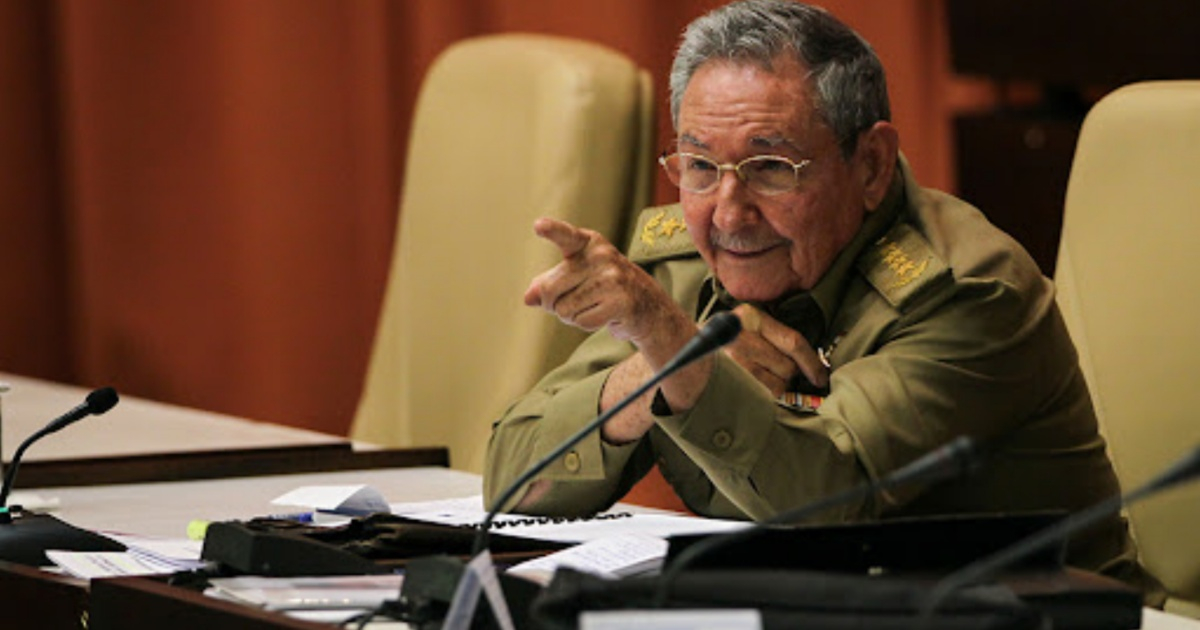
The dictator, aged 94 years, did not physically attend the ceremony, which was presided over by the member of the Political Bureau and Secretary of the Council of Ministers, Major General José Amado Ricardo Guerra, and by the Deputy Minister of the Revolutionary Armed Forces, Army Corps General Joaquín Quintas Solá.
The letter, fully published by the regime's official media, is titled "Year of the Centenary of Commander in Chief Fidel Castro Ruz" and has an actively political tone.
In it, Castro attributes the founding of INRE in 1981 to Fidel Castro and presents it as a shield against what he calls "blockade" and other adversities: "Thus, from its inception, it became an irreplaceable material pillar in the face of the worst adversities our country has suffered: the worsening of the economic blockade, natural disasters, pandemics, and all kinds of contingencies."
He also directly referred to Washington: "It is enough to mention the harshest moments of the COVID-19 pandemic, or the current suffocating policy of the United States government in its failed attempt to destroy the Revolution."
The letter concludes with a quote from José Martí: "Continue to be the strategic rear guard of the Cuban economy. In foresight, Martí said, lies all the art of saving."
Castro's physical absence from the event is not surprising, but it does contrast with the energetic tone of the letter.
His last public appearance was on May 1, 2026, when he presided over the International Workers' Day event at the José Martí Anti-Imperialist Tribune in Havana—his first reappearance since December 2025—and was described by independent media as visibly deteriorated.
Before that, he had been absent from the 9th Congress of the Communist Party of Cuba in March 2026, where Díaz-Canel was ratified as the first secretary of the party.
The most striking episode occurred on May 22, when Castro also did not attend an event specifically called in his honor at the Anti-Imperialist Tribune, which sparked mockery on social media and renewed speculation about his health status.
In April 2026, President Miguel Díaz-Canel acknowledged to Telesur that Castro is "alive but retired for health reasons" and that he is "fragile due to his advanced age."
The letter to the INRE —read in his name by officials of the regime— thus consolidates the general's new mode of participation: institutional presence without physical presence, just a few days before he turns 95 years old on June 3rd.
Filed under: