
Related videos:
The Miami-Dade County is preparing to welcome between 750,000 and one million visitors during all the festivities of the FIFA World Cup 2026, according to projections released by local media and confirmed by county officials.
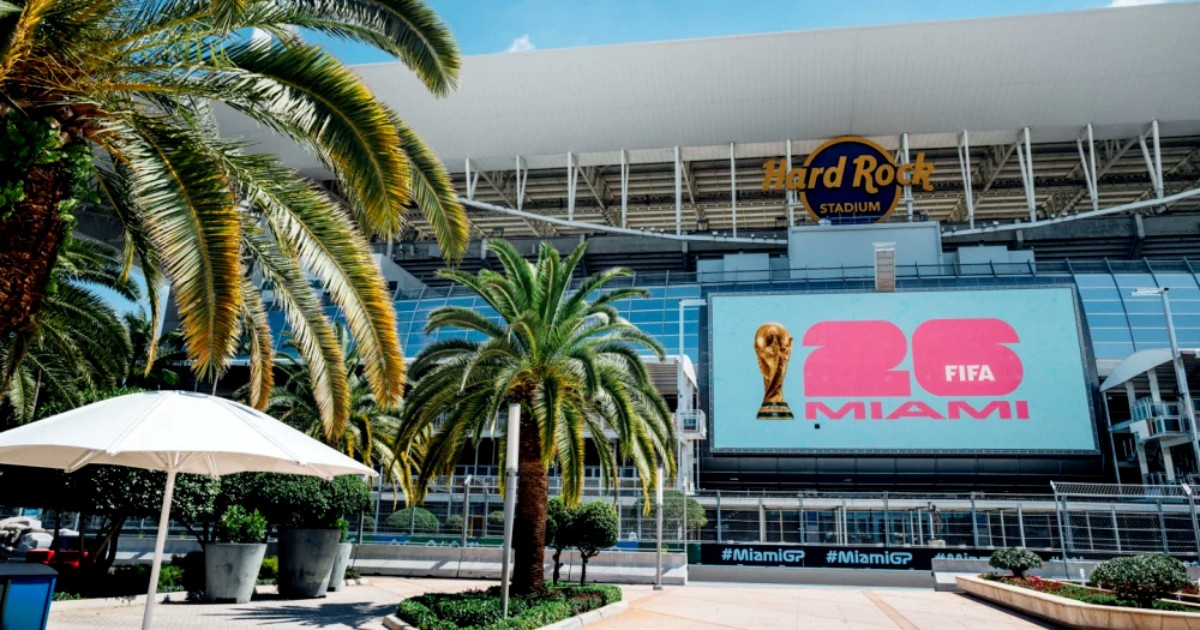
The south of Florida will be one of the most active areas of the tournament, which will take place in the United States, Canada, and Mexico from June 11 to July 19, 2026. The Hard Rock Stadium will host seven World Cup matches, including four group stage matches, one round of 16 match, one quarter-final match, and the third place match.
The match schedule in Miami kicks off on June 15 with Saudi Arabia facing Uruguay, and runs until July 18 with the bronze final. Among the most exciting matches is the clash on June 24 between Scotland and Brazil, and the one on June 27 between Colombia and Portugal.
The central event for the general public will be the FIFA Fan Festival at Bayfront Park, in downtown Miami, which will operate free of charge for 23 consecutive days, from June 13 to July 5.
The venue will cover 436,000 square feet and will include an amphitheater with a capacity for 10,000 people, live broadcasts of all the matches, dining options, and interactive activities. An influx of up to 30,000 daily visitors at the festival is expected.
In addition to the central festival, activation zones and watch parties are planned in Miami Beach, Bayside Marketplace, Brickell City Centre, and other locations in the county. The county also plans to offer free shuttles on game days for ticket holders from designated points.
The projected economic impact for Miami-Dade is approximately $1.5 billion, according to estimates cited by local media. Florida International University (FIU) estimates that this impact will extend beyond tourism, reaching transportation, airports, ports, cruises, retail, and entertainment throughout the region.
To accommodate the influx of visitors, the county approved an infrastructure package of 46 million dollars which includes transportation improvements, security technology, airport upgrades, and multilingual services for visitors.
In terms of security, the FBI and local authorities have been coordinating plans for months, which include a three-mile no-fly zone around the stadium with a ceiling of 3,000 feet.
Authorities warned that violating drone restrictions could result in fines of up to $100,000, up to a year in prison, and confiscation of the device. The planning aims to prevent incidents during the final of the 2024 Copa América, when ticketless fans broke through barriers at the stadium.
One factor that could temper the more optimistic projections is the migration context. International tourism to the United States fell by 5.4% in 2025, and 34% of respondents cite immigration policies as a reason for avoiding travel to the country.
In response, ICE agents and the Department of Homeland Security will be present throughout the tournament, which has raised concerns among potential international visitors.
To facilitate access for foreign fans, the FIFA Pass prioritizes consular interviews for verified ticket buyers who need a visa to enter the United States.
Filed under: