
Related videos:
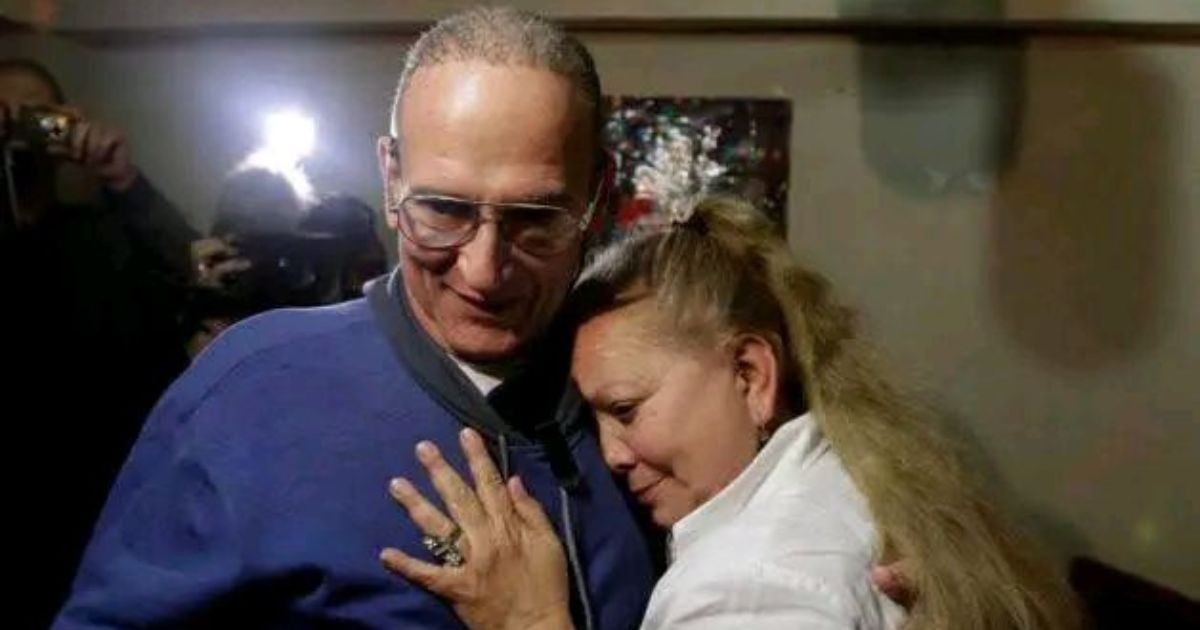
Héctor Maseda Gutiérrez, a Cuban independent journalist and one of the 75 political prisoners from the Black Spring of 2003, passed away this Saturday in exile in the United States, as confirmed by journalist Camila Acosta and writer Boris González Arenas on their Facebook profiles.
"Today, one of the heroes of the cause for Cuba's freedom has passed away in exile," wrote Acosta, who recalled that Maseda was sentenced to 20 years in prison for his opposition and activism against the dictatorship and spent eight years behind bars for refusing to accept exile as a condition for his release.
Born in Havana in 1943, Maseda was also the president of the Liberal Democratic Party of Cuba. He was arrested in March 2003 during the largest repressive wave of Castroism against peaceful dissent in decades, when Fidel Castro's government imprisoned 75 activists, independent journalists, and human rights defenders in summary trials with sentences of up to 25 years.
He was sentenced on charges of "acts against the security and territorial integrity and economy of Cuba," under Law 88 and Article 91 of the Cuban Penal Code. Unlike other members of the Group of 75 who accepted exile in Spain, Maseda refused and remained incarcerated for eight years.
He was released in February 2011 under an "extrapenal license" that did not nullify his conviction, and he stated that his release was "against his will." González Arenas described him as a man "of calm speech and friendly gestures" and noted that his wife Laura Pollán "was able to crown her husband's freedom with her sacrifice."
Pollán was the founder and first leader of the Damas de Blanco, a movement established in 2003 to demand the freedom of the prisoners from the Black Spring, which received the Sakharov Prize from the European Parliament in 2005 and the Human Rights Award from the U.S. Department of State in 2010. She passed away on October 14, 2011, at the Calixto García hospital in Havana, at the age of 63, shortly after Maseda had been released from prison for just a few months.
After the death of the brave leader, former Polish President and Nobel Peace Prize winner Lech Walesa sent a letter of condolence to Maseda in which he stated that “the movement founded by Laura Pollán is proof that peaceful struggle and determination in practice are always victorious” and that “the case for a democratic and free Cuba has become our shared dream and common goal.”
Those who knew him described Maseda as a man profoundly affected after losing his wife. The scientist and activist Oscar Casanella, who visited him at his home on Neptuno in Central Havana, recalled: “He struck me as a very noble man, but he was very depressed. Laura Pollán had already passed away a long time ago.”
In February 2016, when Cuban authorities offered him a one-time travel permit abroad, Maseda rejected it with a terse "I do not accept this," in solidarity with fellow members of the Group of 75 who did not receive the same treatment. He later emigrated to the United States, where he lived until his death.
The news sparked heartfelt expressions of mourning. Cuban intellectual Dimas Castellanos described him as "a man of integrity and courage, with clear ideas," who "has secured a place in the history of Cuba." Rosa María Sánchez wrote: "Another hero leaves this world after fighting and suffering without seeing the freedom of Cuba." Boris González Arenas summed up the collective sentiment: "Today, Cuba mourns the loss of another hero of its freedom."
With the death of Maseda, Cuba loses one of the witnesses of that generation who paid with years in prison for their commitment to freedom, and who died in exile without seeing that dream fulfilled. Deepest condolences to his loved ones.
Filed under: