
Related videos:
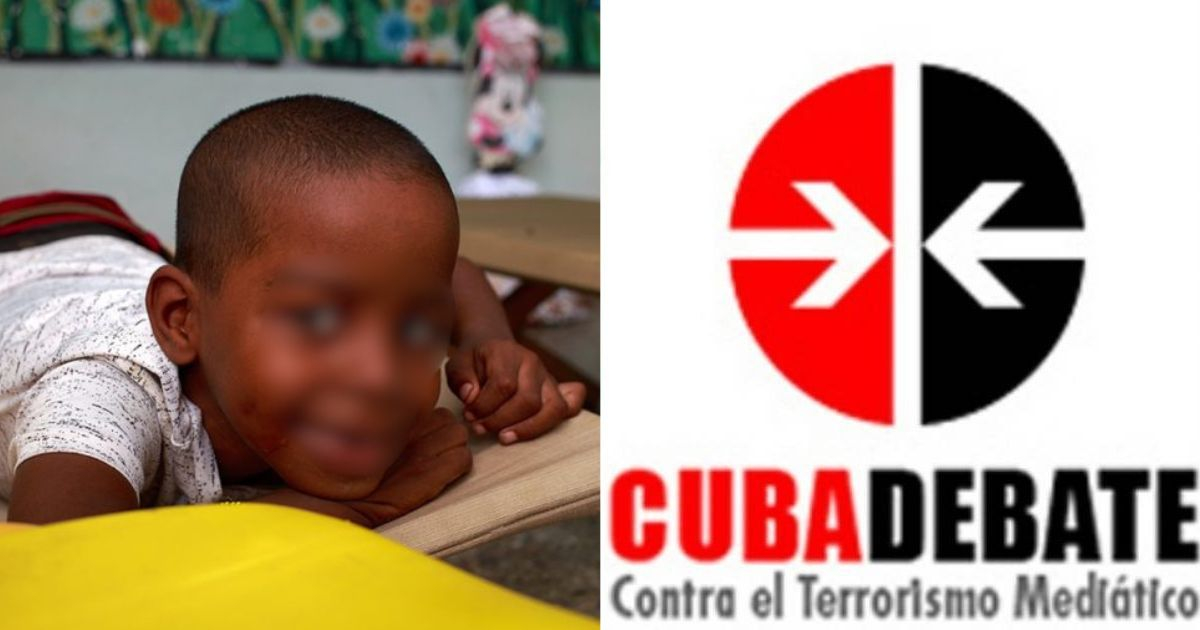
The same state portal that in April attempted to attack CiberCuba by accusing it of "monetizing the suffering of Cuban children" published this Sunday an extensive report titled "The Children of Raúl," in which it uses personal stories and photographs of children with physical disabilities to glorify the legacy of the dictator Raúl Castro, just days before his 95th birthday.
The report, authored by Dianet Doimeadios Guerrero, Ana Álvarez Guerrero, and photographer Enrique González Díaz, focuses on Yaniuska Zaldívar Cruz, nicknamed "Pelusa," a girl born without hands who will turn 14 on June 29 and studies at the special school Solidaridad con Panamá in Havana.
Cubadebate describes in detail the vulnerable situation of the minor: her wooden house in Las Tunas, the makeshift bathroom in the woods, and the cot on which she slept, details that the text uses as evidence of Castro's alleged generosity, who according to the center's director "ordered everything to be checked to provide her with a home."
However, like her, thousands more.
The article features photographs of Pelusa, including one where she is in the arms of Raúl Castro alongside President Miguel Díaz-Canel, and quotes a poem that the girl wrote in honor of the "General of Army."
The best response, once again, came from the Cubans themselves in the comments.
Some questioned the use of minors in political and propaganda content. "It's sad to see how they always use children for propaganda purposes in their favor," wrote Jorge Vega Ramos.
In similar terms, Jaime Silva expressed: "How unpleasant it is every time they use children as throwaway bombs."
Others took the opportunity to recall old, unfulfilled promises of the regime. "Ask Raúl about the little cup of milk he promised for everyone," commented Rubén Bernal.
There were also those who rejected the very title of the report. "Raúl's children are Mariela, Débora, El Tuerto, his grandchildren who live in luxury and without wants; these others are just a façade and propaganda," stated José Martínez.
One of the harshest comments came from Yoiri Daud, who wrote: "I thought you were talking about the children left orphaned in Loma de San Juan on January 12, 1959."
The contradiction with what occurred just six weeks earlier is striking. On April 21, the Media Observatory of Cubadebate published a piece titled "Junk Journalism: CiberCuba monetizes the suffering of Cuban children," in which it accused this portal of exposing images of minors in vulnerable situations.
That attack had the opposite effect: almost 90% of the comments on the Facebook post by Cubadebate questioned or ridiculed the state media.
"If Cubadebate stated that they are monetizing suffering, they are also acknowledging that this suffering and situation of vulnerability exist," wrote one of the users, highlighting the central contradiction.
Others were just as direct: "They show it, you provoke it," "They talk about what you silence," and "They don't monetize it, they teach it, while you hide it, which is even worse."
The report this Sunday is part of the official propaganda campaign to celebrate the 95th birthday of Raúl Castro, which falls on June 3rd.
Since May 20, the Union of Young Communists has called upon children and young people to create videos, poems, and songs using the hashtags #95DeRaúl and #RaúlEsRaúl, describing the former leader as "the steadfast patriot who teaches us to defend the Revolution, with tenderness and with a rifle."
The regime also organized open forums throughout the country from May 23 to June 3, and distributed books praising Castro —nine volumes of Selected Works with over 5,000 pages— amid the paper crisis.
The Solidaridad con Panamá school, where 202 girls and boys with physical-motor disabilities study, has been frequently used as a backdrop for political propaganda.
In April 2026, Díaz-Canel attended the quinceañera celebration of 19 students with disabilities and posted a message on social media praising the Castros.
The children of Cuba bear no responsibility for the propaganda use that the regime makes of their stories and images. They are the ones who deserve real protection, not the kind that is selectively invoked when convenient to attack independent press and forgotten when it comes time to celebrate a dictator.
Even Cubadebate, without realizing it, summarized the hypocrisy of its stance in a quote from the director of the center, which the report proudly reproduces: "The most vulnerable are these children. One must have a lost heart not to feel a pang."
Filed under: