
Related videos:
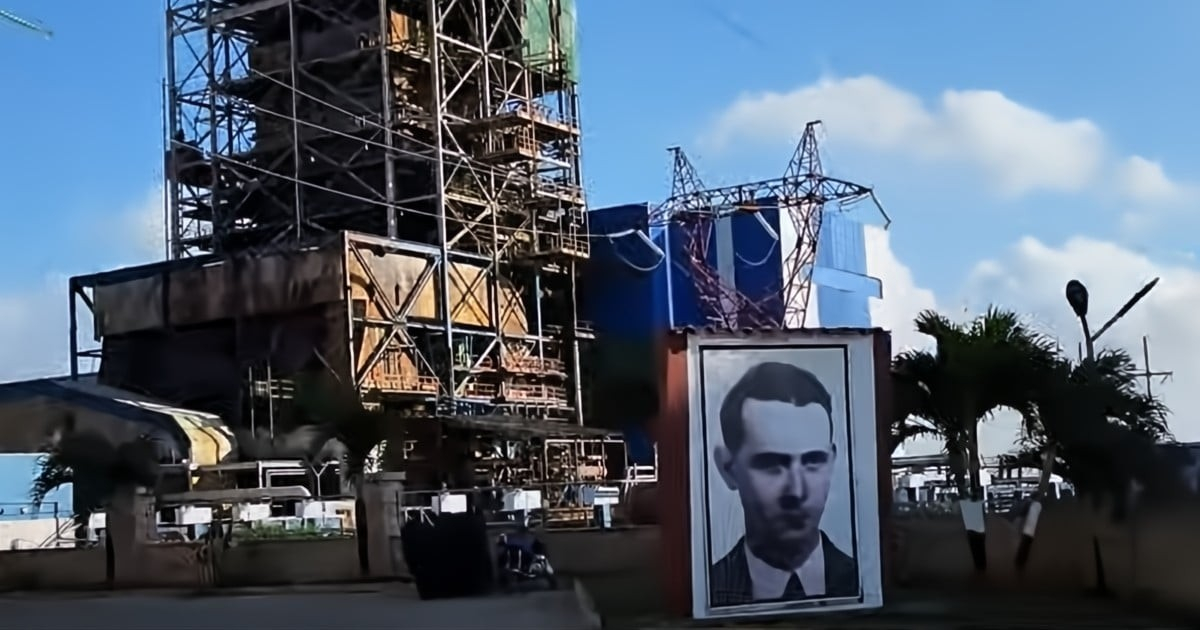
The Antonio Guiteras thermoelectric plant was once again disconnected from the National Electric System (SEN) on Friday night, just 36 hours after being reconnected, due to a new water leak in the boiler economizer, the same component that has caused the majority of its shutdowns in 2026.
A report by Canal Caribe on Saturday reveals the extent of the structural deterioration: between January 1 and May 29, the Guiteras has been offline 12 times, accumulating 293 hours out of service solely due to issues with the economizer. 50% of all shutdowns this year have been due to boiler failures.
A director admitted that if the plant were to shut down for 25 to 30 days, a significant percentage of the causes of breakdowns could be eliminated: "We could execute a large volume and remove a significant percentage of the causes of these breakdowns. We could now do a definitive job, completely as it should be, but it requires a bit more time."
The problem is that Cuba cannot afford that stoppage. The director of the plant, Román Pérez Castañeda, acknowledged days ago that the Guiteras needs a major maintenance overhaul of at least 180 days, the last one being in 2010, and that "the situation in the country still does not allow it."
International technical standards recommend that type of review every seven to eight years. The plant has gone 16 years without one.
The boiler has accumulated over 38 years of operation and has burned more than 10 million tons of national crude oil since 2002.
The economizer is made up of 136 elements, each with three tubes, and the failures recur in different locations within the same component. The management uses this information to rule out errors in the repairs, but the pattern of recurring failures contradicts any narrative of operational normalcy.
Only in May, the Guiteras went offline at least four times: on the fifth due to a breakdown in the boiler, on the 14th for a leak in the boiler, on the 24th due to a pore in the economizer, and on Friday again for a leak in the boiler.
The capital maintenance was promised for the end of 2025, but the Minister of Energy, Vicente de la O Levy, postponed it in December citing a "temporary issue." In April 2026, it was promised again without a specific date.
The impact on the population is immediate.
On Friday, the system operated with a capacity of only 1,400 MW against a demand of 2,770 MW, with a projected deficit of 1,800 MW during peak hours. Power outages in Havana reach between 20 and 22 hours daily; in provinces like Holguín and Granma, the cuts exceed 24 hours. Nearly three million Cubans are suffering from water shortages as a direct consequence of these outages.
Authorities estimated this Saturday that the block could be re-synchronized with the system within a period of 72 to 96 hours. This means another emergency repair that does not resolve anything, while the regime indefinitely postpones the only maintenance that could stabilize the plant, as doing so would further compromise an electrical system that is already operating on the brink of total collapse.
Filed under: