
Related videos:
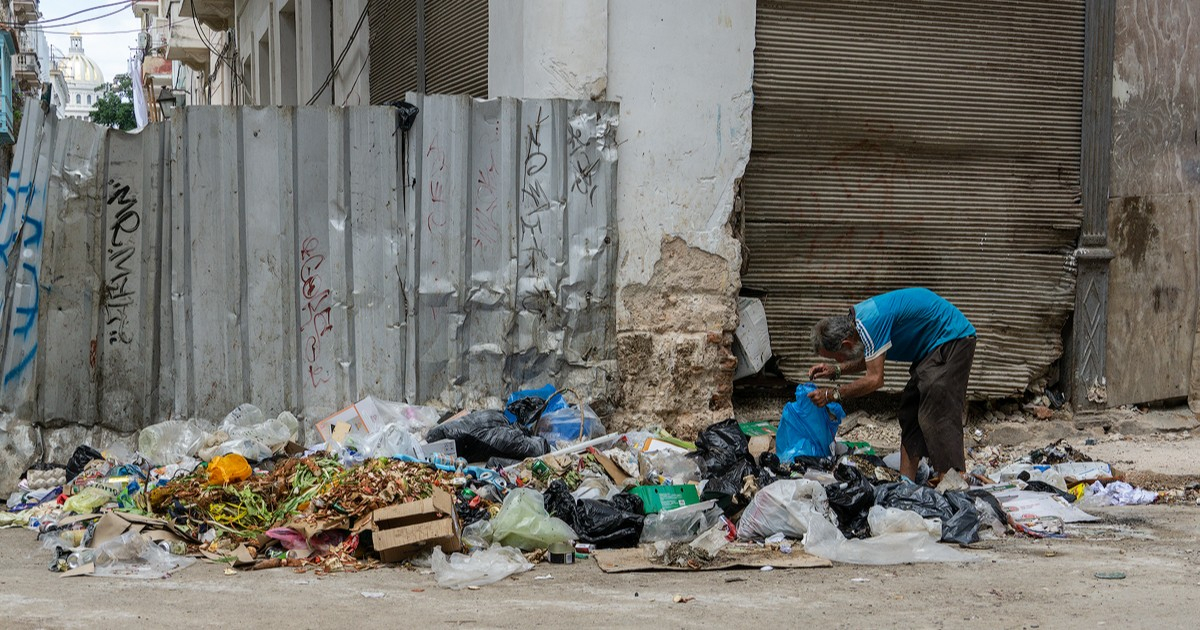
The New York Times published a report in Spanish that highlights a crisis unfolding alongside the economic collapse in Cuba: the massive accumulation of garbage in the streets and residential areas.
The proliferation of garbage dumps in Cuban cities is directly fueling the outbreaks of dengue and chikungunya that have already caused dozens of deaths across the island.
This is not a recent problem. The regime has been dragging this health crisis for more than a decade, but now the fuel shortage and the collapse of public services have paralyzed waste collection, turning entire neighborhoods into breeding grounds for rats and the Aedes aegypti mosquito, which is a vector for dengue and chikungunya.
The Ministry of Public Health of Cuba (MINSAP) officially recognized 33 deaths during the recent epidemic wave: 12 from dengue and 21 from chikungunya, as reported by The Straits Times. In just one week, 5,717 new cases of chikungunya were reported, a figure that highlights the speed of the outbreak's spread.
Official figures are far from reflecting the true extent of the disaster. The Cuban Citizen Audit Observatory raised the death toll to 87 just in October and November 2025, and MINSAP itself acknowledged that many infections go unreported because patients do not seek medical attention.
By the end of 2025, Cuba had accumulated at least 81,900 infected individuals and 65 official deaths. At the beginning of 2026, the outbreak remained active with over 2,800 cases in 134 municipalities and confirmed presence in all 14 provinces of the country.
The province of Matanzas hosts one of the most critical situations: over 300,000 inhabitants without a stable water supply and simultaneous outbreaks of hepatitis A, dengue, and chikungunya. The outbreak began precisely in July 2025 in Perico, Matanzas, before spreading throughout the national territory.
Children are the most vulnerable victims. In Santiago de Cuba, minors accounted for 65% of severe cases, and in November 2025, the MINSAP reported 34 minors hospitalized in serious or critical condition due to chikungunya.
Extended blackouts worsen the situation by hindering the use of fans and mosquito nets, promoting water stagnation, and compromising the operation of hospitals. This is compounded by a shortage of insecticides, ineffective fumigation, a lack of medications, and even the absence of drinking water in millions of homes.
The Cuban people are desperate in the face of the regime's inaction, and in many areas they burn trash to tackle the situation, but this creates another environmental issue due to the toxic smoke from the fires.
In Holguín, the sewage system overflowed last Saturday after a year of neglect in maintenance, adding another source of contamination to an already overwhelmed health situation.
The coverage from the New York Times adds to that of Le Monde, which described the situation in May as "an unprecedented health crisis," as well as that of other international media that have recently turned their attention to Cuba, not only for its political or economic crisis but specifically for the healthcare collapse related to garbage and mosquitoes.
The analyst Juan Antonio Blanco succinctly summarized the moment the country is experiencing: “The Cuban nation is dying”.
Filed under: