
Related videos:
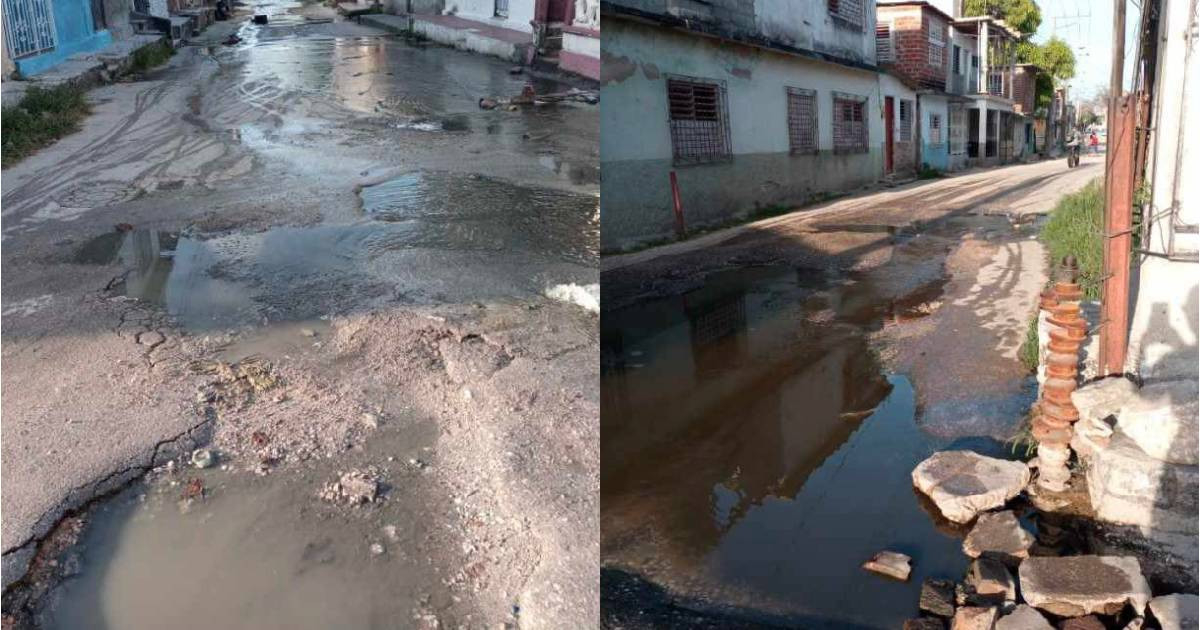
A sewage leak on Paz Street, at the corner of Sol, in the Vista Alegre neighborhood of the city of Holguín, has been overflowing raw sewage onto the public road for over a year, while local authorities have offered no solutions
Images shared by the Holguín Memories Facebook page, show the severely deteriorated pavement, large potholes filled with murky water, accumulated debris, and puddles that occupy a large portion of the street at that intersection in the city.
"What disrespect! They have been in these conditions for over a year, and it’s all just words as always, a lot of blablabla and no solutions to anything," the post states, calling for people to share the content to "reach more individuals."
The case is not an isolated incident. In recent months, Holguín has been accumulating reports of garbage dumps that catch fire every night, public spaces turned into landfills, and an urban decline that is advancing unchecked in what was considered for decades the cleanest city in Cuba.
In April, another Cuban went viral with a video showing sewage flooding a street with a school and daycare, commenting: "Look at how this is, it's a terrible mess."
The children's park Los Caballitos was demolished without a replacement plan and the site has turned into an improvised dump, while the historic Holguín-Gibara train station is now a debris storage, filled with mosquitoes and rodents.
"Holguín hurts", summarized the Holguín Memories page in a recently published viral video, which encapsulates the sentiments of a city witnessing its deterioration deepening while the authorities accumulate unfulfilled promises.
The Holguín Community Services Company has identified deficits in trucks, spare parts, fuel, and labor as causes of the collapse of urban services, but has not provided concrete solutions.
The sanitation crisis is rooted in a national structural issue. Cuba has approximately 24,907 km of pipelines and 3,006 pumping stations, but chronic blackouts paralyze the pumps, and outdated pipes lead to persistent leaks.
The health consequences are serious. In October and November 2025, Holguín reported cases of dengue and chikungunya in nearly all of its 14 municipalities, with stagnant water and garbage identified as factors that favor the breeding of the Aedes aegypti mosquito.
The national survey MICS7, conducted with Unicef since November 2025, detected the E. coli bacteria in Cuban households for the first time, officially recognizing a health crisis that the regime had downplayed.
In 2025, more than 860,000 Cubans were affected by water scarcity, and in April, about 300,000 people in Matanzas still lacked a stable supply of drinking water, according to the National Institute of Hydraulic Resources.
Filed under: