
Related videos:
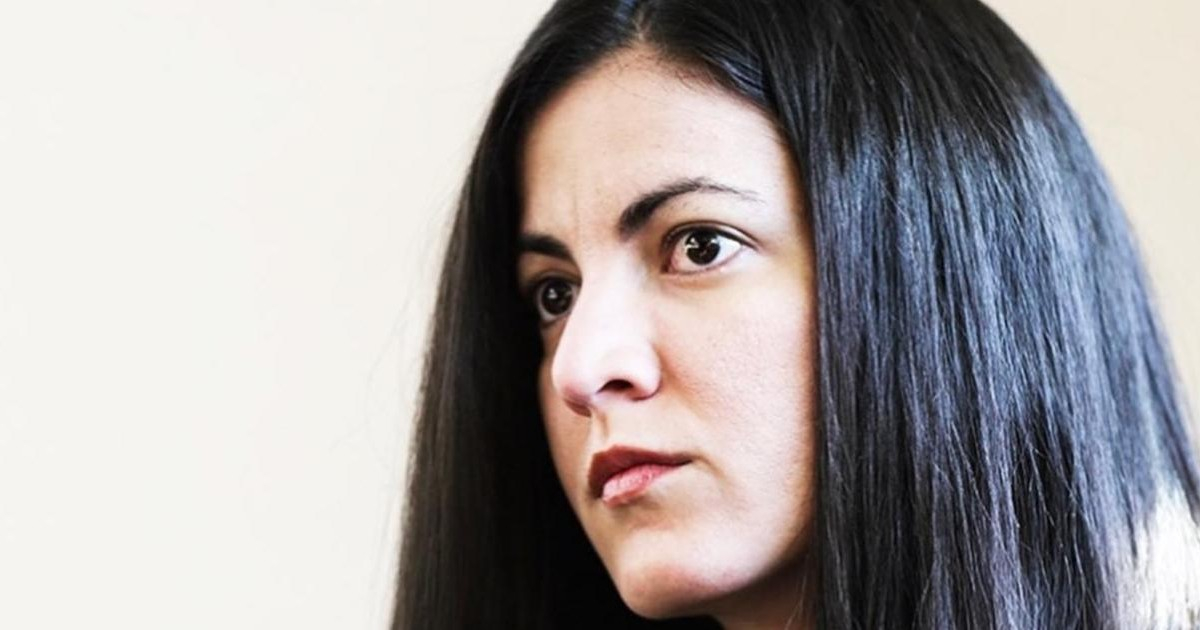
The Cuban opposition figure Rosa María Payá stated that Cuba is at the closest point to political change in decades, in an interview with the newspaper El Mundo in Madrid, where she participated in the symbolic ratification of the Agreement for Liberation, the democratic transition pact promoted by the Cuban opposition in exile.
"We have never been this close to change as we are now," declared Payá, founder of Cuba Decide and one of the most supported leaders among Cubans according to a digital survey conducted by 36 independent media outlets, content creators, and civil society actors.
The Liberation Agreement was originally signed in Miami on March 2 between the Pasos de Cambio coalitions and the Assembly of the Cuban Resistance, with the support of more than 30 exile organizations.
Last Sunday, it was ratified in the Spanish capital with the presence of representatives from the Cuban exile community in several European countries.
The agreement outlines a roadmap in four phases: liberation, stabilization, reconstruction, and democratization, with a provisional government of 51 members acting as a transitional Parliament and an Executive consisting of a president and two vice presidents, culminating in the first free general elections in over seventy years.
Payá supported the increasing pressure from Washington on Havana, including last Saturday's meeting between the head of the U.S. Southern Command and Cuban General Roberto Legrá at the boundaries of the Guantánamo naval base.
"We have been advocating for increased pressure on the criminals in power in Cuba, and we are grateful that the Government of the United States is applying it," he stated, specifically mentioning the case of Jonathan Muir, the 16-year-old who was detained following the protests in Morón in March and accused of sabotage.
On the comparison with Venezuela, she was categoric: "Venezuela and Cuba have intertwined destinies. The Cuban regime has practically colonized Venezuela for almost 25 years."
However, he warned that the scenarios are different: in Cuba, power is more monolithic, concentrated in a single family and a group of generals. "A Delcy Rodríguez is not necessary in our country. What is needed is for that group that has been hijacking the state to leave power," he stated.
The opposition leader stated that the opposition and the Cuban democratic forces are preparing for a democratic transition. "This is the purpose of the Liberation Agreement, the transition plan, the working commissions... to manage the transitional period in Cuba, which will be temporary until we can have free and fair elections."
He also rejected the argument that Cubans would not be prepared for democracy: "If anyone values the importance of freedom, it is precisely the Cuban people."
Payá emphasized that the transition does not require complex preconditions: "Liberation means that those in power must step down, that political prisoners are released, and that fundamental human rights guarantees are respected. This can happen within 24 hours."
The opposition figure thanked in May for the sanctions imposed by the Trump administration against the military conglomerate GAESA and the military leadership, which controls between 40% and 70% of the formal Cuban economy.
Since January 2025, Washington has imposed over 240 sanctions against Cuba, and Secretary of Defense Pete Hegseth confirmed before Congress that the regime poses a threat to the national security of the United States.
Prisoners Defenders reported 1,260 political prisoners in Cuba in April 2026, a record figure that illustrates the repression that the Liberation Agreement seeks to reverse.
Filed under: