
Related videos:
The entrepreneur and Republican politician Vic Mellor assured from Havana that "Raúl" sees business with the U.S. as the key to Cuba's prosperity, referring to a several-hour interview with Raúl Guillermo Rodríguez Castro, known as "El Cangrejo."
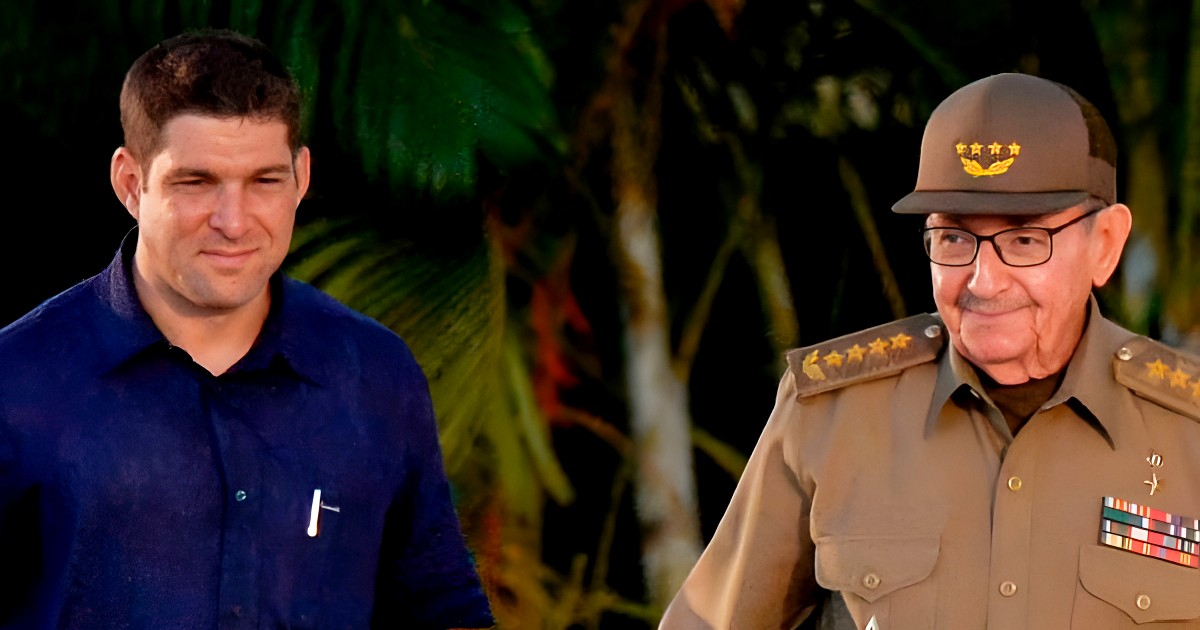
According to a wire from the AFP agency, the Republican candidate for Congress from Rhode Island met in the Cuban capital with “El Cangrejo,” grandson of Raúl Castro, and both agreed to open Cuba to business with the United States.
"I tell you that Raúl understands that business is the way to go. He understands that cooperation in business with the United States is key to Cuba's prosperity," the news agency quoted.
Mellor, who is also a veteran of the Marine Corps, reportedly stated that Cuba is "on the brink of a new revolution" and highlighted the island's potential in sectors such as tourism, mining, and human capital.
"His vision of opening Cuba to business aligns with mine. It is time for change," stated Mellor, who said he was seeking business opportunities with the island when he recently announced a visit to the Caribbean nation.
“El Cangrejo” has emerged as a key interlocutor for the regime in a series of real contacts with Washington during 2026.
The CIA director John Ratcliffe met in Havana on May 15 with Rodríguez Castro, Interior Minister Lázaro Álvarez Casas, and intelligence chief Ramón Romero Curbelo, during a visit described as unusual.
Previously, on April 10, a delegation from the State Department met with Raúl Castro's grandson in Havana. The Cuban government confirmed that visit, although the Ministry of Foreign Affairs denied that there was any official dialogue between the two governments.
The Republican congressman Mario Díaz-Balart acknowledged that there have been discussions "with multiple individuals around Raúl Castro, at the highest levels," although he clarified that "these are not negotiations."
During that same period, Democratic congress members such as Pramila Jayapal and Jared Huffman traveled to Cuba between April 1 and April 6 of 2026, as part of this intense communication activity between Washington and Havana.
Meanwhile, Secretary of State Marco Rubio noted that GAESA controls about 70% of the Cuban economy and accumulates enormous assets while the population suffers. The U.S. has reportedly offered 100 million dollars in food and medicine for Cuba, conditioned on the distribution not going through GAESA but rather through the Catholic Church or charitable organizations.
The agenda of contacts between the CIA and the regime in May included cooperation in intelligence, security, and economic stability, on the condition that Cuba cease to be a refuge for Washington's adversaries in the Western Hemisphere.
The activist Rosa María Payá warned in March that the solution to the Cuban crisis required a complete change of the political system so that Cubans could build prosperity through their own work, a stance that contrasts with the approaches of those who advocate for economic agreements with the same structures of the regime.
Filed under: