
Related videos:
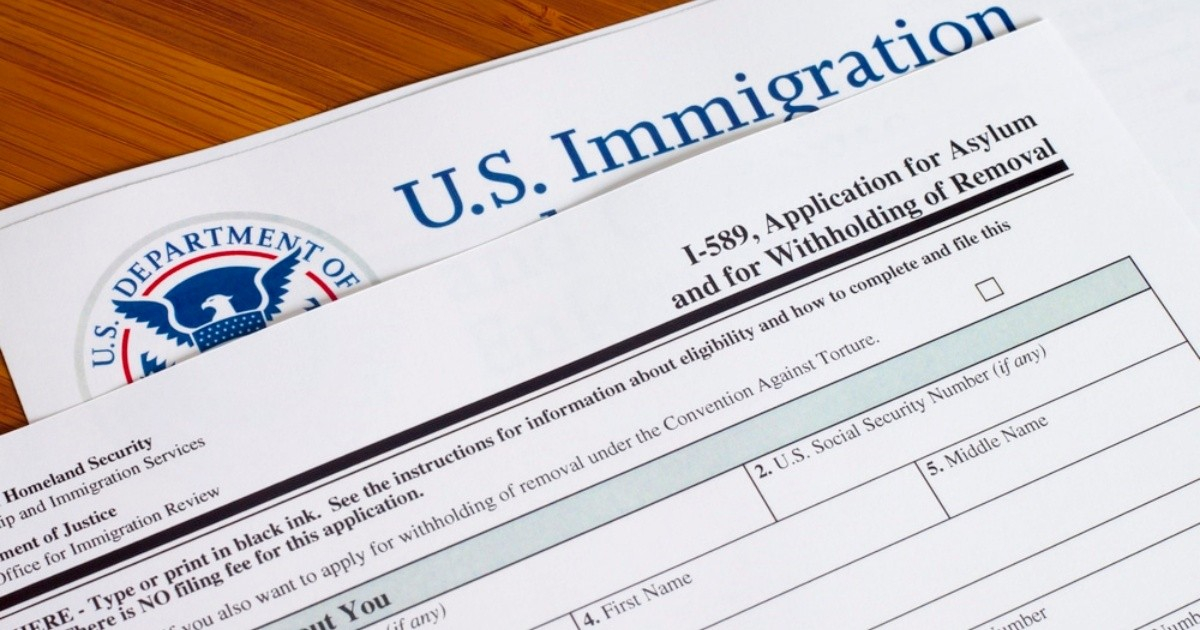
The administration of President Donald Trump is developing a regulation that would allow immigration officials to deny certain asylum applications without first interviewing the applicants, according to internal government documents obtained by CBS News.
The measure, driven by the Department of Homeland Security (DHS), would specifically apply to those who submitted their asylum application more than a year after entering the United States, in violation of the established legal timeframe.
Under this regulation, officials from the U.S. Citizenship and Immigration Services (USCIS) would be empowered to dismiss those applications without following the historical practice of interviewing applicants, and to refer them directly to deportation proceedings before the immigration courts of the Department of Justice.
A USCIS spokesperson confirmed to CBS News that the administration is "considering multiple options" to address a backlog of over a million applications, which it attributes to the "dangerous open border policies of the Biden administration."
The spokesperson added that the measure "would allow USCIS to avoid wasting time on asylum applications that it would otherwise refer to immigration proceedings and would enable illegal foreigners to have their cases heard by a judge."
The proposal would not completely eliminate interviews: cases that fall under the legal exceptions to the one-year deadline —such as severe illnesses, deficiencies in legal representation, or unaccompanied minors— could still receive an interview before a decision is made.
However, the initiative has raised alarm among immigrant advocates.
Conchita Cruz, co-executive director of the Asylum Seekers Defense Project (ASAP), warned that the regulation could "erroneously" place applicants in deportation proceedings without allowing them to explain why they submitted their application after the deadline.
Cruz stated that there are "many reasons" why applicants may submit their applications more than a year after entering the country, "including because they have been living in the country with a temporary status, such as a visa."
"The government would be changing the rules for immigrants who have been navigating a complex immigration process, often for many years," the lawyer added.
The magnitude of the accumulated backlog is the government's central argument to justify the change: USCIS had 1.5 million pending asylum applications at the end of 2025, while the immigration courts of the Department of Justice recorded 3.3 million pending cases as of March 2026, of which 2.3 million involve asylum applications.
This proposal adds to a series of measures that the Trump administration has adopted to restrict access to the asylum system since the beginning of its second term.
In November 2025, USCIS suspended all asylum decisions after it was revealed that the suspect in an attack on two National Guard soldiers in Washington D.C. was an Afghan who had been granted asylum.
That pause was partially reduced in March 2026, but remains in effect for citizens from 39 countries included in Trump's travel ban proclamation, among them Cuba.
Since May 29, USCIS also charges an annual fee of $102 for asylum applications that have been pending for more than a year, with a risk of rejection if not paid within 30 days.
Filed under: